In his book, Managing Transitions, William Bridges says that while change happens fast, transition takes time.
So when you announce an acquisition, it feels like you quickly find yourself way behind the eight ball, because your perception of the deal timeline and your employees’ perception of the deal timeline are operating at different speeds.
In what feels like the blink of an eye, you’ve made the announcement, you’ve wrapped up your all-hands meeting, and your Slack channels are buzzing with questions.
As a merger or acquisition unfolds, you’ll get lots of questions.
Your product manager wants to know whether her team will survive the overlap review. Someone from your payroll department wants to know whether the deductible they’re almost out of will reset if the October plan changes. And a remote employee wants to know whether he’ll be able to work from home or if the acquirer’s return to office policy will be implemented from day one.
The truth is, during the "between signing and close" period, you won’t have many answers. And for some questions, you won’t even be allowed to go find those answers. Antitrust rules in many jurisdictions say the buyer cannot direct the target’s operations before the close of the deal.
So while integration teams can plan, they can’t act.
And if there’s sensitive data - like salary information or individual performance data - that must be shared before the close, deal counsel will usually ensure that data goes through a "clean team" of a small number of named individuals, who are walled off from the day-to-day operations of the business. If you’re part of that clean team, you’ll know things that you can’t share. Make sure you have a written agreement with the deal counsel about what facts you can confirm to your employees, and what you can’t even acknowledge to know.
Another key thing to keep in mind is that your best employees will be the ones with the most options in the market and the least tolerance for ambiguity, so they’ll be the first ones to test the market. And they’ll be the first ones to get calls from recruiters who read the same press release about this merger or acquisition that they did.
The deal team usually has very important and legitimate reasons for not sharing details yet, whether it’s due to securities disclosure rules, obligations about consultation, or the fact that certain deal terms are not yet finalized. But the frustrating thing for your employees is that there’s no way to differentiate those reasons from a simple lack of care.
So your job as an internal communicator is not to promise the world or to make vague statements that are hard to prove wrong.
Your job is to clearly separate what has been decided, what hasn’t been decided, and what you can’t legally discuss right now, and try to put a date on when you’ll provide another update.
You can also use this three-way split to decide what to say to your employees:
- What’s been decided: Give the decided information, along with the date it’s effective from.
- What hasn’t been decided: Inform employees who the boss will be (information on who the boss is) and when you expect to get an update on this.
- What you can’t legally discuss: Let employees know that you can’t discuss this right now, give a one-liner on why (e.g., giving up to consultation) and what event will happen that will lift this restriction (e.g., close of the deal, end of consultation).
Below, we’ve provided the kinds of questions you’ll get, and examples of what you can say if you can’t fully answer these questions yet.
In this section, we’ll walk you through what your employees may want to know, how you can respond as a human resources professional, and how you can use surveys to identify questions people may be hesitant to ask
- 1. "am I going to lose my job?"
- 2. "what happens to my pay and benefits?"
- 3. "who do I report to now?"
- 4. "what happens to my stock options?"
- 5. "will this still feel like the same place?"
- 6. "will I have to move or start coming into an office?"
- 7. "why didn’t anyone tell us sooner?"
- 8. "should I start looking for another job?"
- 9. keep the answers in one place
- How Sparkbay can help you hear what employees still need to know
1. "am I going to lose my job?"
Turns out, most of the questions you will get during your merger or acquisition boil down to this one. So, keep an ear out for how this is asked. You’ll notice the phrasing and get a feel for how anxious or stressed the person is.
For instance, when a product lead asks, "Will our roadmap make it through this merger?" or when someone from procurement asks, "Who’s going to be responsible for vendor contracts now?" they are really asking a disguised headcount question.
Mitchell Marks and Philip Mirvis, authors of Joining Forces, explain this merger syndrome well. They note that once people hear about a merger, they start to protect themselves, fill in the information gaps with worst-case rumours, and spend less time focusing on the business and more time thinking about their own survival. From an HR point of view, this means you can’t simply leave a question unanswered, because people will fill in the blanks with the scariest possible story.
The key is not to lie. But you need to be careful about walking the tightrope from "no decisions have been made" to "I wouldn’t worry." The latter is often said by well-meaning managers who want to put their teams at ease. But in some jurisdictions, this could later be construed as an assurance of continued employment.
It will live in employees’ memories long after the deal team has forgotten about the chat.
In other words, you want your managers to say something like:
"We haven’t made any decisions about individual roles yet. The two teams are working on mapping out where the work overlaps. We expect to have some decisions to share next month, but of course, we’ll keep you updated if that changes."
It’s a good idea to give managers this exact wording, because the manager may be the person who’s also conducting the overlapping work review. So keep that in mind when you think about all the interactions managers will have with their teams.
Isn’t it Better to Discuss Details with Employees Directly?
In an ideal world? Sure. But your legal obligations will determine what you can and can’t say at certain points in time.
Collective consultation requirements in many EU countries as well as notice rules (e.g. US WARN Act for qualifying layoffs) mean that you may very well need to say "no decisions have been made" when in reality, your team is moving forward.
Once your legal team has signed off on the process for your merger, work with communications to create messages that cover important talking points including:
- How affected employees will be informed
- What the severance and support terms will be
- Whether an employee’s tenure with the previous company will be taken into account when determining severance packages
- Who employees can speak to for private conversations with their questions
Before you send out that general communication, there are a few other special groups you’ll need to keep in mind, since the general communication isn’t really a correct answer for them.
- Employees on sponsored work visas. Will their sponsorship be transferred? What happens if the employer entity, their job title, or work location changes? Is their status affected? This isn’t something you can make light of, since it’ll have immigration consequences for the employee. You’ll need to touch base with immigration counsel before sharing any details with the wider team.
- Employees on parental, medical, or disability leave. They may not have been privy to the all-hands meetings or informal catch-ups among employees. So it’s important to reach out to them directly, on the same day, with a written copy of the communication that goes out to the general team. It’s also important to provide clarity about what their parental, medical, or disability leave protects them from during the review, so they don’t have to worry about any negative implications on their review.
- Employees in the middle of a promotion, transfer, or pay review. Is this process frozen? Is it completed on the terms of their existing role? Is it re-started? Avoid sending mixed messages. Otherwise, the employees who receive no communication may think their promotion or transfer is quietly cancelled.
Research on acquisitions has found that employee turnover rates at acquired companies are higher than turnover rates at companies that weren’t acquired. Sometimes, employees leave before they even find out if their job is at risk. And this turnover rate is higher among the employees you’d least want to lose.
2. "what happens to my pay and benefits?"
When people say "no changes at close," they often mean "nothing changes at close, but we’ll eventually align your employee benefits to ours either at the start of the next plan year or within 12 months."
Try to view this question from the specific, practical lens of what people will actually notice.
- If I have to move to a different health plan mid-year, will my payments towards deductible or out-of-pocket maximum carry over?
- Will my years of service with the company count towards vesting in my retirement plan, vacation accrual tiers or eligibility for certain types of leave?
- Will the bonus I receive this year be based on the original targets, or will the rules change because the merger or acquisition has changed the business situation?
Ideally, your employee communications will offer effective dates for each of these answers.
For instance, consider the bonus targets. Your leadership team will have to decide how to handle bonus targets. If the merger or acquisition has changed business plans, it may be unreasonable to expect your sales team to meet targets that relate to a business that no longer exists in that form.
This may lead to a loss of motivation or sales people turning to less desirable ways to meet their targets.
Your leadership team will have to choose whether to guarantee bonus targets at close, prorate bonuses up to close, or establish new targets. Whichever they choose, it needs to be communicated before a new quarter starts.
Large surveys of workers show that roughly 60% of employees say that employee benefits influence which employer they choose. So if your messaging is "nothing changes immediately," expect employees to ask, "What happens after immediately?"
Vacation and leave policies are another area of concern. In some jurisdictions, accrued vacation is considered wages already earned. So in some places, the issue isn’t whether employees can carry over their accrued vacation.
Instead, the concern is how the company will deal with the liability of accrued vacation. If you don’t know the answer to this question when you’re drafting your communication, mark it as an open item, so you don’t have to guess (and potentially have to issue corrections downstream in your payroll).
Once you have answers to all of these questions, consider putting together a written FAQ. Most people won’t remember all the details from an all-hands meeting. If you put out a written document, date it and keep prior versions accessible, so no one can accuse you of spin-doctoring if one of your answers changes later.
Once the terms are confirmed, instead of simply listing the plans, share a side-by-side comparison table of what employee costs are at various levels of coverage (e.g., single, couple, family) for each employee benefit. It may sound silly to you, but you may think of two plans as pretty similar, while the family coverage on one plan may cost hundreds of dollars more per month. Your employees will do the math regardless, so get there first.
Once you’ve finalized your messaging, have it reviewed by the main people who run each employee benefit. Your final messaging should have sign-off from all of these groups: payroll, finance, benefits, and the acquirer’s total rewards team.
3. "who do I report to now?"
It’s helpful to show your team an org chart, so they can see where their team fits in the wider organization.
At the same time, an org chart leaves important questions unanswered, such as:
- Who do I ask when I want to take time off?
- Who has the final say when priorities clash?
- Who can I ask to approve spending when approval matrices overlap?
In the lead up to an acquisition, your teams may need to continue working in a target company’s reporting lines.
This is because there are antitrust risks if leaders from the acquiring company direct the target company’s employees before the deal closes.
Speak with your legal team before you organize any ‘introductions’ that may imply a change in management.
A better option may be to simply share a one-pager that lays out decision rights.
Team members regularly make decisions about things like approving leave, hiring, and spending.
They also manage competing priorities and bring up questions about making policy exceptions for customers.
Take an inventory of the ten most frequent decisions employees make and clearly articulate, ‘in this new organization, who has the power to make this decision, and for how long?’
Before sending out a new org chart and decision rights to the wider organization, consider distributing a briefing document to your managers that spells out what the new org charts and decision rights mean for their teams. This is better than simply sending a company-wide email that reveals a new reporting structure.
Why?
For better or worse, your manager shapes a large part of your working day. Gallup research shows that an employee’s manager accounts for a large share of the variance in employee engagement levels.
During a merger or acquisition, managers are expected to manage the greatest amount of uncertainty.
So when incoming leaders have a chance to meet their new teams post-acquisition, provide them with a briefing that includes:
- What the specifics are about ‘what will stay the same for the next 90 days’
- What decisions they will be making in this role
- Which questions they will need time to think through, with a promise of an answer by a set date
This helps them avoid being seen as being on a listening tour with the goal of ‘decisions later’.
If there’s a temporary reporting structure, make it clear that it’s temporary and that there is an end date.
4. "what happens to my stock options?"
There’s a lot of nuance in this question. A generic answer does more harm than good.
Awards may be assumed, substituted, cashed out, or cancelled depending on the terms of the merger agreement, the plan document, individual grant terms, and vesting schedules.
Sometimes, underwater options are cancelled and rendered worthless. Sometimes, there’s single-trigger or double-trigger acceleration or no acceleration at all.
In some cases, substitution impacts the tax treatment of certain types of stock options. Some deals impact the post-termination exercise window.
In short, don’t assume you know what’s going to happen to your employees’ stock options based on what happened to yours.
Work with your legal and finance teams to create a written guide that helps employees understand the types of terms they may see in their documents.
This guide should include:
- when the transaction date is
- if there are any deadlines to exercise options
- where they can easily access details about their individual awards
Speaking of accessing individual awards, what will happen to your employees’ ability to access their awards information?
How long will it take for your employees to access their information before your equity portal is shut down or migrated?
When you receive this information from your IT department, communicate it to your employees, so they know to download their grant information before the cutoff date.
Consider offering private appointments for employees to discuss specific questions they may have.
For example, an employee may need to make a decision about exercising their options before the close of the transaction and they may not want to discuss their finances or tax situation in a group setting.
Private appointments should not be used to direct employees on what to do. They are an opportunity for employees to better understand the process and direct them to seek independent tax and financial advice.
Anything that could be interpreted as an employee "directive" from your HR team puts your HR team at risk of liability if that leads to a costly decision for your employee.
5. "will this still feel like the same place?"
When your employees ask questions about the culture, they’re usually trying to understand what their day-to-day life will be like after the merger.
Will I still be able to work remotely? Will my team remain autonomous? Will some of the perks I actually use be quietly phased out?
Avoid answering with lines like, "We all share the same values" or "We’re aiming to bring the best of both cultures together." Your employees know that "best of both cultures" is often a polite way of saying, This will be the acquirer’s culture after a transition period.
Instead, ask your employees what specific practices they would like to keep and bring these specific examples to your integration team.
Often, the things that lead to culture clashes aren’t obvious at face value. One company may expect employees to write a decision memo before a meeting while another expects employees to decide during the meeting.
One company may appreciate it when employees escalate issues early while another culture teaches employees that escalation is a sign of failure.
These cultural nuggets may not be explicitly stated on company culture org charts, but they’re things employees pick up on and feel during that first week post-M&A.
Again, be honest about the kind of deal it is. If your company is buying this business to incorporate it into your business, be honest that your operating model will apply, but also highlight any practices that will be carried over.
If you’re buying the company so it can continue independently, be honest about that, too, and articulate which decisions will remain local.
In the long run, telling an acquired company that they’ll be able to keep their culture when in fact they’ll be a fully absorbed team creates the kind of friction that damages an organization over and over again with every system migration down the line.
Location is an important issue for companies that employ workers who can usefully work from anywhere. The vast majority of workers who can do so prefer to work remotely at least some of the time, according to Gallup’s surveys.
So if you haven’t set a location policy yet, it’s okay to say, X will decide on that policy and in the meantime, our current arrangements will remain in place.
Then you can hold your incoming managers accountable to that arrangement. If an incoming manager starts asking people to come in more often, they’re essentially setting the new policy prior to the official announcement from HR.
That said, you don’t need to preserve all old practices - and pretending you will do so will cost you credibility down the road.
6. "will I have to move or start coming into an office?"
This is different from the reporting question.
An employee may be fine with a new manager, but they may not be able to take on a longer commute.
Before you say something like, "We aren’t closing any offices before Q3" wait until you have written confirmation from the people responsible for real estate decisions.
Find out whether an employee’s existing remote work agreements still apply and who they should speak to about exceptions.
If they need to relocate, you’ll want to provide them with written information about timing, relocation support, and what happens if they can’t relocate.
Keep in mind that in some jurisdictions, a significant change in work location can impact an employee’s severance eligibility. So check with your legal team before anyone provides an informal response.
Here’s another important consideration: Some employees may currently work remotely or flexibly due to caregiving or medical arrangements.
This isn’t about team preferences. It’s about a documented accommodation.
Don’t assume they can be wrapped into your new office policies. Instead, arrange a private conversation. Avoid sending an email out to the company.
If your organization is still considering its options, share what’s being considered.
You might say something like, We are taking a look at office capacity, how many employees currently work remotely or on a hybrid model, and when our current lease agreements end.
This is better than saying, "We’re assessing our workplace needs."
Why? Because it doesn’t share anything with employees and simply gives the impression that a decision has already been made.
7. "why didn’t anyone tell us sooner?"
Some of your employees will be angry that a small group of people knew about the merger or acquisition for months. Don’t feel like you need to talk them out of that anger.
Instead, be honest about the constraints you were under. If you’re involved in negotiations, you’re bound by confidentiality. And if you’re a public company, there are securities rules that limit what you can share about material information related to a deal before it’s been publicly announced.
Avoid sharing who was on the insider list. This will stave off speculation among employees about who may have known what.
That said, don’t use confidentiality as a reason to fence off questions forever. Once a merger or acquisition has been announced, employees will continue to evaluate the company based on what the company chooses to share with them.
If you find yourself wanting to use confidentiality as a reason to avoid answering a question about the merger or acquisition, ask yourself whether you could answer that question the day after the close of the deal. If the answer is yes, great. You’ve got a date for when you can come back with an answer.
Even during quiet weeks, it’s important to reach out and say that there is no new information. Consider publishing a running list of questions with responses and updating that document every time a question gets answered. This demonstrates progress and builds trust.
It’s also important that you give employees a chance to ask questions without their manager in the room. Consider providing office hours or identifying a private HR contact that employees can reach out to with personal situations. This gives you a chance to identify themes that need to be answered in company-wide communications.
Finally, if you say you’re going to send an update on Friday, send an update on Friday.
8. "should I start looking for another job?"
What if someone asks you this?
First, recognize that this question almost never comes directly. Usually, it’s couched in phrases like, "What will my next project be?" or, "Does the acquirer have a team for what I do?".
Take a deep breath. This doesn’t necessarily mean someone is planning to jump ship.
Next, ask what information they feel they need to make their decision to stay, and give them as much clarity as possible.
Suppose your leadership team decides it wants to keep this person. This means you need to take concrete steps. You could identify a specific role for them within the combined entity, offer them a path to work on projects that interest them, or put a retention agreement in place.
If you do offer a retention agreement, think about how it’s structured. A big payout on a single date could lead to a wave of resignations the week after. It’s better to split payments over two or three dates.
And always consider the possibility that the retention list may be leaked and plan in advance how you’ll respond to other high performers not on the list.
Buying a person’s time? Absolutely. But now you’ve got some time (the length of those retention payments) to give that person a reason to genuinely stay in the organization.
And that reason isn’t just another pay check. It could be a clear role in the combined entity, a sponsor on the acquiring side, or an opportunity to work on a project they’ve been interested in.
Research conducted by LinkedIn’s workforce research team found that employees who make an internal move are more likely to stay with an organization than those who don’t.
While this is not a hard and fast rule, it makes sense to spend time helping people understand what specific roles they could move into within the combined entity.
Pay attention to how work is re-distributed within your organization. If people who remain are asked to absorb the work of a departing colleague with no backfill, no recognition, or no adjustment to their performance targets, this can be a sign that staying with the organization will be challenging.
And if people do decide to leave, continue to make the conversation valuable. Ask what answers or conditions would’ve led to a different decision to stay, and be careful not to put someone on the spot or make them defend their decision to leave. If you hear similar answers from two or three different people, consider adding them to your FAQ.
9. keep the answers in one place
Before your next all-hands, work with leadership and legal to create three lists:
- Information that HR is allowed to communicate
- Information that is still undecided and who will communicate it
- Information that can’t be communicated yet and why
Once these lists are finalized, provide managers with a one-pager that they can use during 1:1 meetings with employees. This document would outline what managers can confirm to employees, what information should be directed to HR, and when the next updated version of communication will be sent out to employees. Keep in mind that some managers may be reading this document to learn about their own jobs.
Never ask a manager to fill a gap with "hope" or "expected" information that the company hasn’t earned yet.
Use each channel in the best way possible:
- Town halls serve as a great way to set the tone of the message and get information out to everyone at once
- Written FAQserves as a resource for people to go back to and remind themselves of specific dates and wording
- Private conversationsare great for discussions about an individual’s role, pay, or equity
Think about when your audience will receive the message, not when it’s easiest for you to send it.
You don’t want people to receive bad news on a Friday afternoon, forcing them to sit with rumours all weekend with no one to talk to. You want managers and HR to be available when this message is released, so send it out early in the week and ensure that managers and HR are available that same day and that the FAQ has already been published.
Finally, pay attention to where people keep asking the same questions. If you receive the same policy question every week, it means there isn’t enough information in your FAQ and people need more detail. And that detail is usually a date or a figure.
How Sparkbay can help you hear what employees still need to know
When you find out about an acquisition after it’s announced, it’s hard to remember that the questions you have at the town hall are not the ones your employees had all along. With Sparkbay, you can run short pulse surveys to see how supported your employees feel as decisions are made, and monitor this feeling at the team level to avoid surprises.
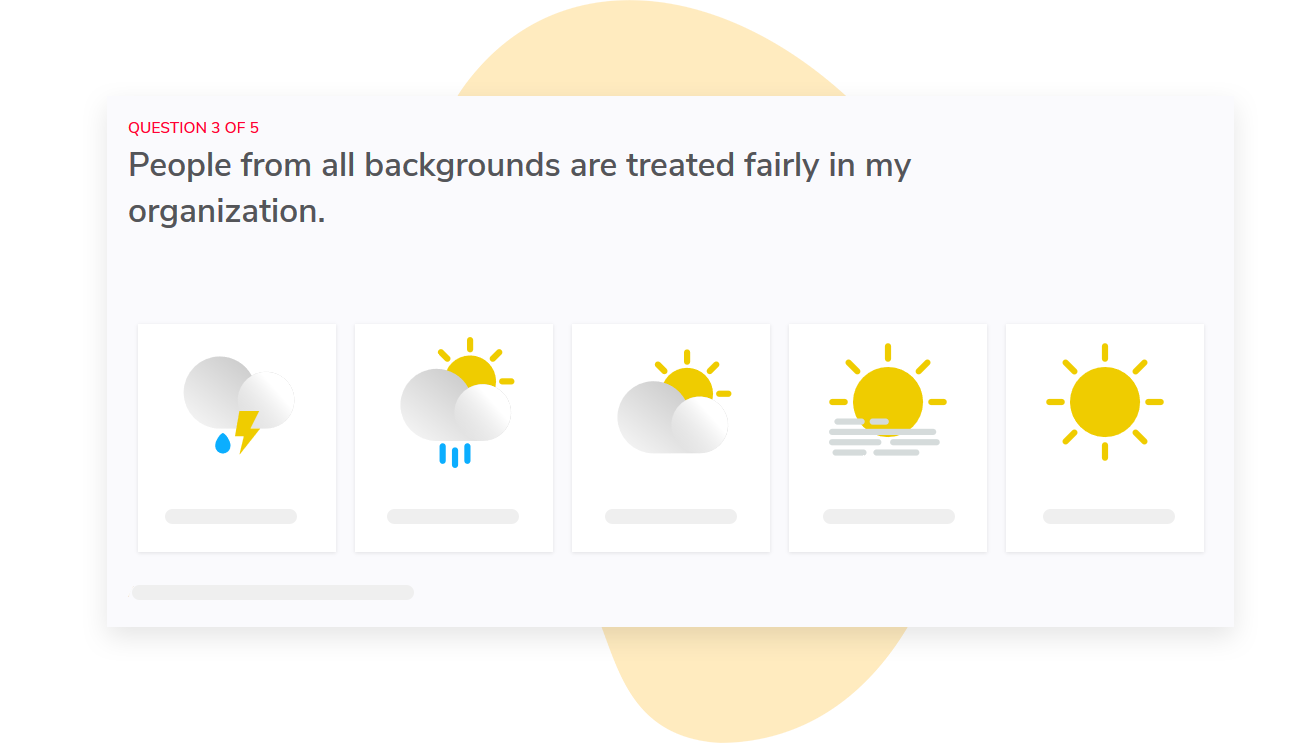
You can customize the wording of the survey questions to ask specifically about this acquisition instead of using general engagement questions. For instance, you could ask whether people know who to go to with a question about their role. Then, after you’ve had a meeting with managers, you can ask the question again to see if the message was received at the team level.
We can also help you compare responses across teams. This is helpful if one group has already met their new leader while others are waiting. Reports are filtered based on the org hierarchy, so managers only see the responses for their teams.
If there are too few responses, the report won’t be visible to managers. This minimum default number is set at 5, but you can change it. This helps protect the anonymity of your employees, so they can be honest.
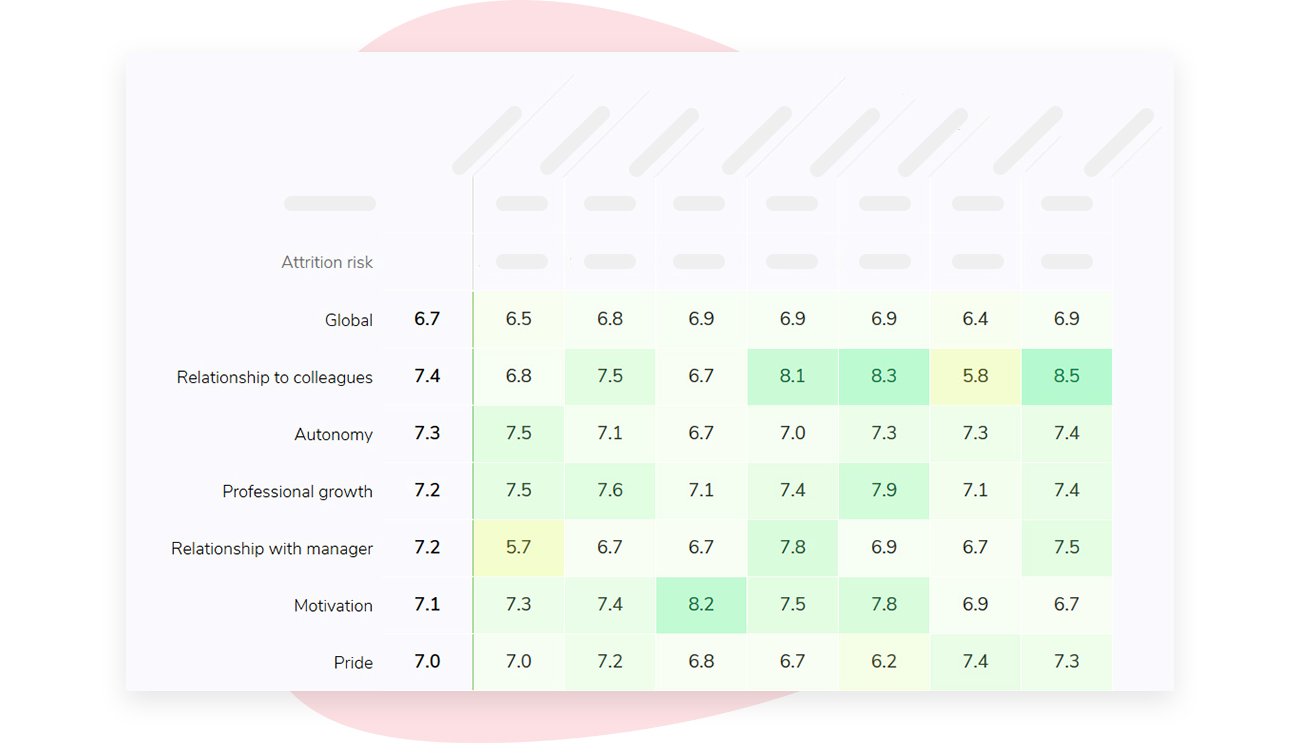
You can use these differences to decide where your next communication needs to be more detailed. If there’s still confusion about the office plans in one location, your HR team can address that specific site instead of sending the same message to everyone.
If you’re interested in learning how Sparkbay can help you build a more engaged workforce, you can click here for a demo.
10. what to say when the answer is still "we don’t know"
There will be times when you don’t have all the answers to your questions by the next update. And that’s okay. Most employees will understand.
What they won’t understand is a question that gets asked and then ignored.
If there are outstanding questions, it’s best to say that they’re undecided, who they’re with, and when you’ll get back to them with an answer.
Often, you’ll know the date by which a particular piece of work needs to be completed in order to move forward. If you can, share that with your audience by saying something like, this depends on the lease review finishing, or this depends on the consultation ending.
If you want to build trust, you need to make sure that date is easily found in your FAQ and that it’s updated if the work takes longer than expected.
If you’re interested in learning how Sparkbay can help you build a more engaged workforce, you can click here for a demo.