Are Employee Pulse Surveys Anonymous? What to Show Your Union
See how pulse survey anonymity differs from confidentiality, how employees get re-identified, and the evidence pack your union will ask to see.

A municipality runs garages, fire stations, arenas, pools, water plants and city hall. Each has its own hours, its own crews and often its own collective agreement.
Road crews, mechanics and firefighters spend their shifts on the road, in the garage or at the station. Many have no work email, so a survey sent by email mostly hears from city hall.
Union representatives want to know who will read the answers before anyone takes the survey. Elected officials want results they can stand behind in public. Vague rules satisfy neither.
Summer students, lifeguards and day camp staff join in spring and leave in the fall, while snow removal crews grow for the winter. Your employee list never stands still.
One survey reaches every workplace. You decide which director sees what, under anonymity rules clear enough to present to your unions.
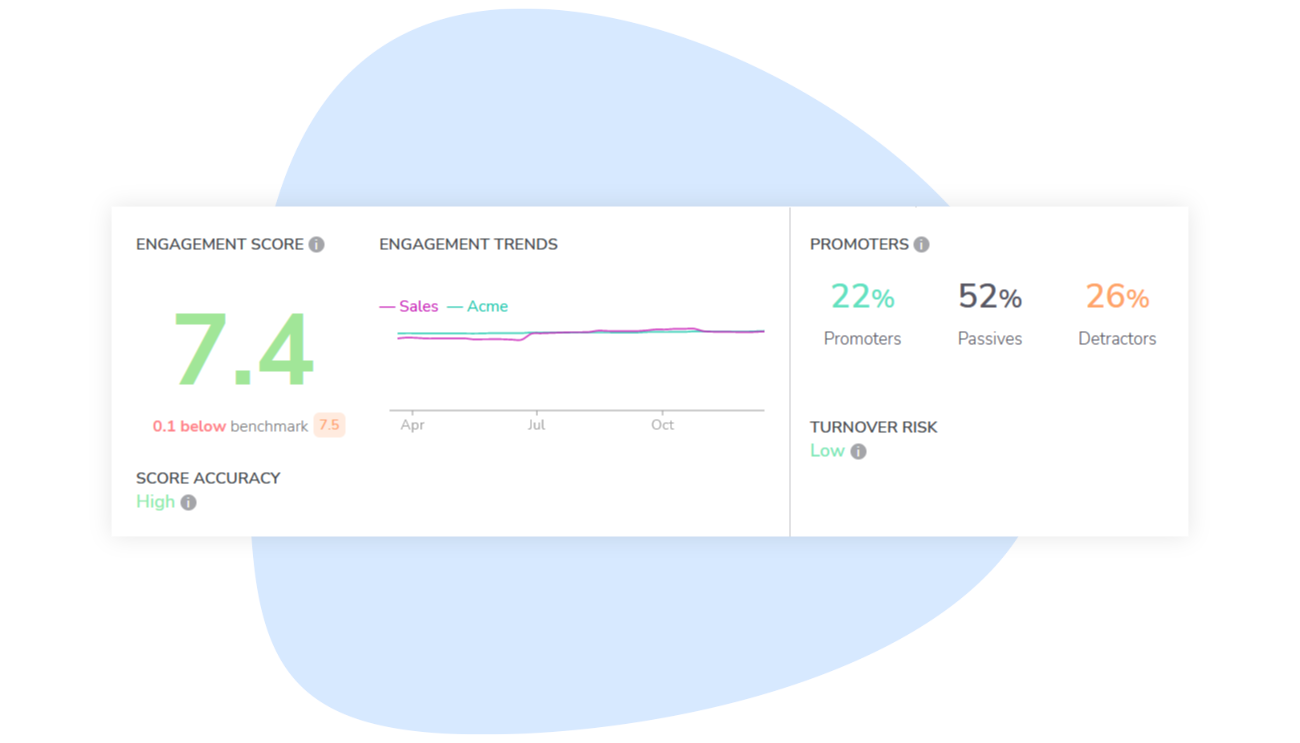
Public works, fire, recreation and city hall share one heatmap, with participation and a score for every engagement driver. Add work sites to your employee data to compare garages, stations and arenas too.
If a department is one crew plus a few others, Sparkbay shows the crew's results instead, so nobody can subtract their way to the others' answers.

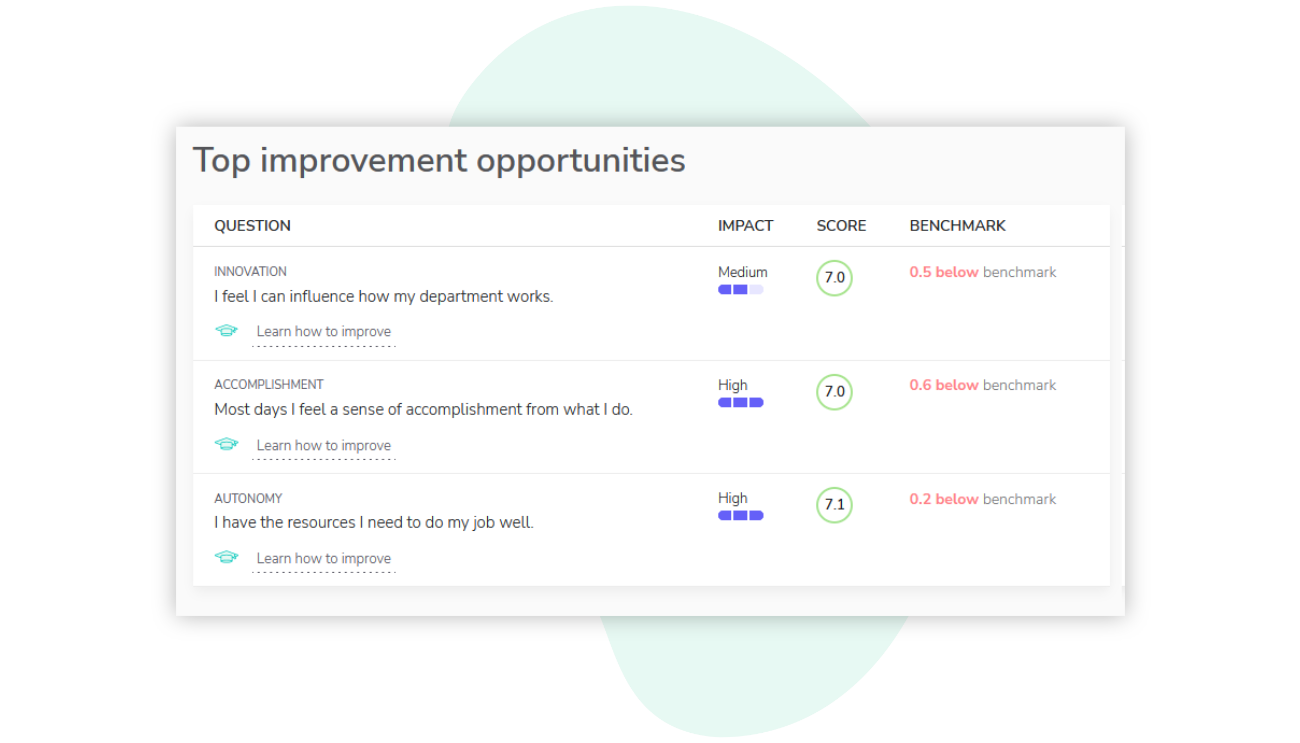
The fire chief, the public works director and the head of recreation can each see their department's weakest questions, with advice on each. What will change, and by when, goes into their action plan.
Briefing council or a union? Export the results to PowerPoint or print a report. The same anonymity rules apply.
Use one channel or combine them, so people with and without a work email can all take part.
A personal link in their inbox. No password to remember.
A survey link by SMS, opened on their phone.
A shared tablet on site, or a printed QR code they scan with their phone. They enter their employee number to answer.
See how pulse survey anonymity differs from confidentiality, how employees get re-identified, and the evidence pack your union will ask to see.
An independent certification body audits our information security management system.
No result appears for a group below your anonymity minimum, 5 respondents by default. Its answers still count in the larger groups above it.
Sparkbay complies with Quebec's Act to modernize legislative provisions as regards the protection of personal information (Law 25) and the General Data Protection Regulation (GDPR).
Employees answer the survey in their own language.
Yes. They answer on a shared kiosk tablet at the garage or fire station, or scan the posted QR code with their own phone, then type their employee number. Crews with a mobile number on file can also get a survey link by text message.
No. Everyone who reads results, administrators and elected officials included, sees them only for groups that meet your anonymity minimum, and comments appear without names. Once you give team managers access, they see their teams' results but, by default, not the comments.
Their answers stay protected. A group under your anonymity minimum gets no result of its own, and that minimum is 5 respondents unless your organization sets another. The three operators' answers still count toward public works and the organization as a whole.
Yes. Seasonal and summer staff answer like everyone else, at a kiosk, by text or by email, once they are on your employee list. If your employee data marks who is seasonal, you can compare seasonal and permanent staff.
If it is one of the HR systems on our integrations page, such as Ceridian Dayforce, UKG Pro or Workday, yes: your employee list updates from it every day. Otherwise, import a CSV file. Departments, sites and reporting lines come from that data.