In Punished by Rewards, Alfie Kohn argues that promised prizes cause people to focus on the promised prize rather than the work itself.
This is an important consideration when you’re building your recognition budget.
You don’t want to buy more prizes you want to allocate your money and time to something which will make a real impact.
When you look at things holistically, you’ll notice that large companies often don’t allocate enough budget to the most important thing: managers regularly noticing specific work.
At the same time, they may over-allocate budget to things like lunches, gift cards, and last-minute awards, which haven’t been properly accounted for in cost centres.
While external benchmarks are helpful for determining whether your overall budget is unusual, they’re not helpful for determining whether all of your teams feel a sense of recognition or if they’re just receive some nice things.
For that, you need a sense of two internal numbers:
- What is your actual spend? This includes anything that hasn’t been labelled as recognition, but is something you recognize by spending money on
- How much time do your managers spend on recognition?
Once you have those numbers, you can compare them to how your teams scored on your recognition survey.
Aligning your employee recognition budget to how much your employees feel you should spend
- Would you be surprised to learn that you already have a recognition budget?
- Assess the cost - both cash cost and manager time cost
- Use benchmarks as a reality check
- Analyze your financial data and your morale data
- Are you under-spending, over-spending, or not focused enough?
- When prizes backfire
- Make the most of the budget you have
- Present a budget case your cfo can test
- A quick check on your budget
- Frequently asked questions
Would you be surprised to learn that you already have a recognition budget?
Ask Finance for your recognition budget and they’ll tell you the number based on three things: your platform contract, your points funding, and your annual awards event.
What they may not consider is the team dinners that get booked to "meals & entertainment", the gift cards that get booked to "office supplies", or the swag that sits in a marketing budget. Plus, any cash spot awards given out through variable pay rather than accounts payable are easy to overlook.
Long-service awards, which are often housed in a benefits or HR operations line, may also be overlooked.
To help get a clearer picture of your overall recognition budget, pull data from the following sources (roughly 12 months worth of data):
- Your purchasing-card and corporate-card transactions filtered by merchant category code (rather than free-text description)
- Accounts payable vendor invoices
- Payroll, in case of any one-off cash awards
- Event budgets
- Formal program costs
If you have a points-based platform, ask your vendor for the number of points issued versus points redeemed, the expiry policy, and whether you’re funded at the time of points issuance or at the time of redemption. If you’re funded at the time of points issuance, unredeemed points represent money spent on something employees didn’t value enough to redeem. Depending on the terms of your contract, the value of expired points may be retained by the vendor instead of returned to you.
This can have an impact on your budget, and it can also signal whether your reward catalogue is well-received by employees if you’re experiencing a high breakage rate.
Ask business unit leaders what they’re accounting for as part of their recognition spend. If you’ve had acquisitions over the past few years, ask the acquired units as well. They may have legacy agreements and vendors for awards that are being invoiced to generic vendors, which would hide those costs from your recognition spend.
In addition, ask whether managers have been paying for recognition activities out of their own pocket. If that’s the case, it means you have two issues. One, your recognition spend is even lower than it appears.
Two, you may have an apparent low spend team that’s actually being subsidized by a manager. This could affect team-to-team comparisons later on.
To ensure you’re only including true recognition activities (e.g., team lunches may not always be recognition activities), establish rules such as "the stated purpose of this event was to thank people for a specific piece of work" and apply it consistently across the organization. This will help you defend your numbers if someone, like the CFO, questions them.
Even after all this, your recognition spend may not be 100% accurate, but it will be much closer to the truth than if you’d only considered the spend in your program line.
Assess the cost - both cash cost and manager time cost
Recognize that there are two costs to recognition.
Determine the budget you’re currently spending on rewards
As a first step, consider cutting down on the over-capturing that can happen when you’re using keyword searches or merchant code searches. For example, a restaurant credit card charge on a sales leader’s card is more likely a client entertainment cost than an appreciation cost.
That said, you’ll likely need to sample and manually review a portion of transactions to apply this logic to the larger set of data you have.
Once you’ve cleaned up your data, you can allocate costs to different teams and calculate how much money is being spent on each team, per team member. This may help you prioritize teams for recognition based on level of spending or identify when one department is spending several times more than a similar-sized team in the same organization.
You can also use this data to determine if there are any tax implications you need to be aware of. In many jurisdictions, gift cards are considered a cash equivalent and taxable to the employee. If you’ve gifted employees with a tax filing through payroll, you may have led to a tax compliance issue that your Finance department will want to address sooner rather than later.
If you have unionized employees, you’ll need to be aware of the collective agreement before handing out cash to employees. Discretionary cash given to some employees within a bargaining unit and not others may violate the collective bargaining agreement or be considered a change to terms and conditions that must be negotiated. It’s best to clarify this with your Labour Relations team first before offering cash to employees to avoid any potential tax or legal challenges.
Assess the time costs of facilitating employee recognition
Ask a sample of managers to estimate how many hours per month they spend on activities related to recognition, such as writing notes, soliciting nominations, or organizing celebrations. Ask them to estimate this time and multiply it by their loaded hourly rate.
Consider also the time spent by nomination committees or groups involved in calibration. Senior people working together to review submission is often the most expensive time in an employee recognition program, and it’s an activity that often isn’t considered at all.
You want to generate either separate reports or line items for these time costs, so that when someone sees it they don’t confuse it with a cash cost.
This exercise can often change conversations about recognition. For instance, a committee-run award with a nominal prize may actually cost the organization more in terms of the time of senior leaders than whatever prize money is allocated. This becomes a problem in terms of process, not budget.
It also allows for better understanding of where the value is within employee recognition. Knowing that you’re spending time on specific praise that lasts 15 minutes a week per manager allows you to assign a cost to it. It also gives you insight into whether gifting money makes a difference.
If managers are already spending that time, adding money may not have a significant impact.
Use benchmarks as a reality check
Benchmarks are usually given as a percentage of payroll, cost per employee, or program fee. It’s important to remember these are not "apples to apples" comparisons.
A percentage of payroll figure will vary significantly depending on the population it’s applied to. You may wind up with an enormous allocation for your engineers and a minuscule amount for your frontline staff. This isn’t defensible.
Instead, convert that percentage to a per employee amount and assess each population individually.
Data from Recognition Professionals International or O.C. Tanner can help you understand if you’re in the right ballpark. Before you compare, ask what the benchmark figures are based on. Do they include platform fees, points funding, or service awards?
SHRM’s research shows that most organizations already have a formal recognition program. This isn’t a differentiator. It also means a benchmark based on formal program costs doesn’t give you much insight into the untracked spend you uncovered during your audit.
You also need to consider your workforce mix. Shift-based populations and deskless workers are difficult to reach using desk-based platforms. Their managers don’t have as much unstructured time.
As a result, recognition in these areas may rely more on tangible items or cash incentives. This may make the cost per person seem high compared to an office-based population where much of the recognition can be attributed to manager time that doesn’t show up on the books. A higher cash figure on your frontline population isn’t necessarily a waste of money.
It might just mean you’ve shifted costs from the time column to the cash column.
Finally, use a benchmark range to identify outliers rather than setting a target. If you’re significantly outside a benchmark range, understand why before deciding whether you need to make a change.
Analyze your financial data and your morale data
Once you’ve got your per-head, per-team spend, compare it to your recognition survey results.
Where possible, use a specific survey item, such as "I feel recognized for the work I do" rather than an overall employee engagement score.
Additionally, try to account for a lag time where your spend in one quarter may be reflected in your recognition survey results for the following quarter.
Ensure you’re comparing the same teams, with similar time periods (keeping any lag time in mind!)
Once you’ve done this, you can place your teams into a 2-by-2 grid based on high/low spend and high/low recognition survey results.
Each quadrant of this grid will have different conversations attached to it.
- High spend, low recognition scores
- In this quadrant, you’ll want to explore your distribution process. Are you giving the bulk of your money to a select few while others look on? You may also want to take a closer look at what managers write when they submit award write-ups. Generic, cut-and-paste award write-ups are a common problem.
- Low spend, high recognition scores
- In many cases, your best insights will come from interviews with managers in this quadrant. You want to understand how they praise work in meetings, what they say to teams after completing a challenging project, and the way they encourage peer-to-peer recognition. These cost-effective methods can easily be implemented elsewhere.
- High spend, high recognition scores
- Here, you want to interrogate the recognition process. Are employees more aware of the words their managers shared with them, or the gift they received? If it’s the former, you may not want to cut a program that’s working even if it’s expensive. It’ll alert you to which elements you need to preserve during a budget crunch.
- Low spend, low recognition scores
- This may be an opportunity for leadership to understand what’s missing. Is the response from employees "No one notices us"? Then simply increasing the budget may not help. It may be more about giving your team the tools or awareness to provide recognition when it’s warranted.
- On the other hand if the response is "We can’t celebrate anything without three sign-offs", then a small, pre-approved recognition budget may be a simple fix.
Research from Gallup on employee engagement confirms that a large amount of variance in engagement levels between teams lies with the manager.
So when it comes to budget decisions, a massive company-wide recognition score is not very useful. It’s the differences between teams that matter.
During this entire process, it’s important to protect anonymity.
If you have teams below your reporting threshold, roll them up to their parent unit or remove them. Be mindful of overlapping groups (e.g., you may have a department score and then a team score within that department) to avoid differencing where someone could identify themselves in your data.
Finally, keep in mind that this 2-by-2 relationship is a correlation, not causation.
There are many factors that could influence your recognition survey results including the size of your team, the amount of work a team is responsible for, or changes like a recent reorganization or a new manager.
Are you under-spending, over-spending, or not focused enough?
Signs that you’re under-spending
You consistently rank at or near the bottom of your survey results for your recognition item. Your tenure milestone celebrations or recognition for project completions are not acknowledged. Your managers tell you the only way to thank someone is through a complicated, three-step approval process.
Your exit data shows that many regretted leavers say they left because they felt like their work went unseen? This is a good indication that you need to improve recognition. Comparing teams with more meaningful recognition experiences to others may show a trend of lower turnover risk within the teams that receive better recognition experiences, as per research from Gallup and Workhuman.
Signs that you’re over-spending
Spending a lot isn’t a bad thing, but it is an issue if your recognition scores or survey results are flat or low.
Do an audit to find out what percentage of recognition award money is going to whom. If you find that the top tenth of recipients are receiving the majority of the award money, you’re likely over-spending on a program that most of your workforce isn’t experiencing directly.
During your audit, review the nature of the recognition experiences you’re providing, too. Are the things you say to employees in your recognition events, programs, etc. generic enough that they could be swapped out and said to someone else? If so, they aren’t giving employees a clear idea of what good work looks like.
O.C. Tanner’s research shows that employees respond more to meaningful recognition than routine, rote gestures.
Even if you’re giving a big gift, it won’t make a significant impact if the message itself isn’t meaningful.
Signs that you’re not focused enough
One manager buys lunch for their team, another writes personal cards, and another saves all their recognition efforts for an annual gala.
These events are not known to one another, and in all likelihood, the kind of recognition employees desire has not been assessed.
Your managers should recognize their people in a way that is meaningful to them, but there should also be consistencies in terms of approval limits, opportunities for all teams to be recognized (e.g., different shifts, different location) and an easy way for managers to enter what they’ve spent so they don’t have to go through a laborious process the following year.
When prizes backfire
You might be thinking, "People like getting prizes and rewards! How could this be a bad thing?"
It is true that people enjoy receiving prizes. Nevertheless, Kohn argues that once a reward is promised, the reward begins to replace the work as the reason for completing that work.
For instance, if you announce a prize for the employee who submits the most improvement ideas, you’ll probably increase the number of submissions. That said, you may also open the floodgates to complaints from employees whose contribution doesn’t fit within that contest.
Edward Deci and colleagues, based mostly on laboratory studies, discovered that expected, tangible rewards tied to performance can reduce a person’s interest in activities they already enjoy. (Positive verbal feedback, it turned out, increased interest.) There is some debate on how far Judy Cameron and others have disputed the findings of these studies to real-world workplaces, and there is still debate among practitioners. But at least, one should be wary of any "do this, get that" schemes.
Deci presents another way of looking at this problem in his book, Why We Do What We Do. He explains that people interpret the same reward differently depending on whether they see it as information about their competence or an attempt to control them.
So if an employee award is announced in advance and tied to meeting a specific target, it tends to be read as an effort to control the employee. If that same award is given out after the fact, with a clear explanation of what the person did, it tends to be read as information about their competence.
In practice, this means it’s better to give out awards after the fact. You don’t need to wait too long. But you do want to take the time to explain what the person did, who it helped, and why you noticed.
And when you’re delivering the award, use your best judgment. Some people will enjoy the chance to be recognized in front of their peers. Others will find that mortifying and would much rather be recognized one-to-one. (It’s worth asking before you plan a big surprise.)
Finally, if your employees view your reward scheme as a way for you to buy extra work out of them without changing their workload or pay, no amount of redesigning your prize scheme will fix that.
Make the most of the budget you have
Something as simple as "Thank you for successfully getting the new analyst up and running in the first two weeks of her time here" instead of "Thanks for being a team player" is an improvement that doesn’t break the bank. It also helps your organization understand what they should do more of.
You might also want to measure how quickly people are being recognized. How long does it take for a review panel to hear about your amazing work? If it takes weeks, then you know you have a process issue to fix before you start looking at increasing the value of awards.
You might also want to consider how often people are being recognized publicly, so people know what the norms are. When managers or organizers say specifically what a team member did during a team meeting, everyone learns what they should strive for. But also allow people the choice to reach out privately, if they so choose.
Are there teams that rarely get recognized when looking at your nomination or recognition data? Do people on the frontlines, night shifts, or remote teams rarely get recognized? Investigate if there’s a logistical barrier to nominations (e.g. submitting a nomination requires a login from a specific computer).
But avoid overcorrecting by simply giving everyone the same number of generic awards.
If there’s a large number of awards, but certain teams still feel low levels of recognition, then it’s time to dig deeper.
You might also consider giving managers a small discretionary fund they can use without additional approval. You’d want to place a limit on these discretionary funds and track their use with a simple one-line log entry. After a recognition cycle, you can see how these discrete funds are used and compare that to TEAM survey results.
If a manager doesn’t touch the fund but their team has good results, then that’s fine. But if a manager doesn’t use the fund and their TEAM survey results are low, then you’ve identified an area of concern that money can’t fix.
How Sparkbay can help you see where recognition is working
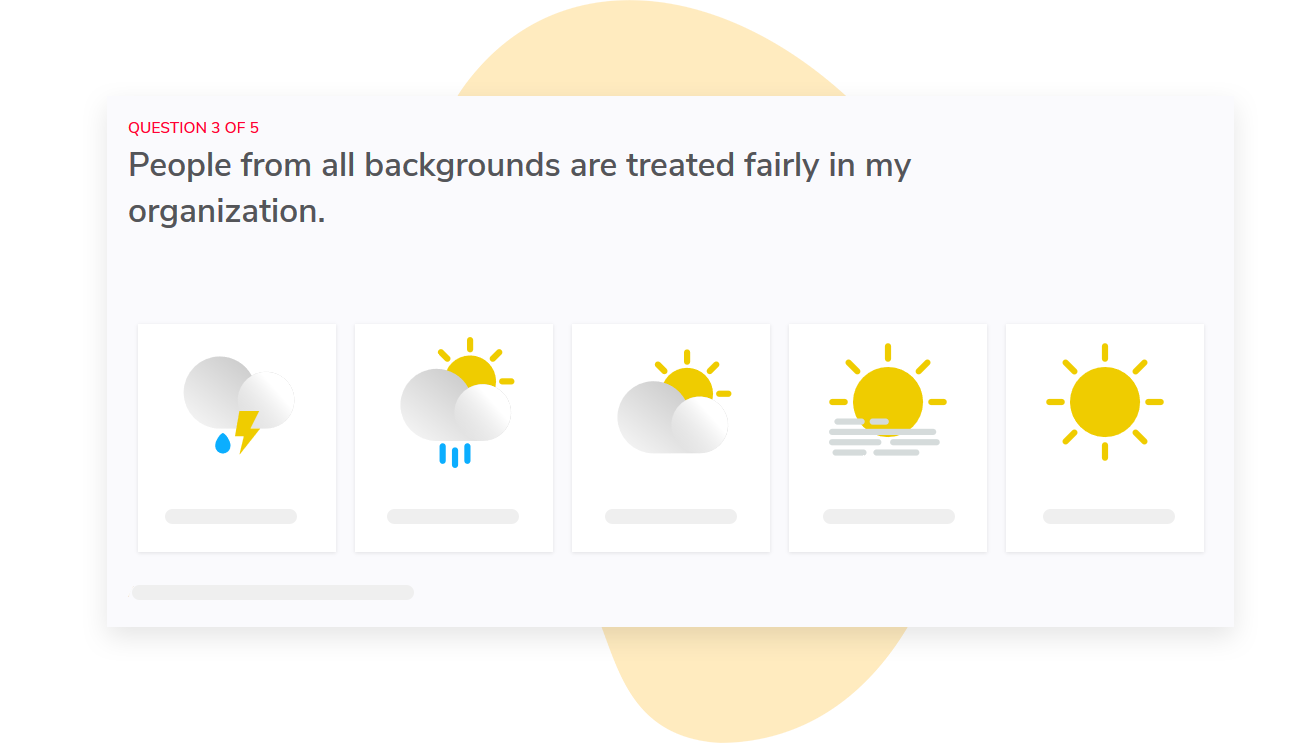
Sparkbay allows you to use recognition questions at the cadence of your choice, based on your budget cycle. You can customize the wording of the questions to match the exact recognition item you’re reviewing as part of your budget review. This ensures you’re monitoring the same items through your survey and financial analysis.
You can also customize your survey questions and dashboard display.
Once your recognition survey is complete, you can view your recognition survey results alongside your overall engagement score out of 10 to easily visualize whether recognition levels are impacting overall employee engagement.
On a large scale, it can be difficult to notice that a team which purchases awards every month is still not doing well. With Sparkbay’s team comparison, you can see your recognition and engagement results side-by-side, and compare those results across different teams.
Sparkbay doesn’t collect your employee spend data. You can upload the amount of money spent per employee, derived from your financial analysis, to each of your teams. Combining this information with Sparkbay’s team-level results allows you to build your 2-by-2.
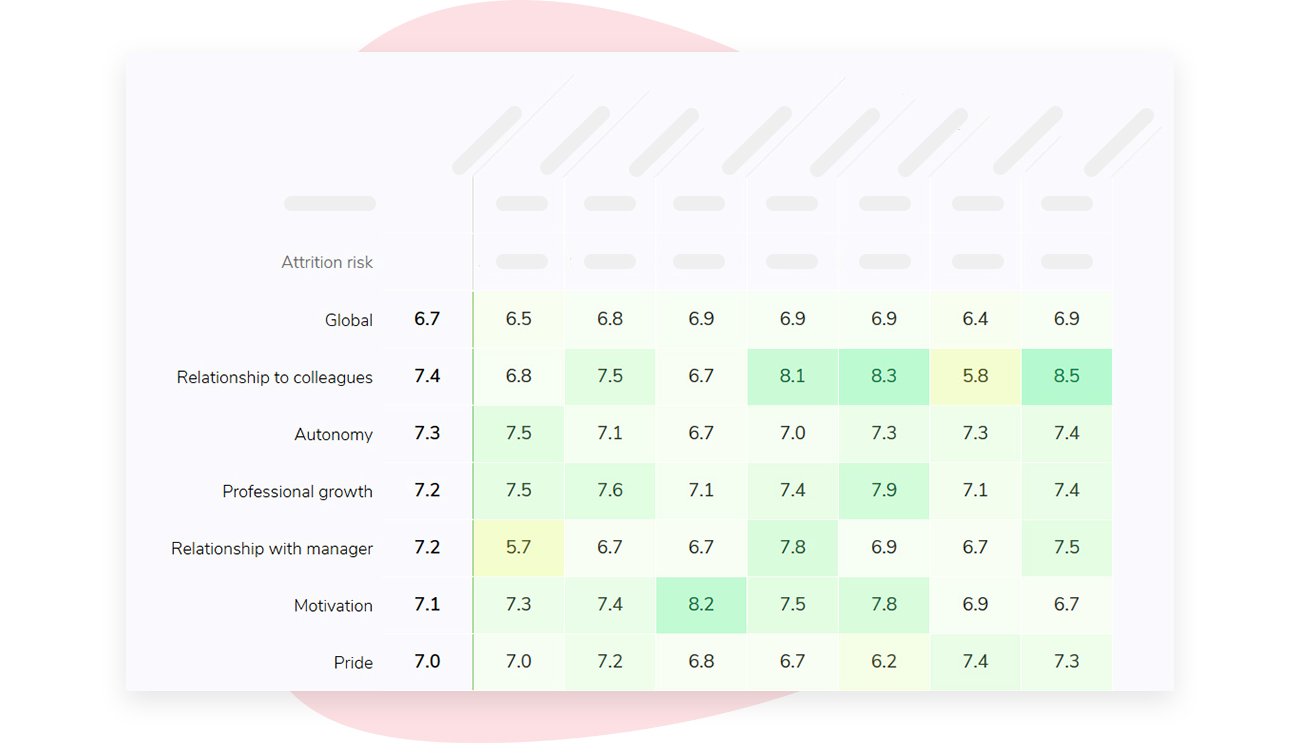
Report access is automatically mapped to the organization hierarchy, so each manager only sees reports for their teams.
To ensure confidentiality, any group with fewer than the minimum number of responses (5 by default, but customizable) will not have their results displayed to others.
If you’re interested in learning how Sparkbay can help you build a more engaged workforce, you can click here for a demo.
Present a budget case your cfo can test
When you request a budget, it’s better to present an organized set of expenses instead of a new request.
For instance, you could list how much you currently spend on XYZ, point out how much you found other departments are spending on recognition, and then present the estimated hours a manager or supervisor will spend on this.
This helps the Finance team understand that you’re not asking for "this much" money, but rather you’re requesting that the money you’re already spending be used in a better way.
You can then use your team matrix to illustrate how this money could be redistributed within the company.
Usually, you’ll be able to demonstrate that money is being spent on teams receiving rewards they don’t value while other teams have no better way to recognize their employees.
You may receive questions about anticipated second-order effects. It is understandable that Finance teams will be concerned about changes to existing (albeit uncoordinated) budgets. This may take away some managers’ favourite traditions, like a monthly team dinner.
They’ll also be curious how employee morale will be impacted if a team’s budget is reduced. Have a plan for this transition. What will replace a budget item that’s being eliminated?
How will you train managers to communicate this change?
And you’ll probably also hear questions about retention. This is where many recognition retention conversations lose credibility.
Don’t use external figures. Use the data your company uses to calculate vacancy, hiring, and ramp up costs for its own models.
Highlight how many regretted exits occurred due to reasons related to not feeling valued as an employee.
No, you’re not saying that lack of recognition caused all these regretted exits. But you also shouldn’t inflate your numbers.
You’ll want to point to published research that makes a link between recognition and retention.
But before you proceed, you need to recognize that none of this gives you an accurate estimate for how much your company will save due to improved retention.
This is why it’s so important to pitch a pilot instead of promising an ROI.
Carefully select pilot teams and comparison teams, based on recognition scores, teams of similar size, and similar functions.
Once you have your teams, record the baseline data and then commit to tracking any manager changes or restructures within either of those groups during your pilot program.
You’ll treat your recognition scores as your leading indicator. This allows you to measure your results during your pilot, because evaluating retention rates within one or two quarters is unlikely.
There’s nothing wrong with saying, We already spend money on recognition in several different budgets. We’d like to bring all of this together so we can test and evaluate a different approach for a few teams and then report on any changes.
This is an offer to deliver a report after a quarter rather than a promise of ROI.
A quick check on your budget
Can you answer the following questions without asking five departments for a spreadsheet?
- Do you know how much recognition costs in terms of cash, payroll awards, and manager hours?
- Can you compare how much money is spent on recognition to how well teams do in recognition scores?
- Do your employees feel like their specific, hard work is being recognized or are they mostly receiving prizes?
- Do you know how much of the total value of awards is going to the same few people?
- Can you justify the proposed budget based on your own results?
If you said no to the first two questions, consider conducting an audit and including a recognition survey item. You don’t need any new budget to do either of these.
Frequently asked questions
How much money should I spend on employee recognition?
There’s no straightforward answer. A better question is: "What’s an appropriate amount of money to spend per head on employee recognition?" for different populations. To answer this, you need to start somewhere.
We’d suggest starting with your current, and perhaps drastically underfunded, investment in recognition.
Of course, there’s some debate among employee recognition practitioners about how the recognition budget should be structured. Should every manager give a certain amount of money per head over a period of time? This method would guarantee recognition opportunities, but would limit access to centrally funded programs.
Central funding programs allow you to move money from teams with high recognition spend and low scores to teams that need more recognition support.
Should employee recognition be part of the compensation budget?
It depends. If you’re giving out cash spot awards through your payroll systems, then this is technically compensation (even if you don’t call it that). This means that you need to consider the implications.
Depending on your jurisdiction and plan definitions, this may impact your overtime calculation, bonus or pension calculations, or pay equity analysis. If you have a series of spot awards that skew towards one group, it could create pay equity issues that you’ll have to explain.
You do want to be mindful of this and keep these separate from cash awards, but also keep them in mind during your pay equity reviews.
Wherever you draw employee recognition money from, don’t draw it from an effort to paper over an unfair compensation structure. Your employees will notice.
I want to give my employees gift cards. Is this a good idea?
It can be. Just make sure to do your due diligence and find out what the tax implications for gift cards are in other countries where you operate.
You also want to make a decision ahead of time about whether you plan to gross up the amount so the employee receives the full value of the gift card after taxes. If you choose to do this it will impact your actual cost, since you’ll be paying out more money.
In addition, ensure you present the gift card with a clear communication about why you’re giving it. This way, the worker knows exactly what they’re being thanked for.
Finally, check in after some time to ensure that people actually value the gift cards you’re giving. If they’re not redeeming them or hardly redeeming them, you’ll know that they don’t really value that form of recognition.
How do I measure the ROI of employee recognition?
To measure the ROI of employee recognition, you need to conduct a matched team comparison. Once you’ve introduced your pilot, you need to start calculating several different data points including:$ Cost of recognition
Hours worked by managers Cost of item used for recognition Number of employees retained
These data points will help you calculate the true impact of your employee recognition programs. Importantly, you need to decide on these metrics before you start your pilot and begin applying your program. This way you aren’t cherry picking data to show whichever metric changed the most.
When you’re sharing your conclusions, include a disclaimer that outlines the limitations of the study. There may be limitations such as small sample sizes, changes in manager, the amount of time it takes for retention rates to change.
This will help you build out trusted data within your finance team rather than presenting them with suspect numbers.
How do I improve employee recognition with almost no budget?
You can do several things:
Train your managers to specifically call out what happened, how it’s impacted the team, and who it’s impacted and to do this within a specified time frame (e.g. within a few days)
Make it easier for individuals to distribute non-cash rewards to employees by nipping approval processes in the bud
Make it easier for peer employees to recognize employees, especially if they are deskless workers
Keep an eye on your recognition survey item to see if any of these actions are making a difference
If you’re interested in learning how Sparkbay can help you build a more engaged workforce, you can click here for a demo.