
Suppose your accounts payable specialist Priya catches a duplicate invoice worth $8,000 before it goes out for payment.
You post, "Great job!" in the team chat, but within an hour it’s buried under project updates.
While Priya knows what she did, her teammates do not. They aren’t aware of why that step in the process is important or what "good" looks like in her role.
When you implement controls, you don’t want anything to happen. If you don’t double pay an invoice, the thing that didn’t happen never shows up on your organization’s records for that day. And if nobody recognizes Priya’s work, it won’t show up on her file during a calibration exercise either.
This is where specific recognition is important. It reinforces the behavior for the person who did it while also signaling to everyone else where the standard is set.
Below, you’ll find a structure for writing recognition messages and 30 examples based on this structure.
We’ll also cover when to keep praise private instead of public, how to find the people you keep missing in your recognition efforts, and how to tell if your recognition efforts are landing.
Recognition messages that name the behavior and its impact, by situation
In this article
- Name the behavior, show the impact, say it soon
- Match the message to the person
- 30 recognition messages you can adapt
- Choose between public and private praise
- Back up your words when words aren’t enough
- Check who keeps getting missed
- Ask whether the recognition is landing
Identify the behavior you want to recognize, show the impact of the behavior, and deliver the message promptly
According to Gallup’s workplace research, only a minority of employees strongly agree that they were recognized for their work in the past seven days.
This is partly due to the fact that most formal recognition programs are event-based. You may have awards at the end of a quarter, recognize service anniversaries, or hold annual award ceremonies.
Despite being well-funded and well-run, these programs may not score well on that seven-day recognition metric because recognizing employees on a week-to-week basis is the responsibility of managers.
Plus, a constant stream of generic recognition statements like "Great job!" is not the solution. While it feels good in the moment, it doesn’t let employees know what specific behavior to repeat. And it doesn’t let onlookers understand what the expected standards of behavior are.
So if you want to deliver good employee recognition you need to identify the behavior you want to recognize, show the impact of the behavior, and deliver the message promptly.
For starters, be specific about the behavior you’re recognizing. Receiving a compliment that says, "You’re so reliable is nice, but it’s not something an employee can act on. On the other hand, You caught that duplicate invoice before we paid it" is a great recognition statement because it points to something the employee did that other employees can also strive to emulate.
These kinds of recognition statements can come in handy months down the line during promotion or calibration discussions. They offer usable evidence of an employee’s performance. This is more useful than a bunch of vague compliments that may also lose out to someone a senior leader remembers.
Next, talk about the impact of an employee’s behavior. This is a step that many people skip over, but it’s important because the person receiving the recognition might not realize how impactful their actions were.
Did the employee’s attention to detail save the regional team a day of rework? Did the customer service employee ensure a customer got an answer instead of being passed from one department to another? Make sure to highlight the impact of the employee’s behavior.
This turns a simple pat on the back into a teaching moment for the role.
Finally, deliver the recognition message promptly. This is more important than many managers realize, because receiving a message of appreciation too far out from a project or recognizing an employee right before performance reviews can make it seem like an attempt to soften the blow of bad news.
And receiving a message of appreciation right after a disappointing review can make a message feel like a consolation prize.
An easy rule of thumb is to recognize employees on the same day you observe them doing something that deserves recognition or within the same week for specific project milestones.
If it’s been too long, acknowledge that you’re late. Saying something like, I should’ve said this two weeks ago is better than pretending the moment just happened.
Notice the difference between these two messages:
"Thanks for all your hard work on the report."
"Thanks for checking the regional figures before we sent the report yesterday. You caught a mismatch that would’ve forced our managers to go back and redo their plans. Thanks for catching it."
Before you send a message of appreciation, run a quick test to see if you could send the exact same message to someone else on the team. If you could, then the message you’re sending isn’t really a message of recognition.
This is especially true when you’re recognizing work that’s maintenance-based activities like reconciliations, documentation, or clean handoffs.
These activities don’t have a start date or something that an employee can point to, so there’s rarely a natural moment to recognize these behaviors.
Match the message to the person
A message that one person appreciates may make another person uncomfortable.
In The 5 Languages of Appreciation in the Workplace, Gary Chapman and Paul White write that there are five ways people prefer to receive appreciation: words of affirmation, quality time, acts of service, tangible gifts, and appropriate physical touch. Their book is based on an earlier framework from Gary Chapman designed to help couples communicate better. While there isn’t much independent evidence to support the claim that matching recognition to someone’s "language" improves outcomes, there are genuine disagreements among practitioners about how much weight to give this advice. We think the best way to use this advice is to base a conversation on it.
Now, you may wonder what to do with the "physical touch" category in a large organization. Even if you have teams where a "high five" is the norm, considering this a formal part of a recognition framework introduces policy questions you don’t need.
That said, the other four categories are easily translatable. One person may appreciate receiving written notes of appreciation that they can keep and read back. Another person may value time with their manager to talk through how the project went and share success stories.
And another person would gladly trade any message of appreciation for someone finally fixing a client handoff that causes issues every week.
But how do you find out what your employee prefers?
Ask them! Have this question in your first-1:1 conversation with your employee: "When you’ve done good work, how do you like people to acknowledge it?" Make a note of the answer somewhere it’s accessible to the next manager.
This is where most organizations fall down - they don’t have an accessible place to record this information. So it lives in the old manager’s brain and gets lost in a reorg. If you haven’t had this conversation, pay attention to how your employees express appreciation for others.
Often people communicate appreciation in the same way they like to receive it, so this can be a useful hint.
Culture plays a role in how people perceive the intensity of messages as well. In The Culture Map, Erin Meyer explains how different cultures convey feedback with different levels of intensity. Some cultures tend to use superlatives as part of their everyday conversation, while others tend to downplay their conversation. So when someone who comes from a culture of downplaying receives a message of "You did an absolutely outstanding job!" they may view it as exaggerated and possibly a setup for a criticism.
So if you have teams spread out in different countries, it’s better to use detailed messages instead of superlatives. A specific message about what someone did, properly appreciated, is likely to be viewed as genuine in most cultures.
According to research from Glassdoor, many employees would stay longer at a company if their manager showed them more appreciation. Notice the phrase their manager. Employees attribute recognition and appreciation to the person they report to, not to a big, centralized program.
30 recognition messages you can adapt
Remember, these are sample messages. You don’t want to send these as are, but rather, use them as a guide to help develop your own messages.
Think about your specific situation. Sending a message that praises someone for something they didn’t do is actually worse than a plain thank you. People will notice and it will devalue the purpose of the specific recognition messages you send in the future.
Don’t forget to also consider which channels you want to send recognition messages through.
While most of these messages are written as words of affirmation, many would also work as offers of time or offers of practical help.
Use whatever the person has told you they value to decide how to best recognize them.
Delivering results
- 1. "Great job getting the revised plan out to all of the sites before the deadline. You made it so the local teams had time to ask any questions they had before they were expected to use it." This is a great message to send in an update to the team, if they’re comfortable with public recognition within their team. It also helps other teams understand that "getting things to us early enough to ask questions" is something they should strive for.
- 2. "Thank you for double-checking the final numbers against the source files and catching that error before they were sent to the client. We really appreciate you giving us a clean set of numbers to work off of." You could send this message directly to a recipient since it’s important to send recognition messages soon so everyone remembers the details.
- 3. "I appreciate how you kept your focus on the customer’s primary concern during that call and worked towards an actionable next step. We were able to walk away with a decision instead of another round of emails." Send this message the same day as the call.
- 4. "You did a great job delivering the launch on schedule while also ensuring that we stuck to the testing phase we agreed to. You made sure the support team had the answers they needed from day one."
Working across teams
- 5. "Thank you for walking the finance team through the new process when they got stuck. Thanks to your help they were able to complete their month end work without waiting for another meeting." Consider copying their manager on this message. Offering help to members of another team is often a task that doesn’t land in anyone’s objectives, so there’s a chance their manager may never hear about it.
- 6. "Thank you for fielding the customer questions while Maya finished up making that technical fix. It meant she could get the work done and still keep the customer up to speed." Send this message to both professionals since it’s likely the person who received help will get left out of the story.
- 7. "Thank you for asking the warehouse team to have a look over the plan before we signed off on it. They caught a potential delivery problem we missed." Share this message within the project group. Asking for another team’s input, especially late in the project, may feel like a delay. Your team may not want to do it if the only recognition for that are grumbles about the delay. Public recognition of this makes it safer for others to do the same.
- 8. Thank you for ensuring the presentation included all of the contributors that worked on the analysis. It made it clear to people outside of our team who they had to thank for their work. If they dislike the spotlight, it’s better to send a private note.
Taking ownership
- 9. Thanks for creating a cheat sheet for new hires to help them answer their own questions about access and minimize the number of calls to our team. It’s already making a difference. Share the cheat sheet with the recipient’s name on it. You don’t want people to share the document around and it become known as "something IT made."
- 10. "Thank you for following up on that customer issue, even though your role was complete. Your continued support means we caught the remaining issue before it turned into a complaint." Send this message directly so you can add context that makes this message credible. Without detail, it could sound like generic recognition.
- 11. "Thank you for figuring out how the team can speed up the approval process while keeping necessary checks in place. You’ve found a way for us to fast track routine requests." Offer time to chat so they can share how they accomplished this. People who figure out ways to streamline processes usually have more processes they’d like to streamline and are waiting for permission to do so.
Note: None of the messages above include recognition for staying late. If someone did put in extra hours, thank them for the outcome and then sort out your staffing issues.
Growing into new work
- 12. "Thanks for using the feedback from your last presentation to make it easier for the group to follow the numbers. We were happy to make a decision based on what we heard the first time." If the original feedback was given in a private session, keep this message private too. Publicly praising someone’s improvement opens everyone to questions about the original problems.
- 13. "Thanks for taking the time to learn how to use the reporting tool and creating an initial dashboard yourself. Now, our managers can easily check their numbers on their own without asking for a manual update." Follow up with a message asking what they’d like to learn to do next to turn this recognition into a development conversation.
- 14. "Thank you for successfully leading your first customer handoff. You made sure that all open issues had an owner, so the next team could pick things up smoothly." Send this soon after the handoff. If it’s their first time accomplishing this milestone, they’ll be in doubt of whether they did a good job.Receiving specific confirmation will let them know what they should repeat.
If someone is on a documented improvement plan, it’s important to carefully craft your recognition messages. Recognize the specific behavior they’re working on in the improvement plan, and do so accurately and without over-fluff. Sending a glowing general message creates mixed signals about where they stand and if they exit out of the improvement plan process later, those messages can be used against them if they don’t reflect the improvement plan.
Check with your employee relations team to understand how to handle these situations as different organizations may have different processes.
Sharing specialist knowledge
- 15. "Thank you for breaking down the policy change in a way that our site managers can use. You ensured they left the meeting with an understanding of what they’ll need to do differently." If they’d enjoy the spotlight, invite them to help you shape the next briefing. Many specialists appreciate more invite and influence as recognition.
- 16. "Thanks for showing the new analyst how to check the data herself instead of fixing the file for her. Now, she can handle it on her own." Ensure both professionals get recognized for this since teaching is a slower process than fixing in the moment.
- 17. Thanks for catching that contract wording that didn’t align with service delivery. Your review helped us get it corrected before the teams started using it. This could be a private note because the details may be sensitive for legal or commercial reasons.
Helping people settle in and speak up
- 18. "Your introduction to our new colleague and the people they’ll work with, as well as the run down of who does what, ensured they had someone to turn to during their first week." If they’d prefer something more low-key, you can mention your appreciation in a 1:1 chat. On the whole, informal onboarding support rarely finds its way into someone’s objectives and so doesn’t get recognized.
- 19. "Thank you for pausing the meeting to ask if the remote team had any questions. It was great to hear one of their concerns before we moved forward with a vote." Include this in your meeting follow-up. You want others to emulate this behaviour and they’ll likely only see it in your meeting follow-up.
- 20. "Thanks for keeping the meeting positive and productive when we had differing opinions on schedule timelines. You ensured everyone’s concerns were heard so that we could leave with a plan." This is best sent privately soon after the meeting. Sending this message publicly risks reopening the discussion or making the people who disagreed feel like the problem.
Getting through difficult work
- 21. "Thanks for keeping the handoffs clear while we went through a team role change. People knew where to take their urgent requests during a confusing few weeks." Keep this message private since the details of the restructure may be sensitive.
- 22. "Thank you for providing a clear answer to the customer when we knew we couldn’t meet their original date. Your follow up made it possible for us to agree on a new plan." Copy their manager on this message. Delivering bad news well is a senior skill and it’s good to have that on the record.
- 23. "Thank you for keeping the team updated on project delays, so we all knew which items to prioritize." If the workload is still unmanageable, consider pairing this with a practical way to help.
Research from McKinsey on why employees leave suggests a large share of departing employees don’t feel valued by their organization. If someone is surviving an unmanageable workload and you thank them for it with no plan to change things, you’re telling them this is the new normal.
Marking work anniversaries
- 24. "We appreciate all of the ways you’ve made our month close easier for each site during your time here. We’re especially thankful for the checklist you created and kept up to date." Instead of simply recognizing the number of years someone has been at your organization, recognize a specific thing they’ve done.
- 25. "Thanks for helping three incoming managers get up to speed on the team’s work. They still use the notes you gave them when they started."
Thanking a peer
- 26. "Thanks for reviewing my draft before the meeting and letting me know that I hadn’t answered this particular question. I was able to prepare a response for when it came up." Send this message directly or post it in a peer recognition channel.
- 27. "Thanks for showing me where to find older project decisions. I was able to finish customer reply without asking the team to redo work." A quick chat message is good.
- 28. "Thanks for covering questions while I was with the client. I was able to properly wrap up the call." Thank them directly and offer to return the favour!
These messages work upwardly as well. Saying "You’re a great boss" reads like flattery and most managers will take it that way.
On the other hand, "Thanks for blocking off that hour before the board deck so I could ask the questions I’d been sitting on" is different. This is feedback that tells them these types of behaviors are ones they should continue with. They rarely hear this kind of feedback from their direct reports.
Thanking a whole team
- 29. "Thank you to the team for sharing the change with site staff ahead of time. We appreciate the work of the people who ran the tests as well as the support members who rewrote the instructions for something people found confusing." Try to name every contributor that would be happy to be named in the message, otherwise all the credit will go to the person that presents the team’s work.
- 30. "I want to thank this team for keeping customers up to speed on the rise in demand instead of letting requests sit unanswered. I want to thank the support colleagues who handled the customer replies as well as the operations colleagues that helped resolve them."
Public or private?
Making a thank you public has the benefit of showing the team what "great work" looks like and giving others a chance to add their thanks. Public recognition also builds a shared memory that someone did a great job. People who are named in all hands messages often become the anecdotal examples quoted in promotion discussions.
This is one reason to be cautious about who you name in these messages.
On the other hand, not all individuals enjoy public praise, especially on a company-wide level. Someone who’s worked hard to improve after receiving challenging feedback may not want everyone to know they had a problem. And someone who’s been singled out for receiving praise in a team meeting for a joint deliverable may feel like their contribution has been erased.
If you’re unsure, consider sending a private thank you and then asking if they’d like to be mentioned publicly.
Similarly, consider the context of the deliverable or situation. A team win can be celebrated during a team meeting. A quiet act of kindness or support might be better appreciated as a direct message from you.
Neither of these is more sincere than the other.
The one downside of private recognition, that people rarely consider, is that there’s no paper trail. If the only evidence of someone’s excellent work is a chat message that their manager never saw, then there’s no record of that work when it’s time to discuss promotions.
So if you’re thanking someone on another team privately, consider whether you can copy their manager to keep a record of their work while keeping the recognition low key.
Finally, it’s important not to use someone’s personal circumstances to make your message more moving. You can praise someone on how they handled a handoff without sharing that they were dealing with illness, caregiving, or a bereavement. That’s not information that belongs to you to share.
And depending on the jurisdiction you operate in, that may create data protection concerns.
Back up your words with action
Saying nice things is not enough for some people.
For them, it means more when you celebrate a win together, fund a course they’ve been asking about for months, or take something off their overloaded plate.
Monetary rewards, points, and gifts are also a part of employee recognition, but they require more oversight than most programs give them. Criteria should be published, budgets should be visible, and tax implications that vary by country should be taken into consideration. If criteria aren’t published, people will assume favouritism whether there is an intention to be favoured or not.
If you give out an "employee of the month" award, for example, make it clear what the reason is for winning. If it’s not clear what the criteria are, people may assume it’s a rotation system and then nobody feels recognized, including the winner.
You also want to be wary of using flexible working as a reward. If employees have to earn the ability to work more flexibly by going above and beyond, you’ve turned something that many employees view as a baseline into a take-away perk.
This also creates a fairness issue among employees who can’t work flexibly at all, such as site, shift, and frontline employees. Their job type means they won’t be able to participate in this reward.
Finally, be aware of using employee recognition to cover up structural problems. If you keep recognizing an employee for going above and beyond, it’s worth checking whether their job description has changed. You don’t want to use employee recognition in place of a difficult conversation about levelling or pay.
Simply put, you don’t want to thank someone for work they should be getting paid for. The more they’re recognized for going above and beyond, the more evidence they have to take to an employer that will pay them for this work.
Identify who keeps getting missed
Recognition depends on what a manager can see. In huge organizations, this often means people working at headquarters, people in client-facing roles, and those who present their work to the company.
It’s easy to predict who gets missed from recognition: people who work remotely or on site, quieter employees, back-office teams, or employees with a different background, schedule, or working style than their manager. Managers tend to notice work that looks like their own. This is called affinity bias.
This can show up in recognition data before it shows up in promotion data.
How can you identify who has not been recognized?
Once you have your recognition data - either from a platform or pulled from channels from a team - look at the distribution of recognition. How many different roles or locations are within the recognition data? How much recognition is given to the top ten percent of recipients?
Are there small groups of people who only seem to recognize themselves? This reciprocal recognition can skew recognition data to show a lot of activity that doesn’t amount to much in terms of productivity.
Then, compare this to who actually did the work behind the scenes that led to these visible wins. This comparison can help you identify who’s being missed.
Avoid filling the gap by scheduling blanket recognition opportunities like a monthly shout out to each team. People can tell when everything is labelled "amazing" or when teams are recognized for work that’s not been done well. This undermines the value of recognition.
Similarly, if every message calls the work "incredible" or "incredible job", these words lose their meaning over time. Save these superlatives for when something truly deserves them and trust that the description of what happened is enough.
A better approach is gathering proof of contributions that you can’t see. Ask project leads who identified a problem early. Ask their peers who were able to unblock them this month.
These questions will often turn up answers that include people you wouldn’t have thought to include.
One last thing: don’t assume you know how someone wants to be recognized based on their demographic background. This can backfire, whether you assume they’re a representative of a group or you assume they want to stay under the radar. Some people want public recognition, others want a private conversation, and others want the entire team to be named.
The only way to know is to ask.
Finally, if you find that after months of messages, you keep hearing about the same people, take this as a data point about where you’re looking. It doesn’t necessarily mean these are the only people doing great things.
How Sparkbay can help you see whether your recognition reaches your teams
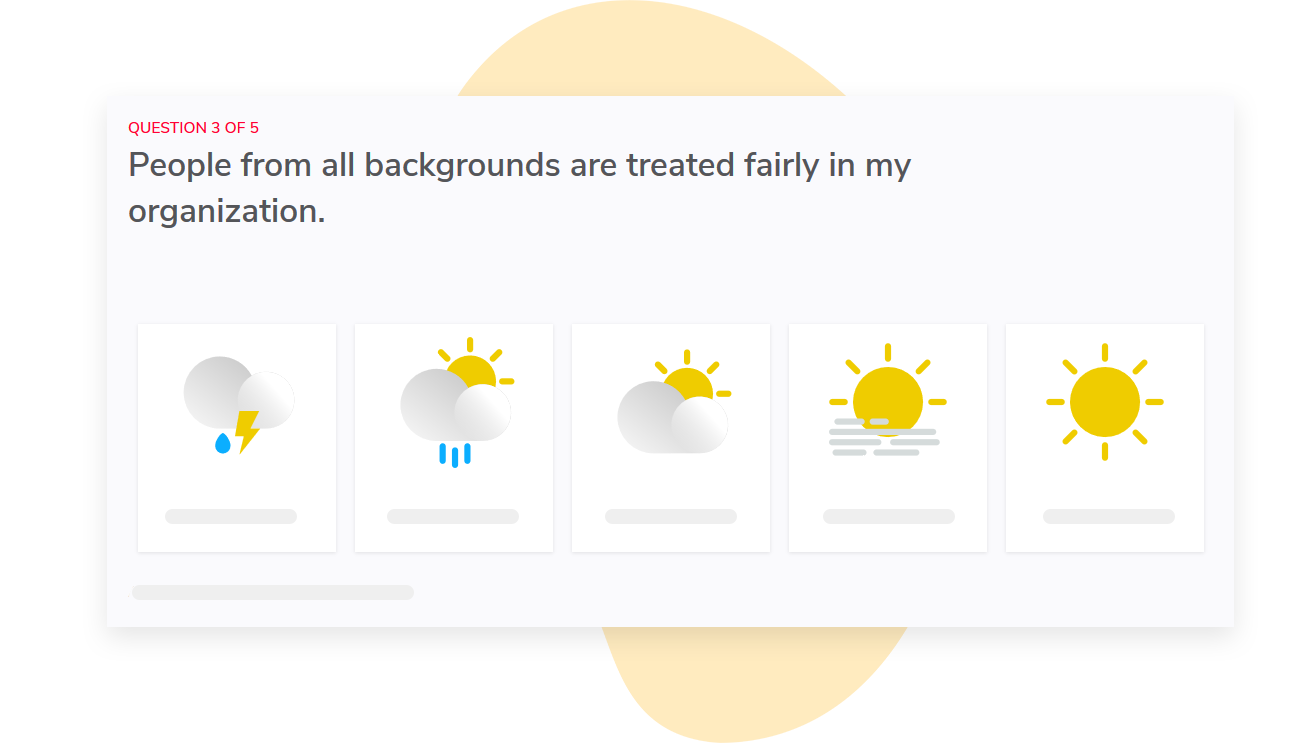
Do you want to know whether people feel recognized without just sending more messages? With Sparkbay you can add recognition questions to your regular employee surveys, and track whether people’s responses change after managers change how they recognize people.
Our survey questions and dashboards are fully customizable. This means you can ask recognition questions in your organization’s own language instead of using generic items.
You can also view your recognition results next to each team’s engagement score (out of 10) to better understand how recognition impacts team engagement.
In a large company, a good average engagement score may hide a team that rarely hears any recognition. Sparkbay allows you to compare results across groups (e.g., different departments or different managers) so you can see where the gaps are instead of telling everyone to work on sending more praise. If a group doesn’t meet the minimum number of responses (5 by default, but can be changed) their results will be hidden to protect anonymity.
For very small teams we recommend reporting at the next level up.
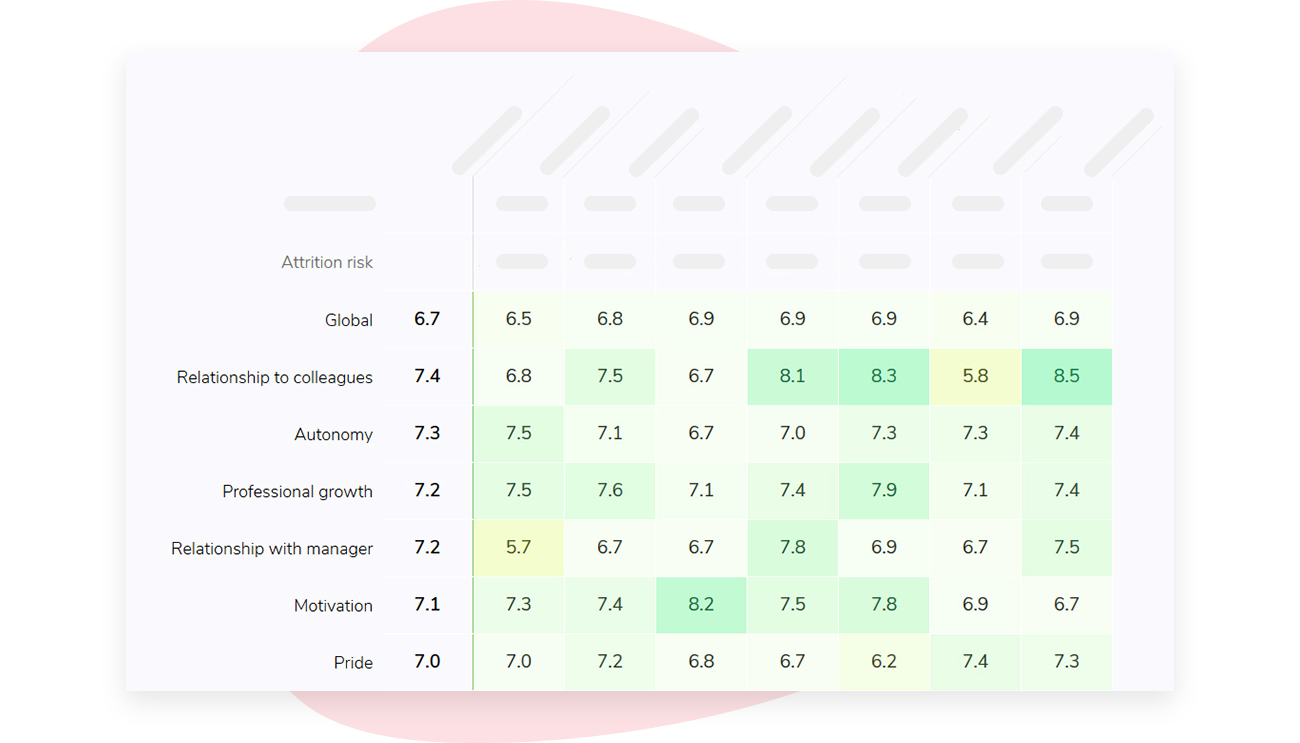
To protect the anonymity of your employees, each manager only sees the results of their teams. This is automatically mapped based on your org hierarchy.
If you’re interested in learning how Sparkbay can help you build a more engaged workforce, you can click here for a demo.
Ask whether the recognition is landing
At first glance, a busy peer shout-out channel may seem like a sign that everything’s hunky dory. But how do you know whether your employees are actually feeling recognized?
Are there people who don’t show up in this channel at all?
Ask your employees directly whether they’re feeling recognized through a pulse survey. For example, you might ask:
- "In the past two weeks, has someone recognized you for a specific contribution?"
- "Does recognition on your team feel fair?"
- "When you do good work, do people understand what you contributed?"
This will help you assess different aspects of your recognition program, including frequency, fairness, and visibility.
If you have high scores for frequency but low scores for fairness, this may indicate that the same people are being recognized while others are being left out. This could lead to a further conversation analyzing results based on teams, roles, or locations.
For instance, if one location is reporting a low score for fairness while the rest of the same team reports a high score, this may lead to a conversation with a specific manager.
On the other hand, if a team rates low on fairness across all locations, this may point to a more structural issue that you need to discuss that could be related to how work is divided up or who gets to present their work.
To understand the impact of changes within your recognition program, give yourself at least two survey cycles before evaluating the impact of a change.
In order to determine whether a change has been impactful, you want two consistent data points. One data point may just reflect a good or bad two weeks of work. Two consistent data points make it reasonable to assume that managers have actually altered their habits.
You can also compare your visibility scores to your frequency scores. If your frequency scores are high, but your visibility scores are low, it may mean that people are being recognized, but not for what they consider to be their true contribution. This may once again bring you back to the "Great job!" problem we discussed at the beginning of this article.
Once you’ve collected your results from your employees, share what you heard and what changes managers will make. Your employees need to see that their feedback leads to action. Staying silent after a survey is worse than not asking in the first place.
It erodes trust and lowers survey response rates.
For your next message, pick someone whose work you noticed but never named. Say what they did, why it made a difference, and say it today.
If you’re interested in learning how Sparkbay can help you build a more engaged workforce, you can click here for a demo.