Your anonymous employee feedback is not anonymous if your manager can figure out it’s you before you finish speaking your truth.
In Europe, companies have to ensure that their promise of anonymity holds up under GDPR. In addition, in many workplaces, there’s a works council that will want to understand exactly what can be done with the employee feedback tool, not just what you intend to do with it.
How to roll out an anonymous employee feedback tool in Europe while meeting GDPR rules and getting works council approval
What does "anonymous" mean under the GDPR?
Recital 26 says that GDPR does not apply to data if "it is not possible to identify a data subject by any means ‘reasonably likely to be used’ by the data controller or by another person to identify the data subject."
This means that if there is a possibility that the data controller can identify a data subject based on information they hold separately, the data is not anonymous. It is considered pseudonymous according to Article 4(5). And GDPR rules apply to it.
This consideration is important for most survey tools. These tools issue unique tokens in invitations, link responses to HRIS attributes, and keep track of which employees have completed the survey for the purpose of sending reminders.
This means from the data controller’s perspective, the data in the employee response is pseudonymous.
When data is exported only in an aggregated report - and the data controller ensures the data meets the aggregation threshold - the data is anonymous as long as people can’t identify individual responses by applying filters, comparisons, or time series analyses.
If you’re exporting data at the response level (even if you exclude names) then the data is not anonymous.
Ensure GDPR compliance before distributing the first invitation
Obtaining employee consent as a legal basis for data processing is rarely advisable. The European Data Protection Board’s consent guidelines state that due to the employer-employee power imbalance, consent is less likely to be freely given.
This is why most privacy teams rely on legitimate interests to conduct employee surveys. Using legitimate interests requires a documented balancing test and gives employees the right under Article 21 to object to data processing.
Determine whether you need to conduct a data protection impact assessment (DPIA)
Article 35 of the GDPR states that you only need to conduct a DPIA if your data processing activities are likely to result in high risk to data subjects. A typical engagement survey may not automatically result in high risk, but it’s a grey area.
According to the Article 29 Working Party’s (WP29) DPIA guidelines, employees are considered a vulnerable population within data subjects. If your data processing meets two or more of their outlined criteria, you may need to conduct a DPIA.
If your survey includes systematic evaluation, free-text comments, or enrichment using your HRIS, you may meet these criteria in most setups, which is why many privacy teams opt to conduct a DPIA as a precaution.
Minimize data collection and set data retention periods
The type of data you collect for your survey can impact your GDPR compliance risk more than the survey questions themselves. Each demographic attribute you pull from your HRIS increases the number of cells you need to report on and decreases the average cell size.
You should set a short retention period for any data used to link survey responses to individuals, such as tokens or completion tracking, and a longer, separate retention period for aggregate reports.
Involve employee representatives ahead of the rollout
Your company may be subject to works councils or other employee representative bodies.
Calling your tool a feedback survey does not mean you can side-step employee representatives’ rights.
Country-specific considerations
- Germany: §87(1)(6) BetrVG gives the works council co-determination rights over technical systems that are "intended" to collect information for monitoring behaviour or performance. The Federal Labour Court interprets "intended" to mean objectively capable of collecting this information, regardless of the employer’s reason for collecting it.
- France: French Labour Code requires the employer to inform and consult with the CSE before introducing any means or techniques for monitoring employees’ activities.
- The Netherlands: Article 27(1) of the WOR gives the works council consent rights over arrangements for processing employees’ personal data (point k) and over systems that can monitor employee attendance, behaviour or performance (point l).
Aim for a concrete review and approval
To give employee representatives a fair chance to judge your tool, show them a live version or demonstrate it using your own tenant/instance.
You want to ensure you receive approval from the works council on the following points:
- The minimum threshold that applies
- The exact filters used for reporting
- Confirmation that results will not be used for individual evaluation
- How comments will be handled
- A change control clause indicating which configuration changes will trigger re-negotiation
Ask the vendor to show you these 8 safeguards
Obtaining a security whitepaper from your survey vendor is helpful, but it’s even better to get access to a test tenant.
If you can load a sample organization into the tool (with several small teams, a few levels of reporting - let’s say 3 - and a few people with interesting attribute combinations), you can ask your vendor to walk you through the following items:
- Minimum response thresholds: Does the tool allow admins to set minimum response thresholds? More specifically, do they count the number of responses or the number of invitees? We’ve seen tools claim to have minimum response thresholds only to let teams of 5 invitees show results with only 2 responses. This defeats the entire purpose of minimum response thresholds.
- Filter protections: Can managers apply filters to reduce the number of survey participants to one? For example, if a participant can view a parent group and all but one of the remaining subgroups, can they calculate the results of that remaining subgroup by subtracting the results?
- Metadata handling: Does the survey tool store any metadata such as IP addresses, device-specific data, or the time at which a participant completed a specific question? Are invitation tokens linked to responses or can they be unlinked after the survey closes?
- Administrator access: What roles within your company and within the vendor company - including support staff impersonating a user - can access response-level records or response exports? Are these data access restricted, logged, and reviewable by you?
- Free-text controls: Can the survey tool hold comments until minimum response thresholds are met? What are the options for reviewing comments that mention colleagues or describe a recognizable incident?
- Data location and transfers: Where does each sub-processor store and access the data? For instance, a survey tool provider may have data stored in the EU, but if its parent company or support staff are US-based, that may result in a data transfer if those individuals access the data.
- The data processing agreement: Does your Article 28 data processing agreement specifically reference survey data? Does it include language about providing notice of changes to sub-processors with the ability to object, assistance with access and erasure requests, deletion of survey data at the end of the contract, and meaningful audit rights?
- Independent evidence: Can your vendor provide independent proof of security compliance? If they claim ISO 27001 compliance, ask for the certificate and what the certificate covers. You may also wish to obtain a copy of the Statement of Applicability. Ensure that the service you’re using from the vendor, in the hosting location you’re using, falls under the scope of certification.
How Sparkbay can help you check survey anonymity
With Sparkbay, you can set the minimum number of responses before results are shown.
The default setting is 5, and you can ask us to raise it if your works council or privacy team wants a stricter rule.
This gives employee representatives a concrete number that can be reviewed and changed to fit within an agreement.
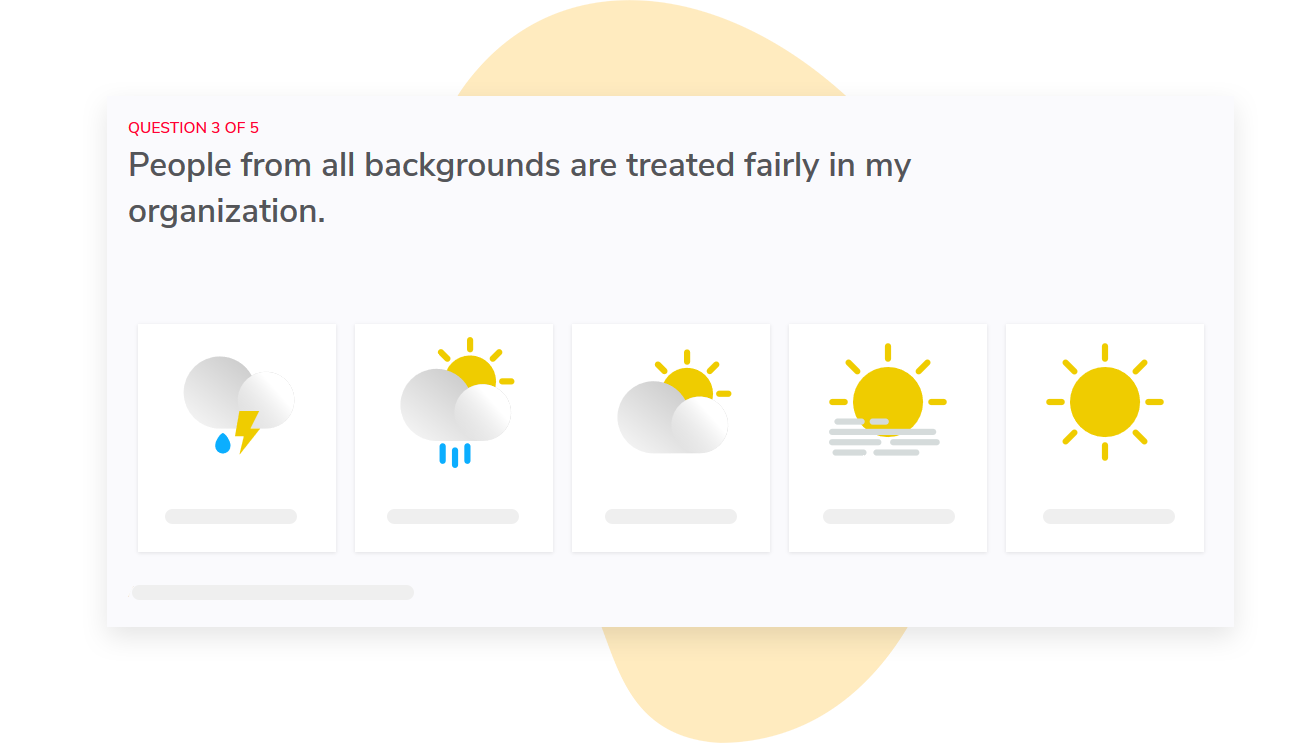
In large organizations, it’s also important to consider who can access which reports.
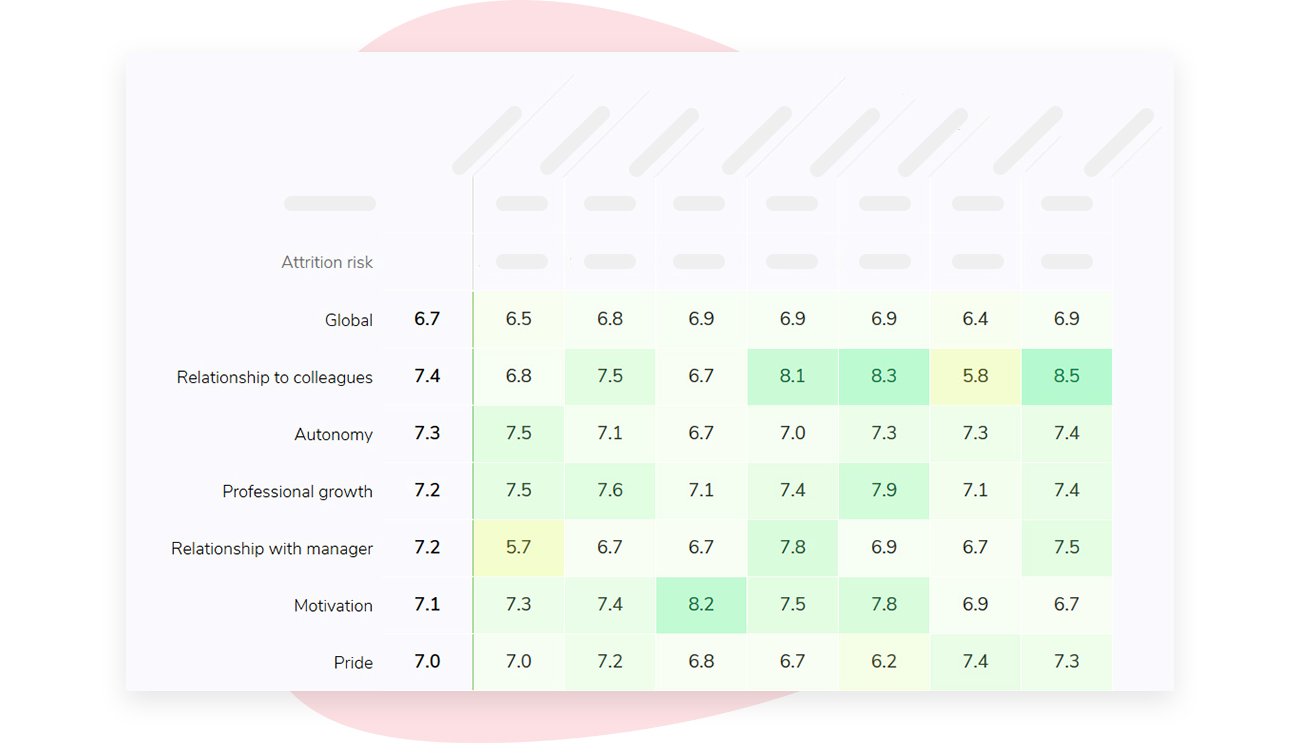
Sparkbay automatically maps report access based on your org hierarchy, so managers only have access to the reports of their own teams.
We also allow you to customize the wording and content of surveys and dashboards to ensure that the information employees and managers receive is consistent with what you’ve agreed to with employee representatives.
We’re ISO 27001 certified, but we still recommend that your team review the processing agreement, review the certification scope, and reach out to us to test your survey set up.
You may have local requirements that your employee representatives wish to discuss.
If you’re interested in learning how Sparkbay can help you build a more engaged workforce, you can click here for a demo.
If you’re interested in learning how Sparkbay can help you build a more engaged workforce, you can click here for a demo.