Imagine your team lead just told you that Maya, one of your best people, accepted a job somewhere else.
Nothing in Maya’s last talent review flagged her as a flight risk. Her rating was good, her plan was on file, and her manager had checked the "career conversation held" box.
But it turns out that Maya couldn’t see herself at this company in two years. She never asked, and no one told her.
Obviously, you can’t promise every employee a promotion. An external recruiter laid out three concrete options in one phone call. Internally, she had seen nothing.
Chances are, your organization already has a career development template. And chances are, most of those completed plans sit untouched between review cycles.
The key point: What makes a difference for employee retention is the conversation. The career development plan is just proof that the conversation happened.
In this article, we’ll cover the things you don’t find in your career development plan templates. We’ll discuss how to have growth conversations when you don’t have new titles to offer, how to keep career development plans alive between formal meetings, and how to manage expectations without making promises you can’t keep.
How to have career conversations when you don’t have promotions
- Make sure your employees understand that career development and career advancement are not the same thing
- What should you include in a career development plan?
- Have the conversation before the annual review
- Use anonymous growth feedback to open the door
- Offer growth even if you can’t offer a promotion
- Make commitments you can keep
- Develop an employee development plan using the 5 steps listed below
- What should I ask my team members during a 15-minute career conversation?
Make sure your employees understand that career development and career advancement are not the same thing
Line managers and employees often use the terms "career development" and "career advancement" interchangeably.
In reality, they’re different. And this is where many career conversations go off track.
When an employee says, "I want to grow", they may mean that they want more scope, they want to be at a higher level, they want more money, or they want to do different work.
Each of these objectives are different and different owners within the organization manage these objectives.
Your team may be able to offer an employee more scope. But leveling is dependent on calibration conversations and job architecture. Compensation decisions are determined by the compensation cycle.
Internal mobility (or choosing to let an employee move to a different role) impacts another manager’s headcount.
So if your employee asks you for more money and more money isn’t within your power to give them, you don’t want to resent them down the line because you offered them a stretch project when what they wanted was a pay raise.
Which brings us to the next point. The classic "career conversation" mistake is to offer a stretch project because it’s the only lever you as a manager have. You want to give the employee something, so you offer a project.
This isn’t really what the employee wanted.
To avoid this, ensure that you really understand what the employee is asking for. Is it more money? Is it a new level?
Is it more scope? Is it different work? Once you know what they’re truly asking for, be clear about when something is outside of your control.
You may be able to address another one of their concerns instead. According to data from the Pew Research Center, among people who had quit a job, they cited lack of advancement opportunities and low pay at similar rates.
This suggests that these two complaints may go hand in hand.
Finally, an "I want to grow/I want to advance" conversation may also reveal that there are people (often star performers) who simply say "I’m happy where I am" and genuinely mean it.
This isn’t a motivation problem, so avoid shoehorning these employees into a career development plan that’s designed for someone who wants to go somewhere.
Instead, their career development plan should focus two things: how to ensure their current role remains interesting to them and identifying scenarios that would make them interested in a change.
You can revisit this plan whenever their current role changes or their personal life changes rather than waiting for formal performance review cycles.
What should you include in a career development plan?
At minimum, your career development plan should include an area of the employee’s career they would like to explore, a specific next step they would like to accomplish, and a date for the next check-in.
Anything else is optional - and may even be harmful. The more fields there are to fill out, the easier it is for a manager or employee to put off updating their career development plan. Long templates also encourage people to make something up, rather than saying what they really want.
If you think it will take you longer to fill in the template than it will take you to have the conversation, remove some fields.
A useful strategy is to tie development goals to something that can be observed in the employee’s work. Say "I want to build my leadership skills" is pretty impossible to revisit and review with honesty. A more specific goal would be "Lead the next data quality review and present the findings to two department heads".
This goal has a deadline (the next data quality review) and a specified audience (two department heads) and a deliverable (presentation of the findings). It’s easy for both employee and manager to know whether this goal has been met.
It’s also useful to write down details that often get re-negotiated over coffee once things get busy. This includes the specific skill the development goal is meant to build, one or two milestones, and the support the employee is expecting whether that’s support from the manager’s time or a budget for a course.
Ensuring these details are written down means they don’t get casually traded away the first time a deadline is missed.
In addition, encourage employees to write in what success means to them. Often, what an employee views as success for their career development goal will be different than what their manager views as success for them getting to that "next role". This is an important conversation for both of them.
Finally, you want your employees to write the plan.
If you write their plan, it becomes your document. Your follow-up conversations may turn into nagging sessions: "Did you update your career development plan?"
If the employee writes the plan, but the manager adds comments and notes their commitments, then both sides have something to hold each other to at the next conversation.
One useful framework is Michael Driver and Kenneth Brousseau’s career concept model. It helps people understand what they may want to do over the course of their career. There are four major concepts that people fall into, according to this model:
Linear: Professionals advancing into progressively more senior roles within an organization.
Expert: Professionals increasing their mastery within a specific field.
Spiral: Professionals who switch to another field within the organization every several years that’s related to their original field.
Transitory: Professionals who frequently and significantly change the kind of work they do.
People often get the labels themselves confused, but they’re most useful when you see whether a given career development plan fits a person, and whether a person’s preferred career pattern fits with what your organization has to offer.
If an employee knows that the only rewarded career path in your career architecture is a linear advancement, and they want to follow an expert career path, they’ll quickly notice that there’s no career path for them.
Before you even sit down to create a career development plan, ask yourself honestly whether your organization has a senior, individual-contributor track that carries real weight, or if it exists only on paper?
Above all, avoid turning career plans into a chore. Don’t treat a career development plan as something to fill out instead of having a real conversation with your employees. And avoid making career development plans a check-the-box activity.
You want to ensure that the language of the career development plan is focused on development. If your employees view their career development plan as a list of their shortcomings, they’ll only view both the document and the conversation as something to quickly get through and not be honest in.
Culture is critical. If you house employee development plans in the same system as performance ratings or performance improvement notes, employees will feel the need to censor their exploratory career development ideas.
Keeping performance ratings and development plans in the same system may make it easier for you to run talent reviews. You may disagree with the suggestion to separate these systems as an HR practitioner, but be aware of the trade-off. If these systems are the same, be sure to communicate clearly to employees who will see their career development plan and when it will be used.
Have the conversation before the annual review
In Help Them Grow or Watch Them Go, Beverly Kaye and Julie Winkle Giulioni write that a string of short conversations is more helpful for career development than one long conversation.
They recommend that you structure these conversations around hindsight, foresight and insight. Keep in mind that all of these may not happen in a single conversation.
This is because when a busy quarter rolls around, standalone career development meetings are often the first meetings a manager cancels.
It’s far easier to manage 10 minutes of career development time during a one-on-one that you already have scheduled. And this can more easily happen on a regular basis.
A good idea is to spend the first 10 minutes of your one-on-one giving an employee an opportunity to think about their career development, so later in a meeting it isn’t pushed out due to day-to-day matters you need to cover.
In practice, this could mean discussing career development questions every second or third one-on-one with an employee. You could also schedule deeper career development discussions twice a year.
Hindsight: find out what has worked
As soon as you start thinking about career goals, it’s tempting to jump straight into a discussion of what roles and objectives your employee has. Instead, start by revisiting the past.
Ask your employee to identify projects they’ve been a part of that they’d happily do again. What did they like about this project? Was it the chance to solve a new problem?
Work directly with customers? Clean up a messy process? Try to gather three or four examples and then see if there’s a common theme.
You can also ask them what they’d like to spend less time on. This is where managers often confuse skill with enthusiasm. An employee might be fantastic at putting together executive reports, but they may be working hard to get this task off their plate.
If they agree to a career development plan that focuses on this skill, they may wind up feeling stuck.
As your employees answer, pay attention to what they value, not just the tasks they do. If they value long stretches of focused time, they’ll view a coordination-heavy role very differently than someone who gets energy from bringing people together. And this is true even if both roles represent promotions on paper.
Foresight: share what they can’t see yet
Your employee has the narrow view of their own work that no one else has. You have the view, no one else has, of how their work fits into everything else.
Discuss what other work your team expects to take on, what skills your team currently lacks, and roles that may pop up on other teams. Be clear about whether you’re talking about something that’s confirmed, something that’s likely, or something that’s a guess, so that an offhand remark doesn’t turn into an expectation.
Remember that your organization is bigger than your team. If your employee wants to work in a different function, connect them with the HR business partner or the internal mobility team instead of guessing.
Suppose your employee is a data analyst who wants to become a manager. You may not know when manager roles become available, but you may be able to tell her about an upcoming project that needs someone to lead other people’s work without actually having line responsibility. That information lets her find out if an important part of a manager’s job is something she likes before she puts all her career eggs in the basket of getting the manager title.
Even if it feels awkward, you need to be honest. You don’t want your employee to assume things, and then after a year of quietly disengaging to find out the role they want doesn’t exist on your team right now or won’t exist within the timeline they hoped for. Better to have the awkward conversation now.
The challenge of acquiring foresight is increasing. According to the World Economic Forum, a large share of job skills will change over a five-year period.
Insight: pick one thing to try
Once you’ve connected your employee’s hindsight with your foresight, it’s time to act.
As Herminia Ibarra puts it in Working Identity, people don’t often think their way into a new path. They act their way into it through a process of small experiments that let them see what they really enjoy.
So if an employee answers the dreaded question "Where do you see yourself in five years?" with "I don’t know," don’t try to force an answer. Instead, arrange for an experiment.
For example, if Maya wants to know if she likes influencing people when she doesn’t have authority over them, if six weeks on a data project that involves work across teams is possible. She’ll get a concrete answer rather than a vague idea of "broader exposure."
During your first one-on-one after the six weeks are up, you’ll want to ask Maya what she learned and whether she still wants to pursue this direction. If not, you can re-work the plan together.
It’s critical that no one views a "no" to this question as a failure. If Maya thinks she’s let you down by ruling out an option, she’s got a reason to keep telling you what you want to hear as opposed to honestly setting herself up to succeed.
Research from Gallup on employee engagement reveals that only a minority of employees strongly agree with the statement that "someone at work encourages my development."
Use anonymous growth feedback to open the door
What if no one brings up career concerns in their one-on-ones? This is often the case for the people who most need to have this conversation. They may already be interviewing and see no point in discussing this.
If your team survey has already highlighted weak growth scores, use this as an opportunity to start the conversation. Share the results with the entire team and invite people to speak with you one-on-one. Try to keep the conversation data-focused and avoid making assumptions about who said what.
Our team’s responses for the growth question were a bit lower than I’d like this quarter. I’d like to chat with all of you about the opportunities you’d like to have and what’s getting in the way.
This turns your development ambitions for the team into a team conversation, rather than a reaction to suspected dissatisfaction.
Plus, people won’t feel like they’re being singled out.
Of course, you won’t be able to tell what people want from a team score alone. Do they want promotion opportunities? Do they want to learn new skills?
Or do they want to do different work? Go into conversations with questions, and be prepared for people to raise something entirely different. People who feel they’re underpaid or overloaded often express this through the growth questions, since "I can’t see a future here" is the closest they can come to expressing how they feel.
As tempting as it is, try to avoid triangulation exercises to identify respondents. You don’t want to start filtering based on tenure or role to see if you can narrow down responses to two or three people in a small team. The purpose of anonymous feedback is to improve the team conversation, not to set up a private conversation with a suspect.
What if your team is too small to display results? Don’t lower your threshold. Instead, move up to the next level:
"Growth was our lowest-scoring area across the department. Does that match what you see?"
How you can use Sparkbay to know when it’s time to talk about career growth
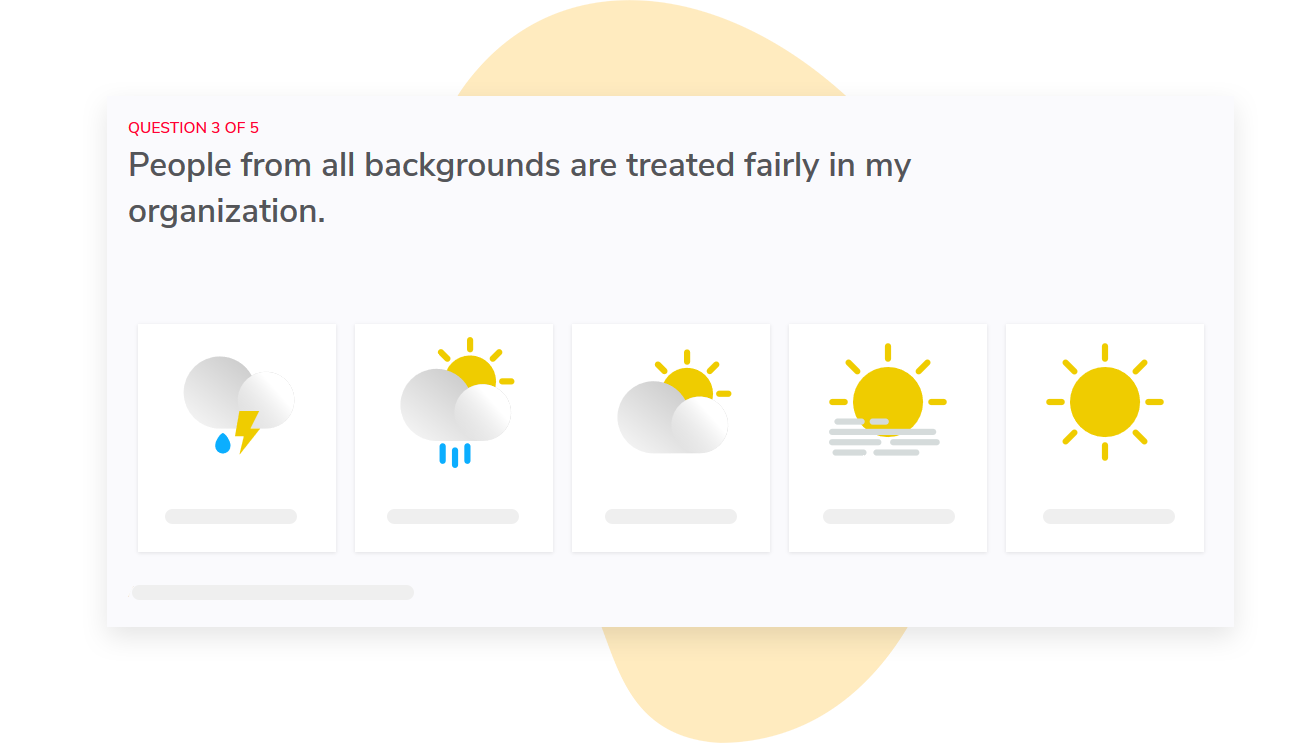
In Sparkbay, you can customize your growth questions to align with your organization’s language and run them as regular pulses. This lets you see whether a team’s responses to these questions improve once their manager starts having these conversations.
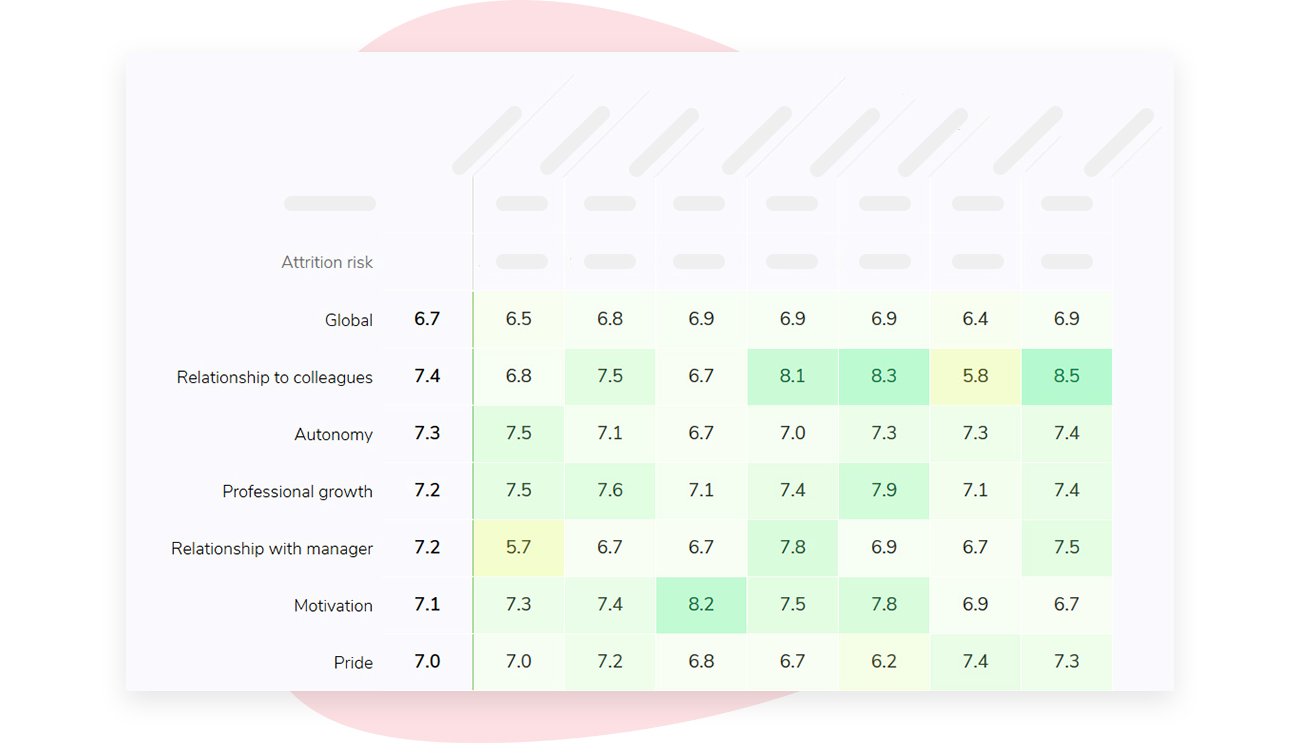
You can also compare results across teams to see where people feel they have the least room to grow, so you can prioritize support for those managers. Access to reports follows the org hierarchy, so each manager only sees results for their own teams. To protect employee anonymity, results are hidden if there aren’t enough responses.
You can change this setting, but the threshold is 5 by default.
If you’re interested in learning how Sparkbay can help you build a more engaged workforce, you can click here for a demo.
Offer growth even if you can’t offer a promotion
In some teams, there are very few senior roles.
Or maybe there isn’t the headcount for someone who’s clearly ready for a step up.
So how do you deal with this?
You could try to paper over the issues, but this isn’t ideal.
Your best people often have a better grasp of the headcount situation than you think. Saying things like, "When things open up..." take away your credibility with the people you most want to keep.
So what can you do instead? There are a few options that work well when you can’t offer a promotion.
You just have to find the right option based on the kind of "I want to grow" you’re hearing:
A lateral move for someone who says, "I want to understand the rest of the business."
Growing in place for someone who says, "I want to go deeper in what I already do." Of course, this needs to be more than just doing the same thing, but better. There needs to be a real change in what the person does. This could be ownership of a specific domain or decision rights or something that makes them the go-to person for other teams.
Lateral moves can help people develop a more diverse set of skills
A lateral move provides an opportunity for people to see areas of the business they may never get an opportunity to see otherwise.
Lateral moves are also where talent hoarding has the biggest impact.
If your mobility policy allows managers to quietly discourage people from moving internally, people will learn that the only way to explore a new opportunity is externally.
From the losing manager’s perspective this is entirely rational.
They’ve lost a valuable team member, often without a backfill, and they don’t get any credit for allowing that person to move on.
Changing what managers get credit for is one way to address this. In some organizations, internal moves out of a team are considered a positive in manager scorecards or talent reviews. Plus, they may also get a commitment to a faster backfill.
When that happens, managers start to view internal moves as a talent export rather than talent attrition.
Suppose an analyst wants to grow by understanding customers better. You could offer a time-boxed opportunity to join a customer-facing team to deliver a specific project.
This allows the analyst to test their interest levels in a new role without making a full commitment. At the end of the experience, their fresh insights will still be of value to their home team.
Of course, before you make this offer, you need to agree on the terms of this engagement. What is the objective? How long will this experience last?
Who will cover the analyst’s work in their home team? And what happens if the receiving team wants to keep the analyst on beyond that period?
The last question is the most important one. Because this chance easily turns into an audition for a role that may never be approved.
Suppose a requisition opens two months into the trial and the analyst applies.
Sooner or later someone will question whether the recruitment process was truly open, given that the analyst had an obvious head start.
If you want people who take part in these trials to be able to compete for positions without individuals questioning the legitimacy of that process, you’ll need to bring HR into discussions before the trial starts.
You’ll need to decide whether experience from that trial will be considered in the selection process and communicate that appropriately to everyone involved.
Trials and lateral moves create the same fairness issue as offering them quietly to a favorite.
So if you’re advertising trials or lateral moves, you want to go public with it too.
Make commitments you can keep
When a strong performer is "next in line" for a job, it feels generous to tell them.
But it’s important to understand how they will interpret this statement. They will likely view it as a commitment.
And if they share the information with others, it could lead to assumptions about who’s on the same slate for that position.
Instead, consider saying something like, I can give you the opportunity to lead this project and work with you to prepare for an interview for a senior role. I can’t promise when a role will open up or who that role will go to.
It doesn’t sound as warm, but it gives a candidate something real to work with. At the same time, it protects you if the succession decision is made in a room you’re not in.
There is disagreement among practitioners about whether it’s a good idea to tell people they’re on a succession slate.
Some believe this is a good retention tool. Others think it leads to entitlement and makes it hard for managers to deliver a "no" down the road.
Whatever your organization decides, it’s important to know what the policy is, so it can be communicated to managers.
During your calibration discussions, ask managers what they have already told their candidates. You’ll often discover that your policy has been ignored.
Once you’re out of a formal conversation, always write down what you’ve each agreed to do, what support the employee can expect from you, and when the next discussion will be.
Avoid adding any possible promotion to the list of deliverables.
Anything you promise, or even hint at, should exist in your own task list as well as the employee’s development plan.
If you said you’d make an introduction, for instance, make it this week. If a project you discussed is cancelled, keep the employee in the loop before hearing it through the grapevine and think about presenting an alternative.
If you’ve already made a promise you can’t keep - perhaps due to a reorganization or because someone overruled you - address it yourself.
Acknowledge that you made a commitment, explain what changed (without placing blame on others), and highlight what you can still offer.
It’s better to address the issue than to wait for them to bring it up. If they have to raise it, they’ll remember your silence long after they forget the reasons for the change.
Career development is one of the top reasons people quit, according to Work Institute retention research.
Develop an employee development plan using the 5 steps listed below
How do you start an employee development plan with someone who doesn’t have a concrete goal in mind?
Kick things off by identifying potential work opportunities. Your employee may not be able to name a target destination role, but they should be able to figure out which projects they would happily revisit.
Keep in mind, you don’t need to identify all the possible paths someone could take. You just need something specific enough to anchor your next conversation.
- Determine how your employee’s interests align with upcoming work: Ask your employee what tasks excite them and which ones exhaust them. Pay close attention to when they tell you they’re good at something, but would like to stop doing it. This is often where an employee development plan goes off track. Then tell your employee about what you know to be coming down the pipeline. Is a certain project confirmed? Likely? Something you’re trying to reel in? Write all this down and see where their interests line up. The rest of your plan will pivot around these aligned interests. If there’s no overlap, your employee development plan may honestly direct them to opportunities elsewhere.
- Determine whether your employee needs to plug a skill gap or access gap: What is one or two capabilities your employee needs to reach the level they want to be at? If it’s a codified piece of knowledge, like a certification or a technical method, it’s reasonable to ask for a course. But if it’s something like judgement, influence, or ownership of work, these are skills people learn by being given real decision-making power. Before agreeing to any course, check who currently makes decisions in this area and whether they’d be willing to allow your employee to make a decision. There’s a very common trap here. Managers approve employees for training when what they really need is a different role or different level of access to decision making. It’s just easier to approve a training and everyone understands that the real need has been parked.
- Write a goal that ties successfully completed course to an outcome: When you use the SMART objective criteria, you should aim for more than just passing the test. Think about what the completed goal will produce and who will see it. What’s the specific artifact that will be produced by this goal? Who, other than you, will see it? "Increase your visibility on the team" doesn’t pass this test. "Present the pilot findings at the next month’s team meeting" does. The goal itself is a great way for the employee to showcase their success when making a promotion case or putting together their CV, depending on which direction their career takes. But your goal itself should not imply that your employee must get a promotion: Because there are no guarantees of a promotion within the company at all times, and if there is a promotion, it may not be the right fit.
- Fund your employee’s development by securing key deliverables: "I don’t have time to work on a development project, I have too much to do." You don’t want this to be the response when your employee wants to embark on their development plan, so help them put it in their calendar by scheduling the project, making the necessary introductions, and blocking out time for their learning. And then ask them what they can move in their workload to make space for this. They should be able to communicate that to their stakeholders. You don’t want them to be the one to absorb that cost, as that implies all employee development happens on their time. If nothing is movable within their workload, you’ll need to scale back so the original plan is achievable.
- Check in to review and discuss your employee’s development: During your check-in discussions, ask your employee questions like "What did you try? What did you learn? Do you still feel this is the right direction for you?." These conversations are more important than whether all boxes are ticked. If the employee development plan needs to change, make a note of why it changed. Did your employee’s interests change or did the business change? Keeping track of this review history can be helpful over time to see if your employee is navigating their career through deliberate exploration or if they’re reacting to business changes. If there’s a lot of business driven changes (for example, projects keep getting cancelled or there’s no more time for learning), that’s a signal that you’ve got a team that can’t afford to sponsor employee development (and that’s something you can act on during talent reviews).
Employee development plans do not have to be statis and polished documents. They should be living and breathing documents that reflect the most current objectives for an employee. If your HR department requires some sort of metric, then track how recently employee development plans were updated or how many employee development plans are past their check-in date.
That way, you don’t create a meaningless completion rate that only encourages people to create - and then disregard - employee development plans.
What should I ask my team members during a 15-minute career conversation?
Even a short career conversation can help your team member get anywhere on their career path.
Hindsight questions
- "What work would you like to do again?"
- "What would you rather NOT do, even if you’re good at it?"
Foresight questions
- "Are there any changes in our team’s work that you’re interested in?"
After they answer, share one change that they likely haven’t heard about yet.
Insight questions
- "What’s one thing you’d like to try before our next check-in? How will I know that it’s worth continuing?"
If you suspect the real issue isn’t about growth, ask this, too:
"If you could change one thing about your job tomorrow, what would it be?"
This will help you understand if you’re dealing with a development question, pay question or workload question - and which of those you can actually act on.
If you’re interested in learning how Sparkbay can help you build a more engaged workforce, you can click here for a demo.