In Love ‘Em or Lose ‘Em, Beverly Kaye and Sharon Jordan-Evans write that the key to retaining great employees is finding out what matters to them before they leave. Unfortunately, too many organizations focus on understanding employees through exit interviews, instead of using their time and energy to learn more about the people who are still on their teams.
You probably already know that replacing employees is expensive. What you may not know is that the cost of replacement extends beyond the employee who leaves.
Regrettable attrition tends to cluster. If someone leaves a small team, it impacts the employee(s) who remain by increasing their workload while also influencing their perception of how normal it is to leave the company.
Before digging into the data, make sure there’s collective buy-in on what constitutes "regrettable" turnover. Preferably, this happens before the data collection process. If managers take a stab at classifying outgoing employees after the fact, you may find all the losses under a less-than-stellar manager are labelled "not a big loss" - meaning the data is used to shield those managers from scrutiny.
Keep in mind that pay is important, and if you’re not offering market rates for a specific role, none of the strategies on this list will make up for it.
That said, if your organization offers market rates, pay becomes more a threshold than a lever. Once employees feel they’re being compensated fairly, they aren’t going to be lured away by promises of a better paycheck. Instead, they’ll focus on other things.
And no amount of money will fix a manager who never checks in with their employees. And no ping-pong table will offer workers room to grow.
The good news? Many of the strategies we outline below are cheaper than a counteroffer and most can be piloted within a single team before rolling out at an organization-wide level.
Here are 15 ways to give employees more say over their time, their careers and the work they do. These should be treated as a menu of options. You’ll want to focus on two or three strategies that you feel best address the areas of improvement your data points to.
Want a quick way to prioritize strategies from this list?
If you notice most of your turnover is within the first year, you probably need to focus on your hiring and onboarding process before you worry about anything on this list.
If most of your turnover happens after two to four years at a company, your growth section (ideas 4 to 7) is probably where you’ll want to focus.
And if you notice turnover issues related to specific managers, you’ll want to prioritize stay interviews and skip-level conversations.
And if your exit interviews emphasize issues related to work hours and burnout, you’ll want to start by looking at the clock.
After sharing this list, we’ll also walk you through how to pilot these strategies properly. It’s important to capture a baseline, have a comparison group and have decision rules established upfront.
Creative, low-cost employee retention ideas and how to use pulse surveys to see which ones actually reduce turnover
Rethink the clock
1. enable employees to design their own week
Allow employees and teams to set a small block of anchor hours around the times they really need to overlap with other team members (e.g. handoffs, standups, client windows).
Outside of these anchor hours, employees can arrange their week how they want.
Anchor hours should be set at the team level, not the entire company level. A company-wide core window is often set based on a central headquarters team’s schedule rather than where dependencies lie.
Figuring out what "flexibility" looks like for shift workers and frontline employees can be a bit more challenging. They may not be able to enjoy "design your week" flexibility.
However, they can enjoy flexibility in other ways such as self-scheduling, or swapping shifts without manager sign-off.
They may also benefit from a rota that is distributed further in advance than is current practice.
Receiving a schedule only two days in advance can make it difficult for workers to plan their childcare, second jobs, or study.
In a randomized study of hybrid working, researchers found that providing employees more flexibility made them less likely to quit.
So even a limited element of flexibility can be beneficial.
2. provide a sabbatical worth waiting for
A paid sabbatical after employees hit a certain tenure milestone provides a real break for long-time employees.
Use your tenure data to select an appropriate tenure milestone. If your tenure analysis shows people tend to leave around a particular anniversary, then setting a milestone that’s just beyond that one offers people a real incentive to stick around.
Publish the length of the sabbatical and the rules for eligibility. If employees have to negotiate individually with managers, whoever has the best-connected boss has an advantage.
Once you’ve established how you’re going to cover the work of an employee on a sabbatical, trust your cover and try to avoid keeping employees on-call during their sabbatical.
Treat your cover as a formal acting opportunity with a defined scope. This is a great way for your organization to test its succession planning.
Opinions vary in the practitioner community about whether to include commitments about returning to work in the sabbatical or clawbacks.
While these protect an organization’s investment, they can also signal a lack of trust. And some argue that if people choose to resign after a sabbatical, the organization needs to rethink its purpose for the sabbatical.
Sabbaticals are not the cure for an unreasonable workload.
3. experiment with a shorter workweek
You don’t need to make an organization-wide declaration to start experimenting with a four-day work week. Introducing a shorter work week can start with one team, so long as you can measure that team’s output in ways that don’t rely on hours worked as a proxy.
You could experiment with summer Fridays or a shared vacation week. These lower-risk experiments can also give you a sense of how enthusiastic people are for time off, even if it doesn’t teach you much about redesigning work.
Before you reduce the hours in the work week, decide what work the team will no longer do. This could include recurring meetings, status report writing, or low-value approval activities.
Otherwise, you risk people trying to simulate what they did in a five-day week over four days.
For customer-facing teams it may be better to stagger everyone’s day off instead of closing up shop every Friday.
In a large-scale experiment on the four-day work week, most of the employers that participated chose to continue using the four-day work week after the trial ended, according to an evaluation by Autonomy.
But it’s important to understand that these participating organizations volunteered to take part in the study, and so the data shows that the four-day work week model worked in environments where leaders wanted it to work.
Grow your employees so you don’t lose them
4. build an internal talent marketplace
Recruit employees for short, scoped projects in other parts of the organization. An analyst can spend 6 weeks working with a product team. An employee in customer service can lend their expertise to redesign the onboarding process.
In an internal talent marketplace, employees can test a new path in the company without formally applying for an internal job.
This matters, because many people won’t apply for internal jobs if there’s a chance their current manager will see them rejected.
Talent hoarding within departments can also make it difficult for employees to move within the company.
If you create policies that encourage managers to work with employees on the timing of a move, but prevent them from vetoing a move, you can overcome these challenges.
You should also incentivize managers to hire employees to their team objectives. For instance, you can incentivize a manager to account for the fact an employee has outgrown their team.
Research from LinkedIn demonstrates that internal mobility is linked to longer employee tenure.
As Reid Hoffman, Ben Casnocha and Chris Yeh suggest in The Alliance, companies should view these stretches of work or "tours of duty" as mutual commitments with a clear end point and something employees can take with them.
5. conduct stay interviews to preempt a search
Ask your people what makes them want to stay, what’s wearing them down, and what would make them take a recruiter’s call.
Your manager can incorporate this into a regular check-in or conversation.
Keep this conversation different from conversations about performance or compensation, so employees don’t feel like they have to performance manage their responses.
Stay interviews should happen after known trigger events. These include situations like not receiving a promotion, a reorganization, or a change of manager.
During these conversations, listen for things the team can act on. For instance, an employee may want access to stretch projects, or an employee may feel like they can’t focus with their meeting schedule.
If an employee raises a problem you can’t fix, say so. If you promise a change and then don’t deliver, you’ll undermine your future stay interviews.
You’ll also want to be mindful of blind spots. If the problem with an employee’s experience is their manager, that manager’s stay interview may not be the best way to identify that problem.
A skip level conversation might be more helpful, as might highlighting themes gathered across teams at the HR level.
6. try reverse mentoring
Pair a junior employee with a senior leader to answer a specific question the leader can’t answer from their vantage point.
For example, the senior leader can use this relationship to understand how a process on the front lines actually works or why employees who’ve recently joined the organization aren’t using a service the company invested in.
A specific question is better than a vague challenge to the junior employee to explain "what younger people think".
In these pairs, it’s important to create a dynamic where both people feel free to set the agenda. The junior employee shouldn’t feel like they’re speaking for an entire generation of employees.
At the same time, because of the power dynamic, the junior employee will be inclined to filter any negative feedback. It’s critical for the senior leader to reward candour in a clear way, ideally by demonstrating changes they make as a result of listening.
On the junior employee side, a key advantage of this relationship is simply having the relationship.
A senior leader in the loop about their work is closer to a sponsor than any formal programs might be.
7. give people a learning budget with room to choose
Give your employees a learning budget that they can use to take courses, attend conferences, or get certifications.
These budgets should include learning outside of their current job.
At the same time, track how people use that money. A learning budget for skills building for an internal move offers a very different return on investment than a budget that’s primarily focused on people’s careers outside your company.
Individual learning budgets are also impacted by how easy it is to get approval. If the process is more than filling out a form and waiting a day, people forget or abandon the project.
Plus, complicated processes skew use of learning budgets toward people who already have confidence in themselves, have spare time in the evenings, and have supportive managers.
Another key point about learning budgets is that the process of approval should be simple, but the employee should be allowed to conduct the learning during their paid work time.
It’s also important to measure the uptake of these budgets based on role and site within the larger company.
Finally, while learning budgets can include repayment clauses if employees get certain certifications, there’s a grey area here. Requiring repayment protects the company’s investment, but it also sends a message that the company expects the employee to leave.
Companies should take note that research based on employee survey data done by Deloitte has found that opportunities to learn and grow are an important factor when gauging employees’ career choice.
Make recognition feel real
8. give employees a chance to recognize their peers
Colleagues often notice things that a manager may not. Give them an opportunity to recognize someone who helped them solve a difficult problem or pick up the slack over a busy week.
Shout-outs are best when they are specific. A specific shout-out that explains what the person did and what it allowed to happen is a great way to show you understood the work, not just noticed it.
For bigger contributions, you may want to give employees an opportunity to nominate someone for a spot bonus.
It’s also worth keeping an eye on who gets recognized. On your own, you may not notice that people in more visible roles or more visible teams are receiving the bulk of the recognition.
For instance, in companies with large client-facing or HQ-based teams, recognized employees may trend that way.
Similarly, you could create a peer-to-peer recognition program only to realize colleagues are simply recognizing each other.
You’ll also want to pay attention to employees who aren’t being recognized at all. This could be a subtle flight risk sign. Cross-check your data on employee recognition with your employee survey data.
Research from Gallup and Workhuman shows that meaningful employee recognition experiences are linked to a lower employee turnover.
At the same time, you don’t want to inundate your employees with meaningless badges they receive automatically through a digital platform.
9. recognize the milestones that are important to the employee
Some employees may want to be publicly recognized for completing their first big client call, while others may prefer for their manager to quietly recognize a challenging project they completed.
Ask employees what they prefer during your onboarding process or after they’ve switched roles within your organization. This information will be stored in your HRIS, so in the event of a new manager, that preference is honored.
Milestones like "completed first project as project lead," "came back after extended leave," or "stood by a project that eventually failed" are easy to overlook, as they don’t have specific start or end dates.
This also applies to personal milestones. Don’t assume an employee wants to share their birthday or other personal news with their colleagues. A well-intentioned celebration may reveal something an employee wanted to keep private.
10. recognize employees by name
When it makes sense based on their roles, allow employees to present their projects themselves to leaders and clients.
When you’re discussing a project, make sure you recognize the person or people who actually did the work. Senior leaders recognize which employees are associated with which projects and activities. Their memory of these associations impacts who they select for bigger roles.
That said, managers can absolutely continue speaking on behalf of their team while also creating opportunities for employees to take the spotlight themselves.
For instance, while preparing a presentation, ask employees if there’s someone who wants to take the lead and then help them prepare.
This is especially important during calibration meetings. Promotion decisions happen during these meetings, and these meetings can take place far away from the day-to-day work you do.
People may be known during these meetings only by their reputation.
Support the whole person
11. select benefits that reduce financial pressures
Benefits like financial coaching, emergency savings support, and education debt relief are not "feel good" perks for employees who live paycheck to paycheck. These benefits can make a meaningful difference in people’s lives. That said, it’s important to have conversations with your employees to understand what they would actually use and identify who’s facing the most financial pressure.
In most workforces, it’ll be lower-paid, frontline, or early-career staff members. Keep in mind that these are the employees who are least likely to access perks through an intranet portal.
According to PwC’s research on employee financial wellness, a large percentage of workers experience financial stress. This has led to divided opinion among practitioners on whether earned wage access is a good employee benefit. Some believe it’s a kinder alternative to payday lending while others think it normalizes running out of money before payday.
In any case, this is all to say that no newly added benefit should take the place of a fair salary.
12. create opportunities for caregiving
Caregiving doesn’t happen on a strict schedule, so it’s helpful for employees to have access to backup childcare or eldercare support. Flexible work hours also allow people to handle a doctor’s appointment without losing an entire day of work. Consider creating childcare and eldercare support programs.
Employees may feel less comfortable sharing childcare needs than eldercare needs. Eldercare needs often fall on experienced, mid-career staff. And these needs can quickly escalate, evolving from occasional doctor’s appointments to a full-time crisis in a matter of weeks.
When crafting caregiving benefit eligibility definitions, consider offering protections for partners, parents, siblings, as well as other non-household family members. Narrow definitions may lead to the exclusion of many people experiencing the most pressure. You may also want to consider pet insurance or giving employees leave if their pet dies.
This may be important for certain teams. Above all, don’t make assumptions.
13. permit employees to take mental health days
Give employees a clear way to take a mental health day without feeling like they have to share private health details with their manager. Whether you want to create separate, specifically-named mental health days is up for debate. On one hand, it signals to employees that they have permission to take such days.
On the other hand, it forces people to categorize their absence. Some organizations opt to do this through personal days with no questions asked. Another key component of this type of mental health support is therapy.
But again, it’s important that employees trust their therapy sessions are confidential. The level of trust is more important than the choice of provider.
According to Gallup, a substantial share of workers report experiencing a lot of daily stress in large employee surveys. Offering days off may help, but this isn’t a solution for an ever-growing workload. If your teams continue to take advantage of these days off, view this as a capacity problem rather than a reason to celebrate the success of your employee wellbeing program.
It’s important that managers take leave themselves and that they ensure their teams aren’t overloaded with work given the hours they have to work.
Give employees a say in what happens next
14. share the upside
Profit sharing or giving employees equity in the organization gives them a stake in how the organization does.
Open-book management, which helps employees understand the costs and trade-offs that go into a decision, can help employees understand the organization’s results.
That said, this kind of management only works if you also teach people how to read the numbers. Otherwise, a shared P&L statement that no one can interpret leads to cynicism instead of ownership.
Before asking employees to get excited about a profit-sharing or equity plan, make it clear what they have to expect. If the expected payout feels too far away, or the rules keep changing, or the equity isn’t worth more than the strike price, people will stop viewing it as part of their pay and start viewing it as a broken promise.
Vesting schedules are designed to keep people in the organization, but they only work if people view the compensation as fair and not just a cost to leave. You may notice a spike in resignations after major vesting dates if people are no longer willing to stick around just for that reason.
Be honest about what you want.
15. fund employee ideas
Give a culture council or employee resource group a budget that they can use without going through a chain of approvals. If you want ERG leaders to do real work on ERGs, you should recognize their leadership as part of their objectives or compensation.
Otherwise, it’s unpaid labour that will lead to burnout, especially among the people most invested in the organization.
Similarly, offer employees an opportunity to pitch their ideas for small changes to processes within the organization, and then give them time to act on those ideas.
Once a certain date passes, clearly communicate why their proposal did or didn’t move forward.
Don’t guess which ideas work
Know your starting numbers
So, where do you start?
Before you make any changes, break down your turnover or regrettable attrition by team, role, and tenure band. Consider employees who’ve left within the first year separately, as early attrition often points to an issue with hiring or onboarding (something that’s outside the scope of this article). It’s also helpful to gather your engagement score (and eNPS, if you measure that).
Then, drill down into the individual questions that make up these scores. If your scores are low for a team when it comes to career growth, you know that you need a different experiment than you would for a team that reports they want more ability to influence their working hours.
Keep in mind if you have very small teams, a few departures can skew your turnover rates. A team of 12 that experiences two resignations may seem like it’s in crisis. Generally speaking, you need a pretty sizable team for you to draw any meaningful conclusions from turnover rates over the course of one year.
If your teams are smaller, consider looking at data over the course of two or three years, or analyze your turnover data in conjunction with your survey results.
Similarly, if you’re considering turnover rates, consider excluding voluntary turnover related to extraordinary events like a restructure or a site closing. You should also be mindful of how you make year-on-year comparisons, taking into account the length of the time periods you’re comparing.
Pilot one change with a clear comparison
When you identify a potential idea, don’t just roll it out with the team whose manager happened to be the first to offer it. You want to roll out and analyze the success of a change on a team where the challenge this idea should solve actually exists.
For instance, if your staff say they struggle to find time for deep, focused work, consider experimenting with a reduced meeting load or flexible hours on this team first.
Before kicking off your pilot, document what the difference will be and what a successful outcome will look like. Also ensure that each team participates in just one pilot at a time. If you give a team a new meeting schedule and a new budget for learning resources within the same quarter, it’ll be impossible to know which change impacted your employee survey scores.
Once your pilot is underway, you’ll need to compare the impact of that change to another team that’s continuing with its normal setup. You can then perform what analysts call a difference-in-differences comparison.
For instance, you wouldn’t want to simply compare the absolute values of your pilot team’s employee survey scores or engagement scores to another team’s score. They’ll never be an exact match, especially in a large organization, because of varying managers and workloads.
It’s important to document these differences, so that when you see results, you can keep these contextual factors in mind.
You should also expect your comparison team to become aware of the pilot and to have an appropriate reaction to being excluded from the pilot.
Ignoring these concepts could lead you to mistakenly view an external factor - like a busy season - as a reason for one of your pilots not working.
Track signs that move before turnover does
Tracking retention can be a slow process. While your pilot is moving along, keep an eye on survey questions that are related to your pilot. If your pilot is "introduce mobility program", keep an eye on questions related to awareness of internal opportunities or even the number of applications to open roles.
Conversely, if you’re rolling out a "shorter week" pilot, keep an eye on answers to questions related to workload or "ease of keeping up with work" rather than "ease of getting help from coworkers" or "ease of servicing customers".
It also makes sense to look at participation, absence, and referral metrics, if they’re relevant to your pilot idea. If you’re rolling out a learning budget, it makes sense to see how many people actually used it and how many people couldn’t get their learning budget approved. This will tell you whether this introduced benefit is actually serving your employees.
If only 3 people use the learning benefit, it might still be worth keeping if they’re in mission critical roles that are difficult to replace. But you do need to know if that benefit is actually serving people in need.
Give the pilot enough time
Once you roll out your change, establish a review date. If your change is effective, you’ll notice changes in your engagement signals in about 3 to 6 months
Retention figures take longer to improve, so you’ll need 12 months or more to see an impact on that metric. And if you’re looking at retention metrics for a team of just a few dozen people or less, you may need to wait even longer since a single resignation can impact your results significantly.
Make it clear what data point is most important for your review.
At the same time, you don’t want to continue with a flawed process just to meet your review date. If a four day work week critically impacts your service team’s ability to respond to customer needs on Fridays, you’ll want to revisit your coverage plan.
Keep track of when you make changes and what those changes are as well. You don’t want to consider two different versions of a pilot as the same.
Ask what the numbers missed
Gathering qualitative data through stay interviews or open-ended survey questions can help you understand why a score changed after you implement a pilot. For instance, a flexible schedule pilot might generally be a popular change, but one overnight shift may feel like they have no realistic way to take advantage of this offering. This could impact their survey responses.
Keep in mind that your averages may hide the specific sub groups within your organization that are more susceptible to turnover. Carefully sort through comments by group, like site, shift, or role, and then create summaries.
When you report the results for your group, share them anonymously and clearly state who will have access to these results. Employees don’t want to report that a pilot negatively impacted them if they fear their manager will be able to connect the comment to them. This is especially true for small teams, where individuals can be recognized based on more pointed comments even if their name isn’t attached.
When you share out the final results, be sure to tell your employees what you plan to do with their feedback.
How Sparkbay can help you test retention ideas
We can help you test whether a pilot project will have a positive impact on your employees’ experience before it starts negatively affecting your turnover rates.
You can customize survey questions to reflect the idea you’re testing, customize the wording of the survey questions, customize the dashboards’ wording and content, and then track your engagement score out of 10 compared to responses to questions focused on your area of concern.
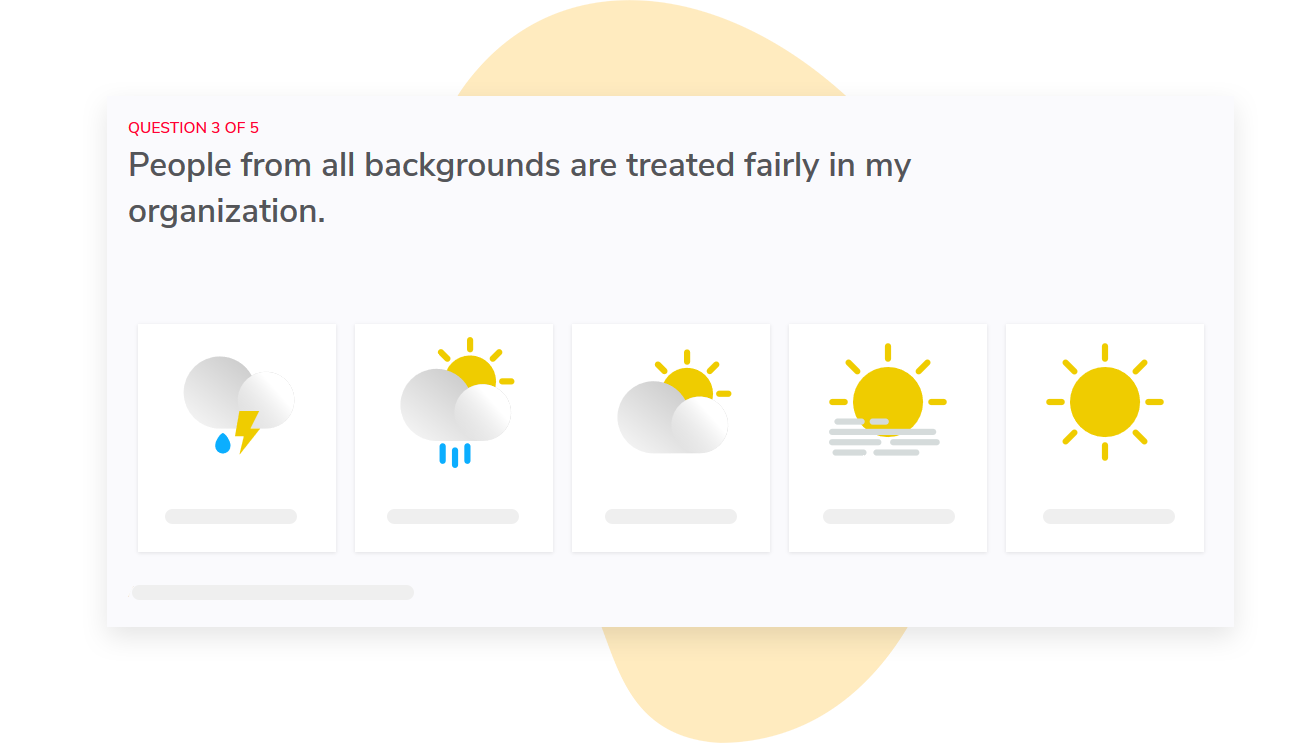
If there are several teams testing different retention strategies, our reporting function allows you to compare results across different groups.
Access levels are automatically assigned based on your org hierarchy, so each team manager only sees results for their teams, not everyone’s results.
Plus, you can set a minimum response threshold below which teams will not see results. This ensures confidentiality. You can change this setting based on your needs, but the default minimum number of responses is 5.
This setting is important if you’re conducting a pilot project with small teams.
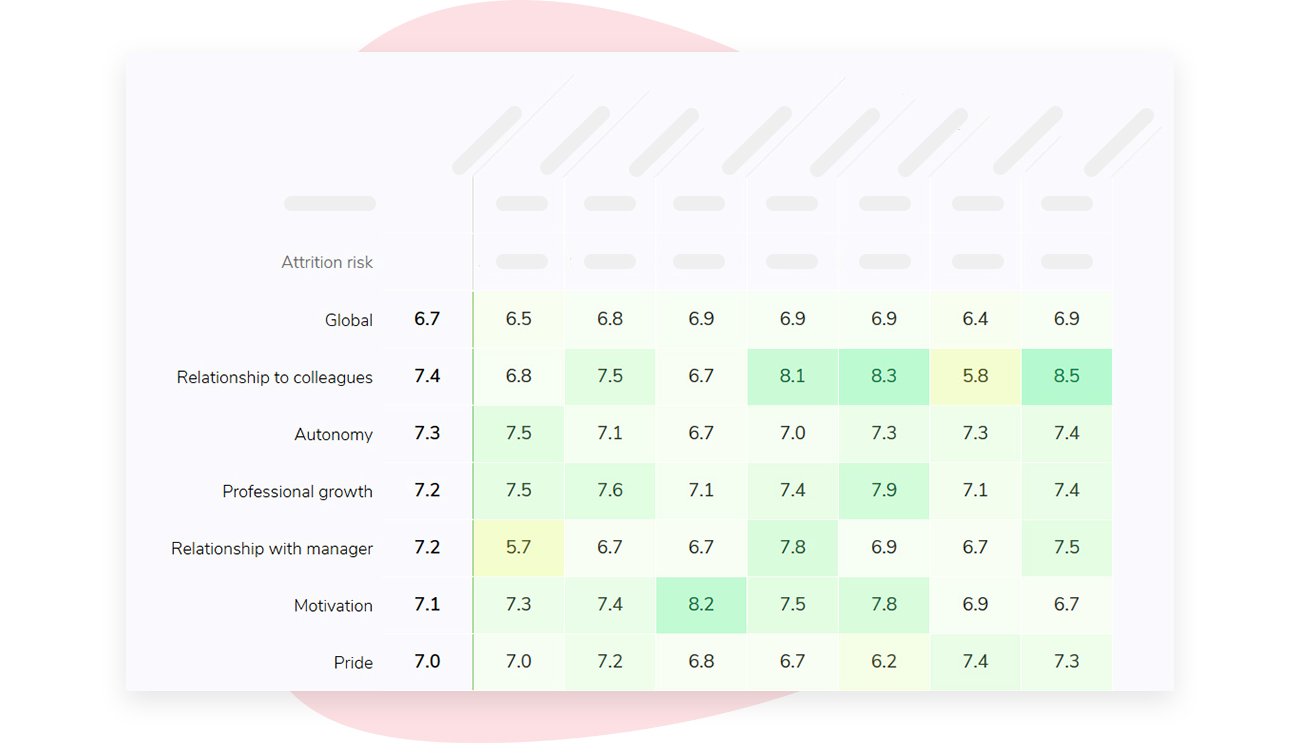
You can use qualitative data from employee responses to better understand your employee engagement score.
If one group of employees says they love the flexibility of the new work schedule while another group says they’re struggling to find coverage, you’ve learned an area where you need to adjust your pilot project before rolling it out to the entire company.
If you’re interested in learning how Sparkbay can help you build a more engaged workforce, you can click here for a demo.
Keep it, change it, or stop?
Before starting your retention strategy, establish guidelines for success and failure. This way, no one gets emotionally attached to an idea and everyone understands how to evaluate it. Ideally, this would happen before the idea is announced by your executive sponsor.
If people are using the pilot project and it’s having a positive impact on the issue it was designed to address, then you can choose to keep it.
if it’s helping some employees but creating a clear negative impact for others, you may want to change it.
If people aren’t using the new option at all, you may want to stop funding it. But first, check to see if people were ever made aware of the change and had a realistic chance of taking advantage of it.
If uptake is low, but awareness is also low, consider changing the messaging or who’s eligible to participate before evaluating the success of this idea.
Once you’ve made a decision, share the results with your employees. Share what you’ve heard from the groups who had a different experience.
If you’re interested in learning how Sparkbay can help you build a more engaged workforce, you can click here for a demo.