When most organizations present engagement reporting, they’re doing something important, but they’re not quite doing something that changes actions.
Have you ever presented the results of an engagement survey only to be met with the response, "The score went up 3 points. Okay. But what does that mean for the business?"
Before you can answer this question, there are a few factors you need to check off. Did the response rate go down, so you’re only hearing from the people who still care? Did a reorganization move a previously low-scoring unit to a different reporting line, so what you’re seeing isn’t really a trend but a change in the seating arrangement?
Did your least engaged people leave, so their absence now looks like an improvement of 3 points?
When your CEO asks, "What does it mean?" they’re usually asking variations of the following questions:
- Will our people stay when they’re hard to replace?
- Are our managers improving or decreasing the productivity of their teams?
- Is our strategy being implemented or just repeated?
Underlying these questions are two quieter questions: whether engagement has a real impact on business metrics we care about and whether there’s capacity within the organization to absorb another change. We’ve dedicated the five sections below to diving a little deeper into each of these questions.
These are actual people analytics and HR analytics examples of how companies have connected employee engagement scores to business decisions
- 1. Which teams are at risk of losing people?
- 2. Are higher levels of engagement related to desired business results?
- 3. Where do managers need more support?
- 4. Do our employees feel like they understand how the company’s strategy applies to them?
- 5. Do your people have room for the next big change?
- How Sparkbay can help you answer your CEO’s questions
- Put the answer to your CEO’s question before the survey score
1. Which teams are at risk of losing people?
A popular approach is to use an "intent to stay" question. Unfortunately, this is not a great early warning system, because many people won’t say they want to leave before they’ve effectively made their decision.
Instead, items on growth, recognition, and the relationship with the manager may be better leading indicators. But of course, this is something you need to test based on your own data.
One way to do this is to identify teams where responses to growth-related items have declined for two consecutive survey cycles while "intent to stay" responses have remained relatively stable. This may highlight teams where people aren’t looking for new opportunities yet, but their reasons for staying are diminishing.
To test whether this is a good approach, you could look at the rate of regretted turnover (i.e. turnover of people you wanted to keep) in hard-to-fill roles for flagged teams versus unflagged teams over a predetermined time period. If flagged teams aren’t experiencing a greater turnover rate, then this isn’t a meaningful way to identify at-risk teams.
Pay attention to team size as well. You may see a 12.5% turnover rate for a team of eight if they lose just one person. This isn’t meaningful.
You may need to look at multiple survey cycles or combine similar, small teams to identify at-risk teams.
2. Are higher levels of engagement related to desired business results?
Ask yourself, "Does a higher engagement score mean a store sells more?"
Chances are low that your HR team has tested this assumption, even though your CEO will expect it to be tested.
To test this, you need to first identify a metric that your CEO already trusts (e.g., sales per employee) and find stores with similar attributes (e.g., similar headcount, location, trading conditions).
Once you’ve done this, you can compare these stores over multiple periods to see whether changes in engagement level lead to changes in sales or vice versa.
If you notice that changes in engagement predict changes in sales, or vice versa by a similar margin, then you know there’s a feedback loop happening.
This feedback loop is different than a view that higher employee engagement leads to higher sales. This may impact how you "sell" investment in employee engagement to your leadership.
While Gallup’s large meta-analyses show there’s a relationship between employee engagement and productivity and customer outcomes across business units, these are averages across a massive number of business units and companies.
They’re helpful when you need to gain a hearing from your CEO, but they aren’t enough to justify a specific investment in your business.
3. Where do managers need more support?
Gallup estimates that managers account for at least 70% of the variance in team engagement.
It’s tempting, then, to take a manager-level view, but this is where many programmes damage their own data.
Once managers are ranked based on results, they will optimise for rankings. This could manifest as "reminders" in the weeks leading up to launch about the importance of answering the survey, or suspiciously similar scores from teams that were split the cycle before.
There’s genuine disagreement among practitioners about where to draw the line. Some believe it’s acceptable to offer a small incentive for completing the action planning and sharing the results with the team, since the actual score isn’t tied to anything. Others think that any incentive, no matter how small, signals that the survey is intended to be a performance tool, and compromises the data.
Both arguments hold water. What doesn’t hold water is a compromise that slides over time. If you can’t stop leadership from turning a completion incentive into a score target, then don’t tie anything to the results at all.
You should also read the low scores carefully. A manager with 18 direct reports and a full sales quota isn’t reporting low scores because of a skills gap. They’re reporting low scores because of a job-design problem, which is an organisational design decision for your CEO.
4. Do our employees feel like they understand how the company’s strategy applies to them?
Most companies include a survey item that says, "I understand what the company’s goals are." This usually scores pretty high, since anyone who has listened to a town hall meeting can agree with this statement.
But this doesn’t measure whether the company’s strategy has been translated into something that impacts employees’ work.
To assess this, companies include items like, "When I receive competing requests, I know what to stop or de-prioritise."
Understanding what to stop or de-prioritize when you receive competing requests is crucially important. If a company’s overarching strategy has not been translated into tradeoffs, it’s difficult to determine what to put down.
Again, understanding the pattern of responses across departments is crucial. If two departments that rely on each other both score low on this item, it may signal that there are conflicting priorities at the executive level.
Two executives may be setting priorities that result in conflicting messages for the teams that report to them.
5. Do your people have room for the next big change?
Where possible, measure workload, trust in leadership and confidence in the company’s direction before a major change is announced.
Once the rumour mill starts, it’s hard to get an accurate reading on these factors, so a pre-announcement baseline is helpful.
This is helpful, because timing is usually the most flexible part of a change plan, and the one that’s least often leveraged.
If you know that one business unit has a high workload and low trust in leadership, and you’re about to incorporate them after an acquisition, you can make the data-backed case for pushing back their incorporation or adding more support from managers before the change plan is finalised.
Once the plan is announced, that same data can only be used to explain why the timeline slipped.
Gartner’s research on change fatigue found that as the volume of change increases, employees’ willingness to support organisational change decreases.
So a low change-readiness score may not mean people are resistant to this change. It may mean they’re already at capacity.
These two scenarios require different responses, and you want to avoid turning a saturation response into a resistance response, which can turn your change programmes into a battle between employees and the organisation - and that’s a losing game for the organisation.
Once you’re in the thick of your change, conduct short, targeted pulses within the affected units and re-ask your baseline questions so you can see movement against your baseline rather than guessing.
How Sparkbay can help you answer your CEO’s questions
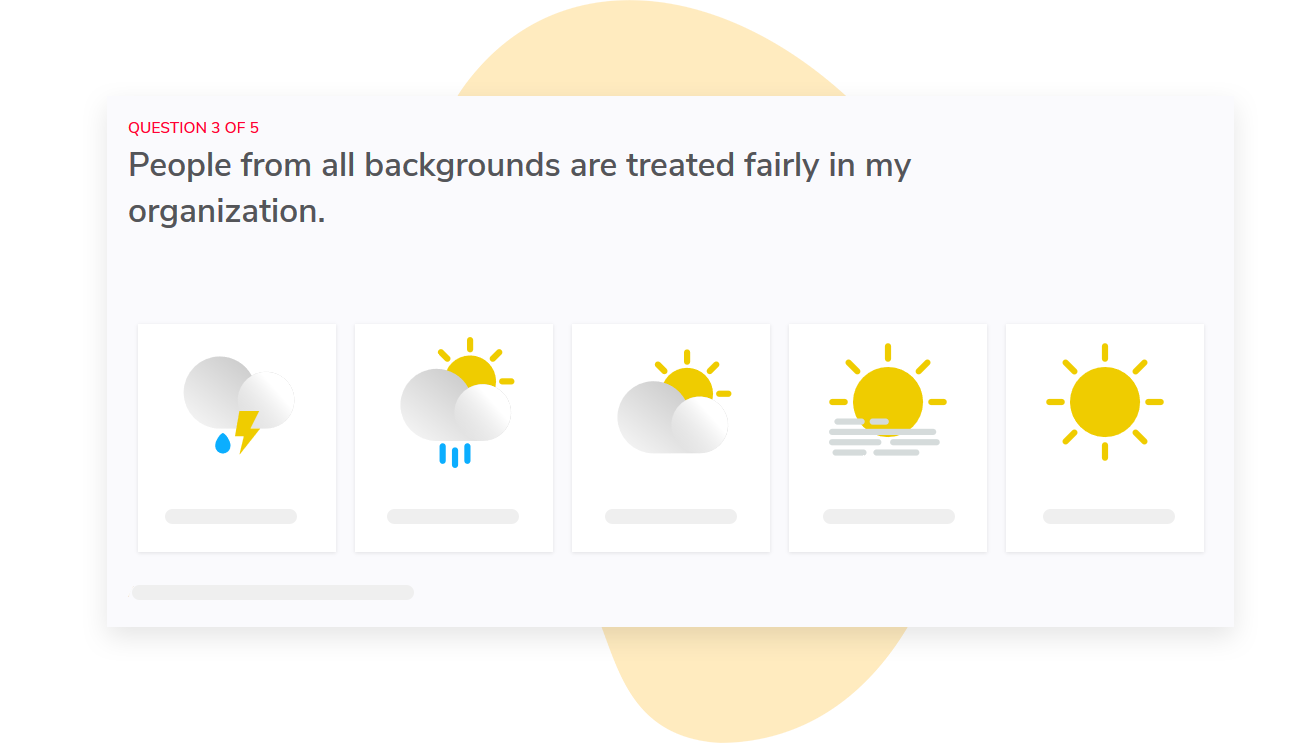
Sparkbay allows you to hear from your employees through regular surveys and pulses, track your engagement score out of 10, and monitor the trends for different teams over time.
Our platform allows you to customize the wording of your surveys and dashboards.
This way, you can ask the specific questions we focused on earlier and customize your dashboards to answer your CEO’s questions.
If you work in a large organisation, you can compare different parts of the organisation to understand whether a poor company-wide result is due to a widespread issue or a smaller group that requires your attention.
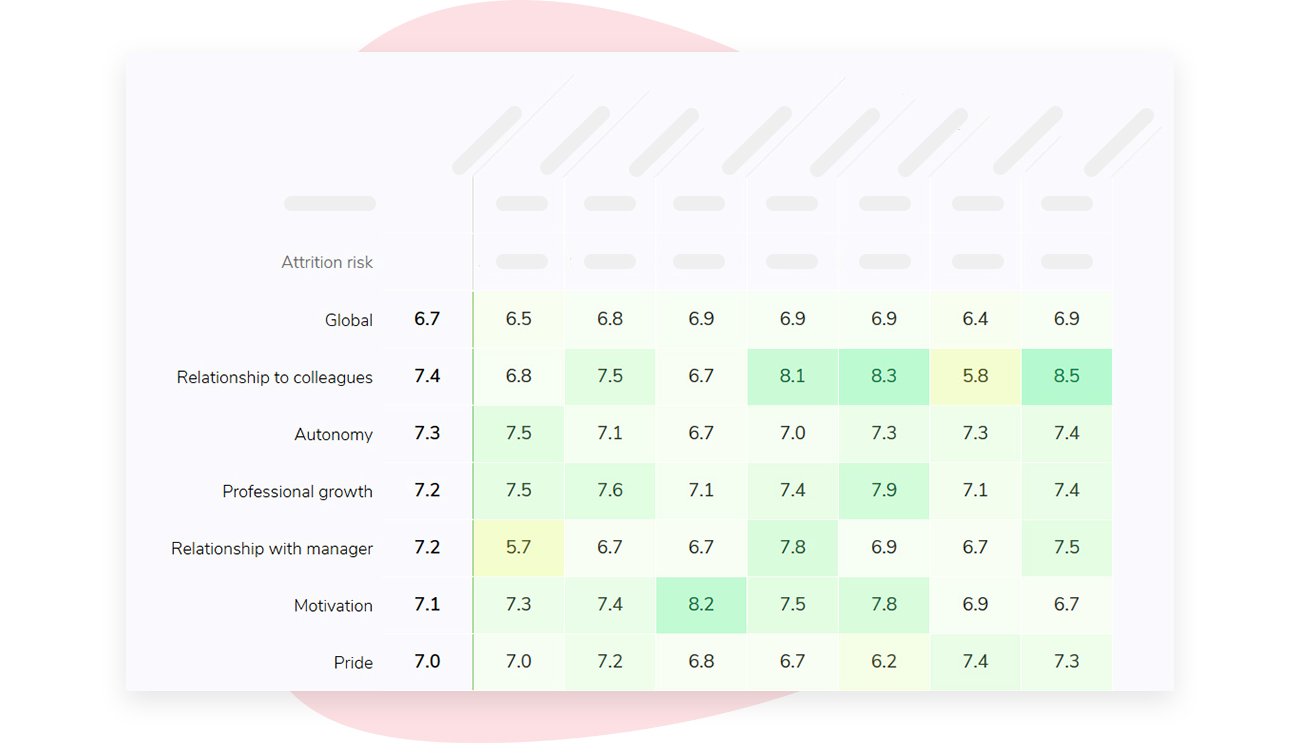
Access to reports is automatically linked to the org hierarchy, so each manager only sees reports for their teams.
We also ensure employee responses remain anonymous by hiding a group’s results if there aren’t enough responses (5 by default, but you can change this).
If you’re interested in learning how Sparkbay can help you build a more engaged workforce, you can click here for a demo.
Put the answer to your CEO’s question before the survey score
Suppose your CEO asks, "How are we doing compared to similar teams?"
At this point, your answer should come before your survey score.
You should be able to present one chart that highlights the gap between truly comparable teams.
Then, in one sentence, articulate what this gap means in business terms (i.e., what needs to be done and by whom).
Next, your presentation should include one sentence that explains what you have ruled out (e.g., response rate, changes in team composition, or other variables you’ve controlled for) and whether the gap exceeds normal cycle-to-cycle fluctuations for teams of that size.
Senior audiences pick up on when this sentence is missing, even if they never ask for it.
It’s also important to state upfront what would change your mind. For example, you might say, "If we still see this gap next cycle - once the reorg has settled - then we’ll need to act. If we don’t see this gap next cycle, we won’t need to act." Stating this decision rule before the data arrives is what separates analysis from storytelling.
Of course, this isn’t something you have to do every single time. If it’s crystal clear that you need to act, then you should do so without waiting for another cycle.
But it is good practice to choose one of the five questions above before your next cycle and ensure your survey includes an item that can properly answer it.
Then, before your survey results come in, agree with your CEO on the business metric that will be used to evaluate the survey item.
If you’re interested in learning how Sparkbay can help you build a more engaged workforce, you can click here for a demo.