It’s hard not to smile when you listen to your team talk about how they’re going to use this great new tool. And you’ve answered all the questions of the people in the room, so you feel pretty confident.
Then, you start receiving questions from a different room. Finance wants to know when this will start saving them money. IT wants to know who’s going to manage the technical aspects of this integration.
Legal wants to know what level of access employee responses will have.
What the...?! Where did you all come from? You didn’t have to deal with any of this during the demo.
And there’s the problem. A demo is not geared towards answering questions like these. But the people who will assess and pass judgement on this tool are the ones who have the budgetary, security, and compliance oversight.
And each of them will have their own "break-even" point to justify the investment.
According to research from Gartner, a buying group is usually made up of several people. The same research also finds that a lot of unhealthy conflict happens within buying groups.
When it comes to HR tech, this unhealthy conflict may not result in a dramatic "no" decision. More often, the project simply stalls.
You’re going to get an overview of the biggest objections from each stakeholder, what they’re really saying, and how to respond to get their buy-in
Do you want your deal to die on the vendor, or die on the problem?
Suppose you’re trying to move a stalled deal forward, and you’re tempted to ask for another demo or another reference call.
Resist the temptation. This risks turning a problem alignment issue into a persuasion issue. If HR is thinking about better employee feedback, finance is thinking about the cost of turnover, and IT is thinking about the number of systems they need to manage - a better demo is not going to help them come to a decision.
As Brent Adamson, Matthew Dixon, Pat Spenner and Nick Toman write in The Challenger Customer, a buying group needs to align on the problem they need to solve before they can buy from you.
Write the problem statement before anyone sees a demo
Saying you want to "modernize the employee experience" is not a good problem statement.
Why? Because it’s unfalsifiable. Unfalsifiable means that it’s impossible to demonstrate that the statement is false.
In this case, every employee function will hear what they want to hear within the statement, so no one will actually be agreeing to anything.
Instead, write a problem statement that can be proven false.
"We need to fix [problem we can observe] because it causes [cost or missed result] and our current process can’t [specific thing we need it to do]."
In the case of a survey tool, this might be:
"The results of our surveys are reaching managers weeks after the survey results are in, which means they miss the window to take actions based on survey results."
And:
"Our HR analysts spend [X amount of time] each survey cycle reformatting survey data exports for each business unit."
These claims can be checked by looking at the timeline from the last survey and the timesheets of HR analysts.
Once you have this problem statement drafted, circulate it to others as a draft and ask a few clarifying questions.
Finance, for example, may want to know that they can accept the costs of the problem in a business case. They may view the cost of analyst hours as "not cash".
It’s important to figure that out now.
After one round of reviews, you should get back a problem statement that meets the following criteria:
"I can easily re-state this statement in one sentence and without mentioning a product. This statement isn’t just an HR problem anymore."
The gatekeeper cheat sheet
| Gatekeeper | What questions do they raise that stall a deal? | What information should you bring? |
|---|---|---|
| Finance | When will this start paying off? | Assumptions on cost, expected timing, and a way to check |
| IT | Who will make sure this is supported after launch? | Technical requirements, owners, and a phased rollout plan |
| Security | Can we verify what the vendor claims? | Current documents and scope of certification |
| Legal and privacy | Who can see data tied to our employees? | Access rules, anonymity settings, and contract terms |
| Employee representatives | When will employees have a say on this? | Consultation plan and straightforward details on how the tool will be used |
| Procurement | What happens when we want to renew or exit? | Renewal terms, price terms, and download/export details |
Finance wants to know when the money shows up?
Break your business case into hard and soft savings, and lead with the hard ones, even if they’re smaller.
Finance can understand costs you’ll eliminate (e.g., buying a tool, hiring consultants), money you can spend elsewhere (e.g., analyst hours), or reporting costs that will go away.
While increased retention is a real benefit, it’s only loosely attributable to your tool, and an experienced finance person will downplay this if it’s presented as the star of the show.
Instead, present the tool as a way to get earlier signals of attrition in specific populations, and put forward a validation plan (e.g., a milestone check, a later date to compare retention trend in pilot units against the rest of the business) that finance will buy.
IT wants to know who’ll support this?
Let’s set aside issues like single sign-on, which rarely create major issues.
The real pain point is getting accurate org data. Indeed, engagement and analytics tools need accurate reporting lines.
Sadly, in most large organizations the manager field in the HR system is correct less often than anyone admits, particularly in matrix structures, after reorganizations, and when it comes to contractors.
So a few key questions to ask your vendors are: How is your software provisioned? How often is the org structure synced?
Your IT and HRIS teams will then want to know answers to questions like: When an employee changes teams, who updates the source data? How fast does this happen?
If the answer is "Nobody, until someone complains," then this is a data quality issue that your new tool will highlight, not introduce.
Security wants proof?
A security certificate logo on a website is often not enough. If a vendor says they have ISO 27001 certification, ask to see the certificate.
Then confirm three things: That the scope of the certificate includes the service and locations you’ll actually use, that the certification body is accredited, and that the certificate is current.
You can also obtain the Statement of Applicability (SOA) which singles out which controls are in scope. This is where you can spot potential issues.
If you’re forwarding a vendor’s response to a security team, avoid increasing the answer to something it’s not. For instance, one vendor may only have one entity, product, or data centre covered under certification. That doesn’t mean all their services have the same coverage.
Legal and privacy want to know who can see what?
Meeting minimum response threshold requirements is one thing. Avoiding inference risks is another.
For instance, if a team comprises 12 people, they easily meet minimum response requirements. But if someone filters the 12 team members based on tenure or location, then compares responses to the unfiltered output, it might be possible to infer who were the 2 dropouts.
Repeated survey waves can create similar issues. Say the team has 2 people join or leave. A quick comparison might reveal who they are.
If your jurisdiction falls under the GDPR, be prepared for privacy to ask for a data protection impact assessment and question the legal basis.
On the latter, consent is a shaky legal basis to process employee info considering the power imbalance, so most organizations rely on legitimate interest.
Legal will also want to see the data-processing agreement with the vendor, the subprocessor list, info on data residency and mechanisms for data transfer, and data retention periods.
Employee representatives want to know when employees can weigh in?
Before locking in how you’ll use your tool, have a chat with your employee representatives (e.g., works council, union, employee forum).
Hearing about its launch and use as a done deal is different from being looped in while it’s still possible to change things.
In some jurisdictions, this conversation is essential for even being able to roll out a tool.
Jurisdictions differ. For instance, Germany has a co-determination requirement that applies to technical systems that can monitor employee behaviour or performance, even if that’s not the intent.
Ask your legal team to understand the details for each country.
Typically, a works council will want to negotiate specific settings (e.g., higher anonymity threshold, restrictions on certain filters, restrictions on info shared with senior leadership). So anticipate such settings to be negotiable rather than contractual.
Procurement wants to know how they can easily get out?
Procurement will want to look closely at the notice window for automatic renewal. You don’t want to miss the window and find yourself locked in for another full term.
You’ll also want to ask for a cap on renewal price uplifts and clarity on what could trigger a price change (e.g., headcount bands, added modules).
On exit, Procurement wants to know more than just whether they can export/download data. Sure, they could export aggregated reports or PDFs, but this won’t let them pick up where they left off with another tool.
Can they export response-level data with question identifiers and survey dates? What kind of files can they expect? How long will it take to get an export?
Will there be an additional cost? Is it possible to get confirmation that the vendor deleted their copy of the data?
Carefully manage the sequence of your conversations to avoid "reset"
Imagine you’ve just announced a launch date for your new tool, and someone raises a concern about privacy. This is a frustrating conversation to have since it puts you back at square one.
This is why it’s important to have initial conversations with your executive sponsor, finance, and your mobilizer to agree on what the problem is, what the cost of inaction is, and what a helpful outcome would look like.
Before you finalize a list of vendors, consult with your IT and security teams. Ask them what their key requirements are that may disqualify a potential option.
Keep a shared document that logs decisions and actions. This document should have information about the decision, who is responsible, and what the decision from the group was.
How Sparkbay can help you make the case for an employee survey tool
If you’re trying to solve the problem of late or patchy employee feedback, we can help you build your case by focusing on the questions your buying group actually agreed on.
With Sparkbay, you can change the wording of our surveys or our dashboards or what appears on the dashboard to make sure you’re testing the problem in your problem statement.
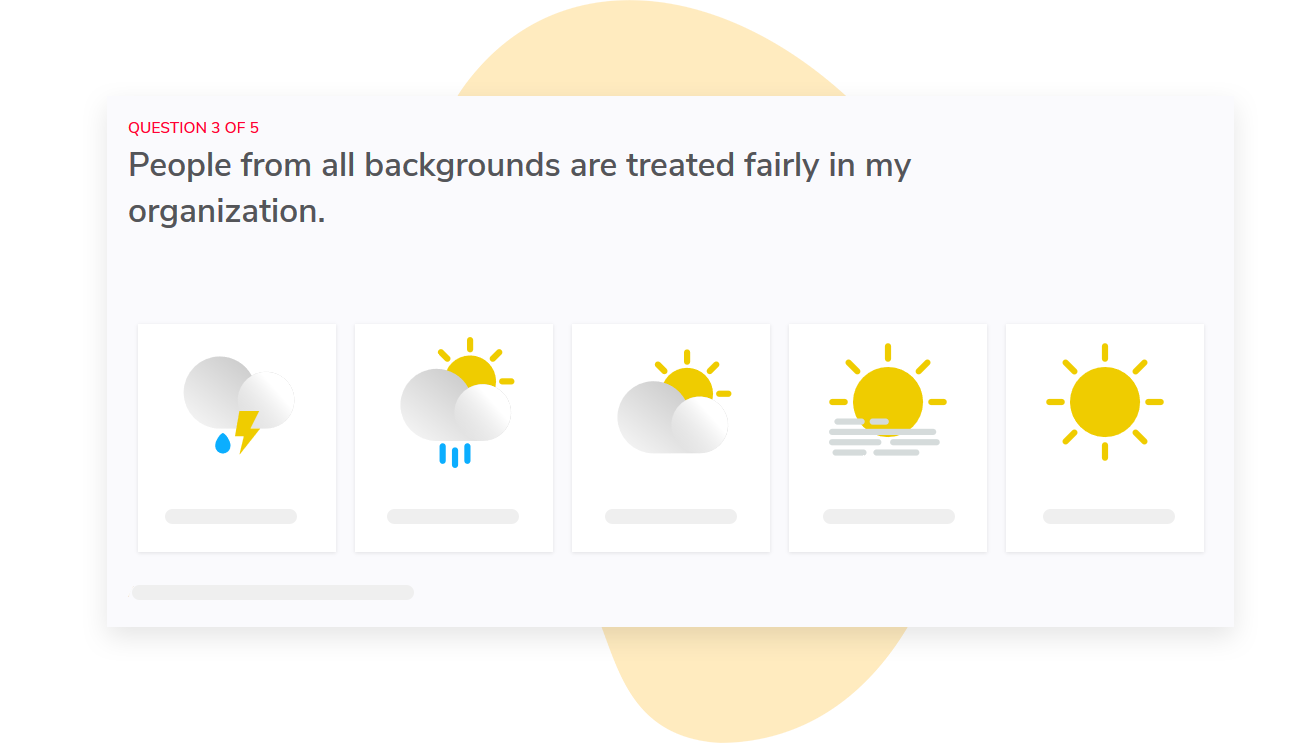
If you’re making the case for an employee survey tool in a large organization, it’s important to have a tool that works at the team level as well.
With Sparkbay, you can easily compare results across different groups. Report access is automatically mapped to the org hierarchy, so managers only see reports for their own teams.
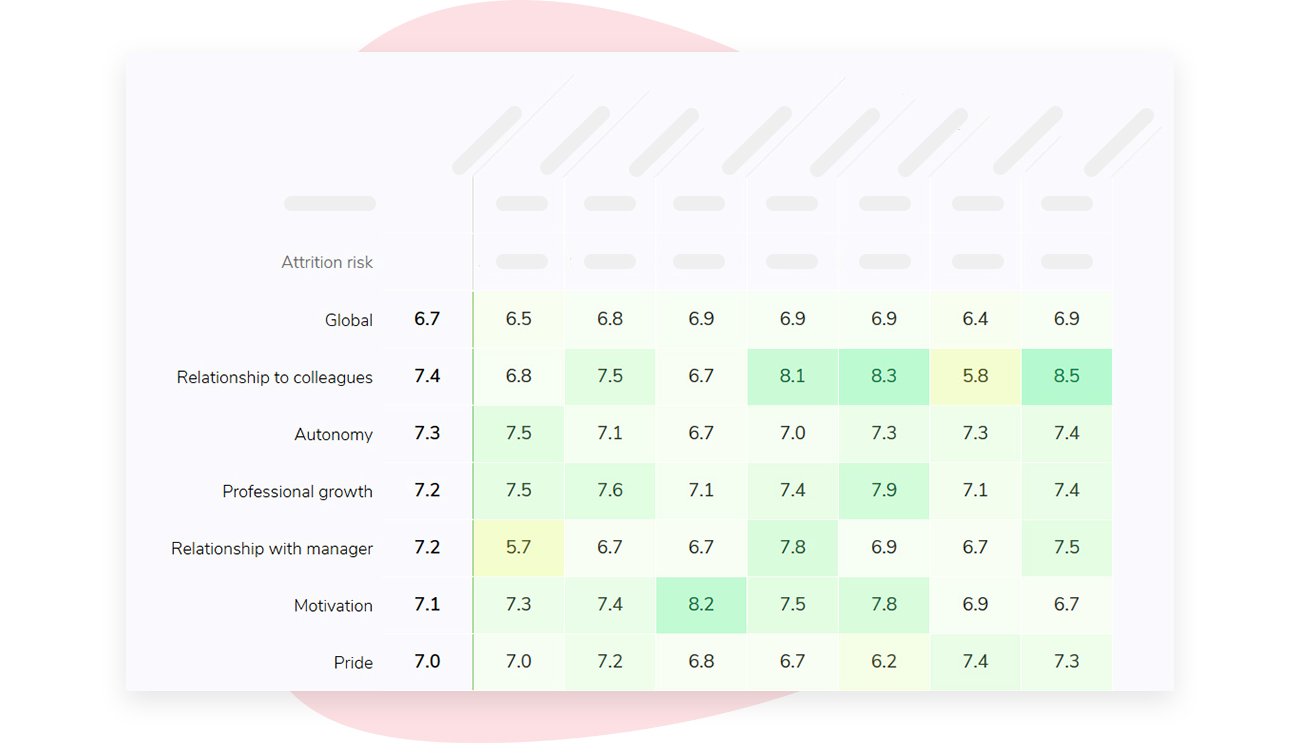
When you’re sharing these views with stakeholders, it’s important to understand how a small team’s results will be displayed.
Sparkbay hides results that have less than a minimum number of responses (default is 5 but can be changed to whatever your works council agrees to).
If you’re interested in learning how Sparkbay can help you build a more engaged workforce, you can click here for a demo.
If you’re interested in learning how Sparkbay can help you build a more engaged workforce, you can click here for a demo.