You can probably recite the pyramid from Patrick Lencioni’s The Five Dysfunctions of a Team by heart.
After all, absence of trust sits at the base of the pyramid,
and it’s the foundation for avoiding conflict, half-hearted commitment, and weak peer accountability.
At the very least, you know that when it comes to building trust within teams, leaders should go first by owning up to their mistakes in front of the team to signal that it’s safe for others to do the same.
But while this advice mostly holds up, there are predictable situations where it doesn’t make sense.
Before jumping into trust exercises, it’s important to evaluate the situation by answering these questions:
Is lack of trust truly the issue at the root of our problems, or is it a symptom of something more structural (e.g., unclear ownership, an unresolved performance issue)?
Which kind of trust are we lacking: trust in the manager, trust between peers, or trust in the organisation?
Why does this matter? Because each of these issues will require a different approach to building trust. It’s easy to make things worse by choosing the wrong approach.
Will "vulnerability from the top" help us build trust on this particular team, or will it backfire?
How do you spot these concerns? Using engagement scores is not a good way to do this. Engagement scores are an average of people’s feelings, taken over a time period that lags behind events.
For instance, if you have a survey question that assesses whether "The people I work with trust me," your team may receive perfectly respectable scores while the real conversation about building trust happens in direct messages, in the corridors, and eventually, in exit interviews.
Instead, you should focus on gathering signals that help you answer the above questions. The best signals are ones that are harder for people to game since they are based on behaviour, and that happen at a faster pace than an annual or quarterly survey.
These two signals are:
1. How long it takes for bad news to reach the manager
2. Whether people believe their survey feedback leads to action
We’ll discuss how you can assess #1 in the section: "How to spot the early signs that trust is eroding".
We’ll discuss #2 in the section: "How to follow through on your last survey".
What to measure about trust in the manager, between peers and in the organization
How can you tell if trust is starting to slip?
Oftentimes, managers have a hunch that something’s off, but need more concrete data points to present at a calibration meeting or to a sceptical business leader.
To collect these data points, managers can ask themselves questions like:
- When a problem last surfaced, how long did I know about it before I heard about it? Did my team tell me about it, or did I hear about it from a customer, another team, or a status report? (Bad news reaching you from outside your team is one of the clearest signs that trust has eroded)
- In team meetings, how many different people push back on ideas? Or is it always the same one or two voices while everyone else stays quiet and lets them speak for the group?
- Who asks a colleague for help while there’s still time to fix things and who waits until it’s too late? A shift from the first pattern to the second usually precedes any change in survey scores.
Volunteer-based or volume-based measures can be tricky. If you notice a decrease in the number of issues raised, escalations, or reported incidents, it could mean one of two things:
- Problems are being solved and there are fewer issues
- People no longer feel comfortable flagging problems
So if the number of reported incidents drops after a change of manager, don’t celebrate just yet.
Did your team lose manager trust? Or peer trust? Or company trust?
Before you start planning a team offsite, it’s important to understand which type of trust has been compromised.
Do they trust their manager?
From a manager to their team, trust is built or broken over small commitments and how visible those commitments are kept.
According to research from Gallup, managers account for a large portion of the variance in engagement from one team to another.
Do they trust one another?
When there’s a lack of trust or engagement within peer groups, it’s normally not about personal issues. Personal issues are often the go-to explanation, but there are usually structural reasons behind employee disunity within teams. These could include ambiguous ownership of tasks and projects that leads to people claiming credit or passing on the blame.
Or it could be an unspoken performance issue that colleagues are quietly dealing with in the hopes that someone addresses it.
Do they trust the company?
Lack of trust in the organisation can be caused by a single event that caused a disconnect between what leadership said and what they did. This could be an event like layoffs after leadership said they weren’t planning any, a reorg that employees heard about from external sources before hearing about it internally, or a policy that was reversed shortly after it was promised.
How do you address each of these areas of trust?
- If the manager has lost the trust of the team: This isn’t something a team event can fix. This requires an audit of all outstanding commitments, even implicit commitments. For instance, if you’ve said "let me look into that" during a 1:1, that’s a promise you’ve made to that person, even if you’ve forgotten it. Once you’ve audited these commitments, you have to either deliver on them or explicitly close them by explaining what happened and why. It’s important not to quietly clear the backlog as part of a burst of activity - this will be viewed as performance. Next, it’s important to specifically acknowledge moments where you’ve dropped the ball, as opposed to offering a general apology which can sound like damage control. Finally, over the next few months, it’s important to continue asking for a next concrete step with a date, so that every new interaction becomes a promise you keep, in a visible manner.
- If team members have lost trust in one another: Addressing this requires first fixing the team structure. This means clarifying ownership and credit in work assignments and reporting, creating visibility into workload and addressing any underperformance colleagues are supposed to be working around. Once this is in place, teams can then organize facilitated discussions where they can raise complaints and work towards solutions. If these discussions happen before the structural changes happen, these conversations turn into venting sessions that provide no power to change anything, leaving people more cynical than before.
- If trust in the organisation is low: This isn’t something a workshop can fix. There are ways to limit the impact of organisational distrust on your team’s day-to-day work, but there is no way to reverse a decision made above you. In fact, hosting a workshop about this can backfire since it forces people to deal with a problem they had no part in creating. A better approach is to escalate specific concerns up the ladder and then circle back once there’s a response - even if it’s an unsatisfactory response. Becoming the person that reliably escalates questions and then reliably delivers responses is the part of organisational trust a manager can control.
Here’s a simple way to tell the difference between these three kinds of broken trust:
If one team scores low while other teams within the same leadership unit score well, you’re most likely dealing with a manager or peer trust issue.
If there’s a significant drop in engagement across an entire department after a single company decision, you’re most likely dealing with a company-level issue that requires escalation.
Keep in mind, this is a rule of thumb. In many instances, there are mixed reasons behind employee disengagement. For instance, if an organisational change isn’t handled well by a manager, issues around organisational trust may be amplified and converted into issues of trust in the manager.
Are there times when vulnerability is a bad idea?
Generally speaking, "go first" is good advice. But there are situations where it backfires:
- When the admission is about your core competence. Admitting you dropped the ball on a project or that you made a bad call can be a great way to build trust. But if a new manager admits they don’t really understand what the team does, this creates distrust. People start to wonder if this person can defend their headcount, priorities, or decisions with senior leadership. In other words, there’s a big difference between "I messed up" and "I may not be able to do this job."
- When nothing changes afterwards. If you admit a mistake and say you’ll do things differently, but your behaviour doesn’t visibly change, your admission starts to look performative. This is especially true for the people who had to deal with the consequences of that mistake.
- When you ask for it from a team inside a low-trust organisation. Asking everyone to share a failure can feel like a good team-building exercise. But if candour has previously been met with shaming or penalties, people will be guarded. Especially if they’re the ones with the least power in the room, as they have the most to lose. They’ll either opt out or share a safe, rehearsed story. You learn nothing and, in fact, this exercise serves to further reinforce the distrust you’re trying to root out.
- When the admission is about the organisation, not about yourself. Saying something like, Honestly, I’m not a fan of this reorg either might feel like a vulnerable moment. But in reality, you’re trading the credibility of the organisation for short-term rapport with your team. This also puts you in a difficult position later when you need to implement that reorg with a team you’ve already told you don’t believe in it.
Follow through on the last survey
Want to quickly gauge your organisation’s level of trust?
Ask employees what happened with the last round of feedback?
If they can’t name a single thing that’s changed as a result of their feedback, then you can expect them to be less forthcoming next time, if they participate at all. Remember, this is about what people noticed, not what actually happened. If something did change, but no one made the connection between the change and the survey, then it doesn’t count.
You need to make it obvious by saying something like, we changed this because you told us.
There’s no better way to build trust than to show that a change was made because people spoke up.
Of course, you can’t act on everything. Choose one or two items that are within your team’s power to change, assign a specific person to own it, and set a date for the next update. When deciding which items to choose, consider the impact of the change on the people who raised the issue.
Even better than waiting to make a change is quickly communicating what people can expect. Within a few weeks of the survey closing, send something out that outlines:
- What we heard
- What we’ll commit to working on
- When you’ll hear from us again
This doesn’t need to be a detailed plan of action. But if people hear nothing for weeks, they’ll assume nothing is going to happen.
Sometimes you need to say no, and that’s okay. A clear no with a reason often retains more trust than a "we’re looking into it" that goes nowhere.
You can also test whether your follow through is working. When you distribute your next survey, compare teams that received an update from their managers to teams that didn’t on the "my feedback leads to action" item. This isn’t perfect - your teams may differ in many ways besides managerial communication - but it offers a directional view.
How Sparkbay can help you track trust after you ask for feedback
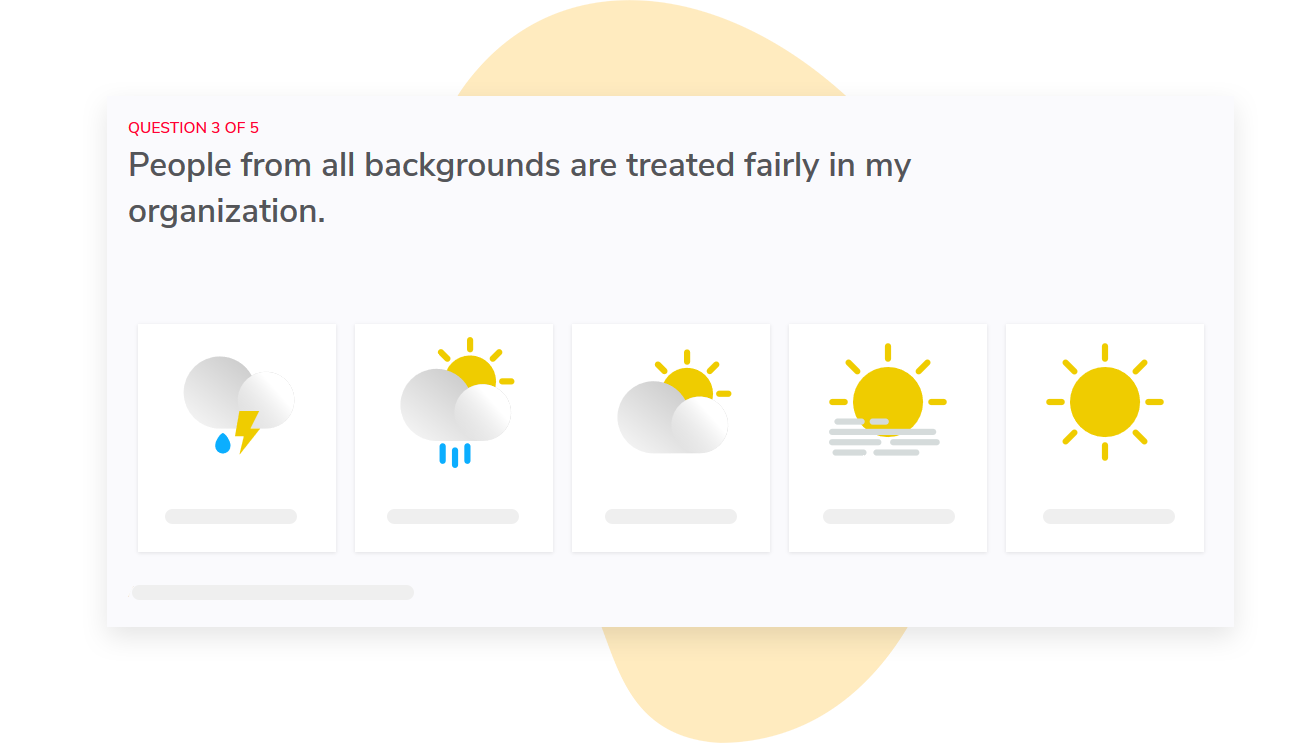
With Sparkbay, you can ask targeted trust questions based on what you actually want to work on. For instance, do you want to know whether people feel safe to speak up with a concern? Do you want to know whether people feel like their answers will lead to change?
You can customise the wording of your survey and your dashboard to measure the specific kind of trust you’re concerned about instead of asking a vague "Do you trust your team?"
Sparkbay then compares these trust questions with a team’s overall engagement score (out of 10) to help you understand which drivers are actually having an impact on your team’s engagement.
Sparkbay also allows you to compare results between different groups. This helps HR teams understand whether a concern is limited to one team (and therefore a manager or peer issue) or if it’s spread across a department (perhaps due to a company-wide decision).
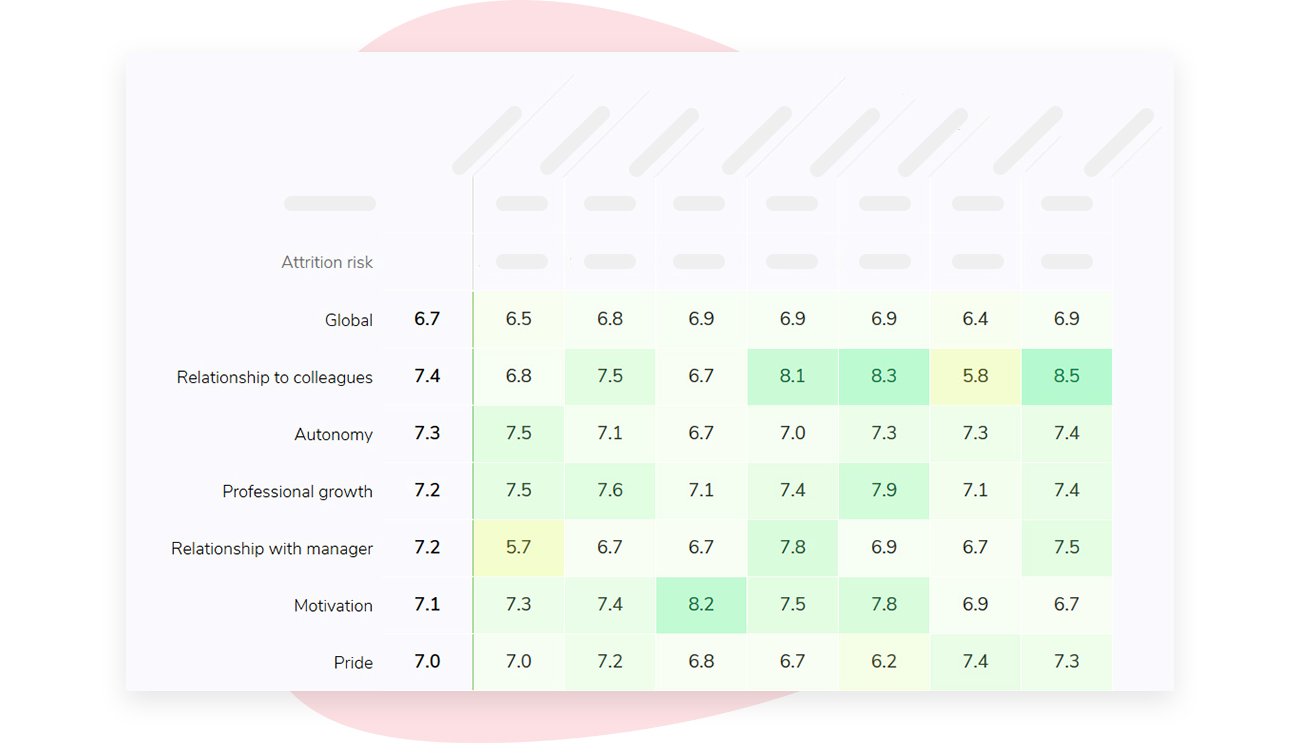
In large companies, it’s important who sees what. In Sparkbay, report access is automatically mapped to your org hierarchy, so each manager only sees the results for their teams.
If you’re interested in learning how Sparkbay can help you build a more engaged workforce, you can click here for a demo.
What if my team is too small to generate a score?
We only want to show results when a sufficient number of people have responded, to protect anonymity. In Sparkbay, the default threshold is 5 responses before results are shown, but this can be adjusted up or down.
We don’t recommend lowering this threshold just to get a number.
We also strongly recommend not trying to identify people based on response timing or phrasing.
You either sacrifice your long-term trust for a short-term data point. In a team of four, the mere suspicion that someone is reading individual responses is enough to cause people to hold back on all future surveys.
If your team is part of a larger group that meets the threshold, you can use that group’s results as a directional read. These results are helpful for understanding organisation-level patterns, but they won’t give you a view into what’s happening in your team specifically.
A better approach for inspiring insight at the team level is to be more deliberate with your 1:1s. Try asking the same few questions over the course of several weeks to see how answers change, rather than reacting to any single response. This is better than a generic check-in questions where the response is always "I’m fine." Try to pick questions that relate back to the two trust signals above.
For example:
- "What did you find out about later than you would have liked, from me or from anyone else?"
- "Is there anything I said I would do for you that I haven’t closed out yet?"
If your answer to the question is always "Nothing, all good", then this is a red flag, especially in a small team where nobody can hide in a crowd. If your answers get vaguer and vaguer over the course of weeks, that’s an even clearer warning sign.
If someone loses trust in their manager, they need an outlet other than an exit interview.
Encourage regular skip-level conversations and present these as a routine part of how the organisation works.
If skip-levels are presented as an escalation channel they people who most need them will avoid them because they don’t want to be seen as complaining about their manager.
You also want to ensure that the skip-level leader is disciplined about what they feed back down to the organisation. Themes heard across several people can be shared, but not specifics that can be traced back to one person.
If you’re interested in learning how Sparkbay can help you build a more engaged workforce, you can click here for a demo.