
Receiving anonymous feedback from your employees isn’t a sign that your company culture has failed.
It may be that someone on your team has a useful point to make about their manager that they don’t wish to attach their name to. As an HR leader, you need a way to hear them before they leave.
That said, it’s important to recognize that the hard part isn’t collecting comments - it’s managing them. If your employees tell you what’s wrong and nothing changes, your next survey will feel like a checkbox exercise.
In this post, we’ll cover why anonymous feedback is important, what features should be included in a paid tool, and then we’ll share 9 anonymous feedback tools for different teams.
On this page
- Why is anonymous feedback the secret weapon of great HR teams?
- What makes an anonymous feedback tool worth your investment?
- 1. Sparkbay: the best all-in-one tool for continuous feedback
- 2. workleap officevibe: best for real-time pulse surveys
- 3. surveymonkey: the budget-friendly champion for small teams
- 4. culture amp: an employee engagement survey software designed for data-driven HR leaders
- 5. tinypulse: the easiest platform to set up for instant feedback
- 6. qualtrics employeexm: best for enterprise-level organizations
- 7. 15five: an engagement-focused feedback platform
- 8. lattice: best for remote and hybrid teams
- 9. leapsome: the rising star worth watching
- How can you determine the right anonymous feedback tool for your team?
- What are the best practices to successfully implement anonymous feedback?
Why is anonymous feedback the secret weapon of great HR teams?
Employees often have the insight employers need, but they hold back due to fear of retaliation, feeling awkward, or being labelled "difficult".
This is why psychological safety - the belief that you can be honest without personal risk - has shot up in popularity as a culture buzzword. When employees feel safe, they’re more likely to flag issues like burnout, manager issues, inequity, broken processes, and disengagement before these problems become expensive.
Anonymous employee feedback tools give companies a way to encourage this kind of open, honest communication. They help HR teams move beyond glossy engagement scores to the real employee experience across departments, locations, and levels.
These insights are invaluable - they help companies avoid costly turnover, declining trust, and missed innovation opportunities.
What makes an anonymous feedback tool worth your investment?
Not all anonymous feedback platforms are created equal. To make our list, an anonymous feedback tool should make your employees feel like they are actually anonymous.
This is because anonymous feedback is often confused with confidential feedback. Confidential feedback is where your employees know their identity may be known to the vendor or HR team, but due to policy, that information won’t be shared.
In contrast, anonymous feedback obscures the individual’s identity from a technical standpoint.
Why is this important? Well, let’s say your anonymous feedback program can filter responses down to "one finance manager in Germany with six months of tenure." Even though the survey is labeled anonymous, at that level of detail employees may feel it is, at best, confidential.
The most robust feedback tools include features that limit the risk of re-identification through minimum response thresholds, role-based permissions, aggregation rules, and restricted exports. This is especially important for larger organizations, where segmentation is vital to take action but can pose the risk of identifying someone within a small population.
Aside from anonymity, HR teams should also consider how well an anonymous feedback platform caters to the operating rhythm of modern HR teams. You want a platform that offers pulse survey automation, customizable question sets, lifecycle surveys, open-text analytics, trend reporting, manager-level dashboards, benchmarks, and even integrations to your HRIS, Slack, Microsoft Teams, or single sign-on providers.
For seasoned HR teams, the real differentiator is often the quality of the analytics layer. You want a tool that clearly distinguishes statistically meaningful movement from the noise, that easily surfaces hotspots and areas of concern without manual spreadsheet work, and that helps leaders understand whether a low score is a local issue, a systemic issue, or maybe due to organizational events.
Data security should also be a priority equal to product usability. Ask your vendors questions about GDPR readiness, SOC 2 reports, data residency, encryption, retention policies, subprocessors, access logs, and how they manage deletion requests from users.
Pricing models vary significantly in the anonymous feedback tool market. Some platforms charge a per employee per month rate while others charge an annual rate based on employee bands. Enterprise platforms are often quote based with an additional implementation fee.
HR teams should take these details into consideration when comparing the total cost of platforms.
The best anonymous feedback programs listen to employees consistently, make it easy for employees to participate, and for leaders to understand and act on the results.
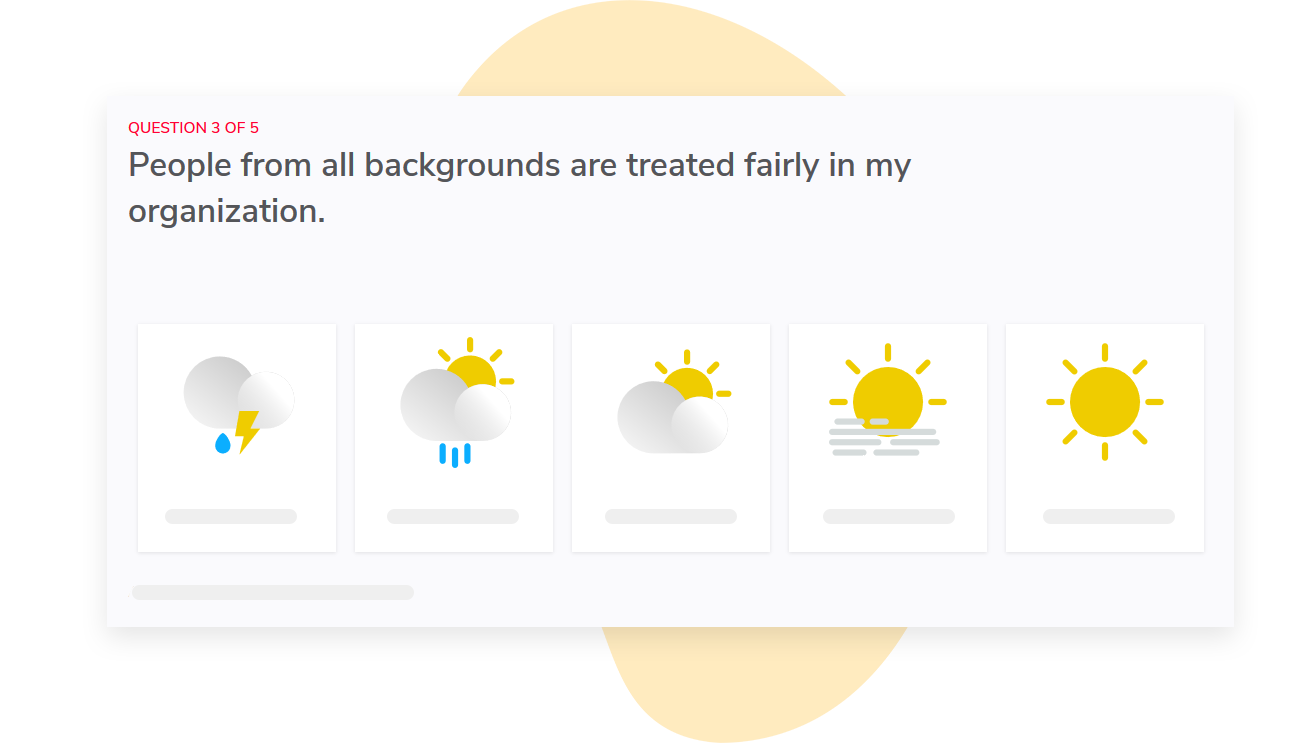
Sparkbay automatically collects employee feedback at regular intervals. Many of our clients opt for monthly pulse surveys to maintain a current temperature check of employee engagement, manager effectiveness, workload, recognition, belonging, and more.
Sparkbay then presents the results in intuitive reports with a clear score out of 10. This helps HR teams and other leaders easily understand where their organization stands without the need to decode complex dashboards.
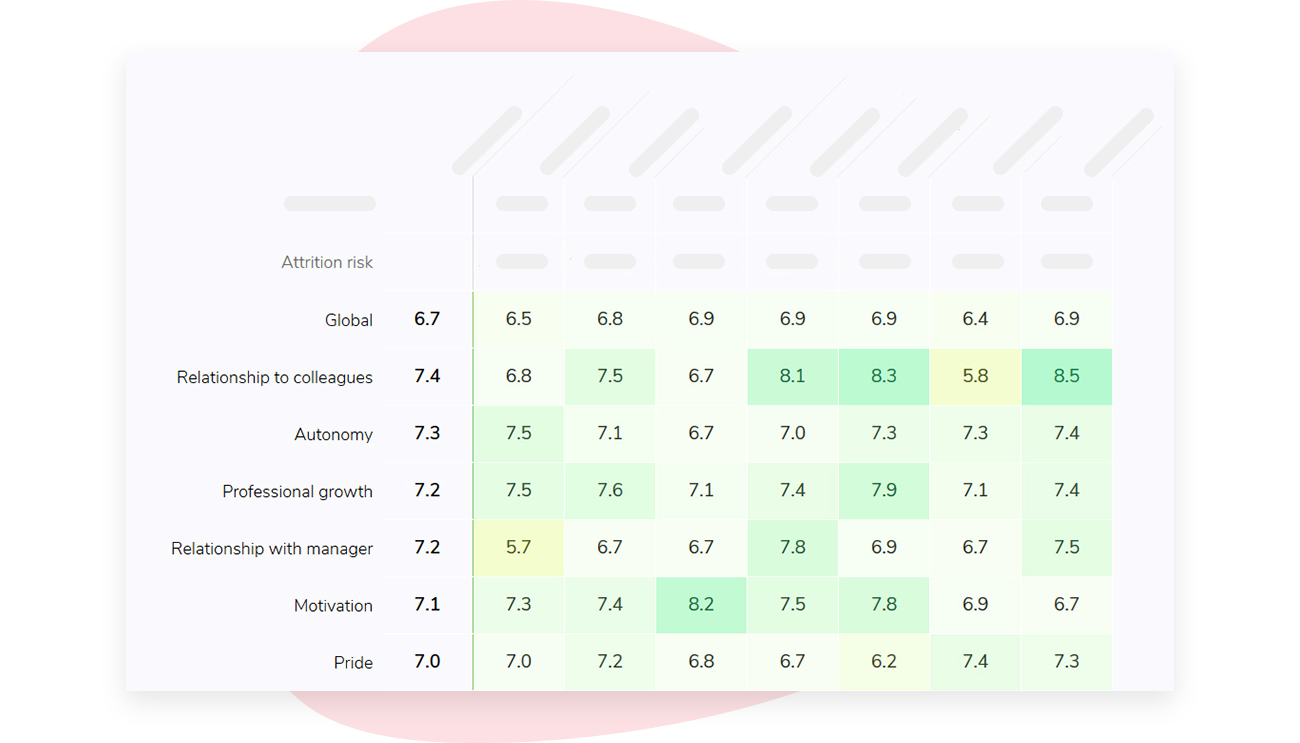
Sparkbay also allows HR teams to segment their results based on manager, department, tenure, location and other company-specific attributes. Teams can also benchmark themselves against companies in the same industry using Sparkbay’s proprietary dataset. This helps HR teams identify whether their concern is a company-specific thing or a weird phenomenon in the market.
Furthermore, to truly make a difference anonymous feedback needs to drive behavioral change, and managers require more than dashboards to help them make changes. That’s why Sparkbay offers a library of easy-to-implement actions. These actions help managers address low scoring areas related to topics like recognition, expectation setting, rebuilding trust, and team communication.
If you’re interested in learning how Sparkbay can help you build a more engaged workforce, you can click here for a demo.
1. Sparkbay: the best all-in-one tool for continuous feedback
If you’re looking for a platform that offers anonymous employee surveys, employee engagement analytics, benchmarking, and manager action planning, Sparkbay is a great choice. It’s particularly helpful for mid-sized and large organizations that want to start a recurring listening rhythm instead of a once-a-year engagement survey.
Is it the right tool for you?
Sparkbay is a great tool for HR teams that want to move from measurement to action, but that don’t want to burden managers with complex analytics.
Pros
- Automates pulse survey delivery to support continuous listening
- Action library to help managers respond constructively
Cons
- You may need additional systems if you want a broad performance management suite
- Leaders must be ready to act on recurring feedback to get the best value
Pricing snapshot: Sparkbay pricing is typically quote-based and depends on company size and requirements.
2. workleap officevibe: best for real-time pulse surveys
Workleap Officevibe is a well-known tool for lightweight pulse surveys and team-level engagement insights.
It focuses on the power of frequent feedback, quick check-ins, anonymous comments, and manager-friendly reporting.
The platform is a great choice for companies that want a low-friction way to monitor employee morale and team health.
Officevibe offers a straightforward employee experience that can help improve response rates in organizations where survey participation has been hit and miss.
Best fit for:
Attractive to distributed teams, fast-growing companies, and HR teams that need managers to engage directly with results.
Pros:
- Great team-level reports and the ability to track trends over time
- Integrations with common workplace systems
Cons:
- Advanced enterprise-level analytics may be better suited to larger EX platforms
- Organizations that require highly customized research design may outgrow this structure
Pricing snapshot: While pricing plans per user per month were listed in the past on the website, we recommend you confirm the current rates with Workleap, as prices may vary depending on the package.
3. surveymonkey: the budget-friendly champion for small teams
SurveyMonkey is not an employee engagement platform per se, but it’s a nice option for organizations that want a basic, anonymous survey at a lower price.
SurveyMonkey allows HR teams to create custom surveys, distribute links, and analyze response patterns without going through a long implementation process.
While experienced HR teams can use SurveyMonkey to create their own engagement surveys, exit surveys, onboarding surveys, or manager feedback surveys, they will also have to design the methodology, anonymity rules, reporting structure, and action process themselves.
Best fit for
Small organizations, pilot programs, HR teams that want to test a feedback approach before investing in a dedicated platform
Pros
- Familiar interface for many employees
- Useful for ad hoc projects that require anonymous feedback
Cons
- Manual work needed to protect anonymity in small segments
- Less mature manager action planning and HRIS-based segmentation
Pricing snapshot: SurveyMonkey has several paid plans, usually priced per user or team.
4. culture amp: an employee engagement survey software designed for data-driven HR leaders
Culture Amp is one of the more established employee experience platforms on the market.
The good news is that Culture Amp developed a strong employee engagement survey, lifecycle surveys, benchmarking, and analytics.
It’s often one of the preferred tools of HR teams who want a research-backed, data-driven approach to employee engagement and robust reporting capabilities for complex organizations.
Its benchmarking and analytics capabilities can support board-level conversations about company culture, retention risks, and organizational effectiveness.
Best fit for
Culture Amp is a great fit for mid-market and enterprise organizations that have mature people analytics capabilities.
It’s also an attractive option for HR teams that want an integrated employee engagement measurement, performance, and development solution from the same vendor ecosystem.
Pros
- Great driver analysis and insights generation capabilities for prioritization
- Part of a larger, well-known employee experience ecosystem
Cons
- The Culture Amp platform may be overkill for smaller teams
- Cost can be higher than lightweight pulse survey tools
- Implementation and governance require careful planning when working with large teams
Pricing snapshot: Culture Amp pricing is generally quote-based. Price depends on number of employees, modules selected, contract structure, and support requirements.
5. tinypulse: the easiest platform to set up for instant feedback
TINYpulse focuses on quick employee feedback, pulse checks, anonymous suggestions, and recognition. It’s built on the notion that feedback should be frequent, simple, and easy for managers to respond to.
While TINYpulse isn’t as research-heavy as some enterprise tools, this simplicity can be a boon for organizations that need speed and adoption.
Best fit
A good choice for teams that are new to continuous listening.
Pros
- Recognition features for positive reinforcement
- User-friendly for HR teams without dedicated people analytics resources
Cons
- Advanced segmentation and analytics may be limited compared to larger platforms
- Action planning may not be deep unless internal managers follow through
Pricing snapshot: TINYpulse pricing is usually quote-based or plan-based depending on package and company size.
6. qualtrics employeexm: best for enterprise-level organizations
Qualtrics EmployeeXM is designed for large-scale employee experience programs that require sophisticated analytics, complex survey governance, and enterprise-grade customization.
It’s a great option for global organizations that require advanced research design, robust integrations, and strict data controls.
Qualtrics EmployeeXM can serve many different use cases, including engagement surveys, lifecycle feedback, 360 programs, EX analytics, and more.
It’s a very powerful tool, but its complexity and power mean that HR teams need clear governance and specialist owners to make the most of it.
Best fit
Especially useful if you need to merge employee experience data with customer, brand, or operational data.
Pros
- Advanced text analytics and experience data capabilities
Cons
- Can require significant implementation effort
- May be expensive for organizations looking for a simpler engagement solution
Pricing snapshot: Qualtrics pricing is generally quote-based and can vary substantially based on modules, employee count, integrations, and service model.
7. 15five: an engagement-focused feedback platform
15Five is an employee feedback tool that combines engagement surveys, manager check-ins, performance management, OKRs, and recognition.
Although it’s a little different from the other companies on this list, we think it’s worth mentioning, because its employee engagement tools can help HR teams relate employee sentiment to manager check-ins and goal execution.
If you want your anonymous employee feedback questions to live close to performance conversations and manager check-in habits, this is a nice platform. (Though it’s important to be clear about which channels are anonymous and which are visible to managers.)
Best fit for:
Companies that are investing in manager effectiveness, goal alignment, and regular check-ins with employees.
Pros:
- The recognition and check-in features of the platform can help reinforce participation
Cons:
- If you’re looking for a pure anonymous employee listening platform, this may be overkill
- If you want advanced survey research features, your team may need additional configurations
Pricing snapshot: Historically, 15Five has published per user per month pricing for several plans, with enterprise options also available.
8. lattice: best for remote and hybrid teams
Lattice offers an engagement survey, pulse survey, performance review, goals, one-on-one, and career development features.
Its big selling point for remote and hybrid organizations is that Lattice allows you to connect feedback to structured manager rituals and distributed team operating practices.
Anonymous engagement surveys can help HR understand where remote workers may feel disconnected, unclear, or unsupported.
Best fit
Remote and hybrid teams that want to keep their people processes consistent across different locations
Pros
- Modern user experience and familiar workflows
Cons
- You may need to pay for more than you want if you’re only looking for anonymous surveys
- Survey anonymity rules and reporting governance need to be carefully set up
- You may need a specific plan level or configuration to access deep people analytics
Pricing snapshot: Lattice has historically offered modular pricing per user per month, often with add-ons for engagement and other features.
9. leapsome: the rising star worth watching
Leapsome is an employee experience (EX) platform that combines employee engagement surveys, performance reviews, learning, goals, compensation, and manager enablement.
When it comes to employee survey features, Leapsome offers anonymous employee feedback, pulse surveys, survey templates, survey analytics, and reporting geared towards taking action.
It could be especially interesting for companies that are scaling up their HR operating model and looking to consolidate vendors.
Best fit for
Companies looking to offer HR teams a modern, tech-forward experience that’s a step up from spreadsheets, standalone survey tools or fragmented performance management systems.
Pros
- Features for manager enablement to help managers act on information
Cons
- Implementing multiple modules at once can increase implementation challenges
- You’ll want to compare the benchmarking and analytics capabilities of Leapsome with those of enterprise survey specialists
Pricing snapshot: Leapsome pricing is generally quote-based or modular depending on the products you choose and your company size.
How can you determine the right anonymous feedback tool for your team?
The best anonymous feedback tool for your team will depend on the kind of operating model you want HR to have.
For example, if your company intends to do quarterly listening exercises with centralized analysis by the HR team, you’ll need a different feedback platform than a company that wants every manager to have monthly insights into their teams with recommended actions.
First, define what you want your feedback architecture to look like. Consider the different moments when you want to gather feedback from your teams, such as engagement, onboarding, exit surveys, change management, inclusion, manager effectiveness, workload, post reorganization sentiment, and more.
- What level of anonymity is technically implemented? For example, how does the tool handle small groups of participants, free-text comments, or comments that will be exported?
- Who will the follow up belong to? Does your company want HR to lead follow up? Senior executives? Or individual managers or cross-functional teams?
- How much customization is necessary? Are there specific survey customizations your enterprise organization needs, such as custom hierarchies, multi-lingual surveys, or complex permissions?
| Tool | Best for | Pricing style |
|---|---|---|
| Sparkbay | Continuous anonymous feedback with clear scoring and manager actions | Quote-based |
| Workleap Officevibe | Frequent pulse surveys and lightweight team feedback | Plan-based, approximate public pricing |
| SurveyMonkey | Low-cost ad hoc anonymous surveys | Published plans, verify current rates |
| Culture Amp | Research-backed engagement analytics and benchmarks | Quote-based |
| TINYpulse | Fast setup and simple pulse feedback | Quote-based or plan-based |
| Qualtrics EmployeeXM | Complex enterprise EX programs | Quote-based |
| 15Five | Engagement connected to performance and manager habits | Plan-based, verify current rates |
| Lattice | Remote and hybrid teams using integrated people workflows | Modular per-user pricing, verify current rates |
| Leapsome | Integrated people enablement and engagement | Quote-based or modular |
What are the best practices to successfully implement anonymous feedback?
Implementing anonymous feedback at your company is a big deal. Consider drafting an informal contract or agreement that outlines what exactly is anonymous, what information will be aggregated, who will have access to different sets of information, which comments may be quoted, and what actions HR will take if they notice feedback relating to harassment, safety risks, discriminatory experiences, or the company’s legal exposure. If your HR team is highly mature, you may want to consider involving legal, privacy, works councils (if applicable) and internal communications teams before launching your feedback initiative.
When designing your anonymous feedback survey, try to avoid getting caught up in the internal politics of your organization. Stick to the behavioral science of survey design. This means avoiding long questionnaires that include every stakeholder’s priority question.
Surveys that are excessively long increase the chances of satisficing, straight-lining, and people abandoning the survey.
Once you have your core stable question set that allows you to measure trends within your company over time, you can include topical modules on a rotating basis to collect data for specific business needs. For example, you may have a stable question set on employee engagement drivers, but you may want to include additional questions related to workload after a major restructuring or related to inclusion after a major leadership team transition.
Finally, closing the feedback loop generates a lot of trust within your organization. Your employees do not expect you to act on every feedback request, but they want to know that their leaders heard their feedback, understood recurring themes, made decisions based on those insights, and communicated why they made trade-off decisions.
- Protect the open text comments: Open text comments are very valuable when they are shared broadly, but you should remove any identifying details before distributing them.
- Choose a priority focus area(s): It’s better to choose a small number of focus areas from the survey results rather than publishing a long list of actions that won’t all get completed.
- Provide managers with the tools they need to take action: Provide managers with options to take action, talking points, and guidance on how to discuss results without getting defensive.
- Measure your follow-up actions: Use both qualitative and quantitative data to measure your follow-up actions. You can measure participation, movement in scores, completion of actions, and even track turnover or qualitative sentiment over time.
As you measure the ROI of your anonymous feedback initiative, consider both leading and lagging indicators. Leading indicators might be participation, trust in leadership, manager effectiveness, and intent to stay. Lagging indicators might be regrettable attrition, internal mobility, absenteeism, and productivity proxies.
If you’re interested in learning how Sparkbay can help you build a more engaged workforce, you can click here for a demo.